TSP vs. Liquid Deglosser: Efficient Surface Preparation Comparison
Proper surface preparation determines the success of any painting project. Patchy finishes or premature peeling often result from inadequate prep on walls, cabinets, or trim. Two effective options, TSP and Liquid Deglosser, enhance paint adhesion and smoothness through distinct mechanisms. This comparison examines their strengths to help you select the best approach for your needs.
Applications Where TSP Excels
TSP proves essential for surfaces contaminated with heavy dirt, smoke residue, or grease buildup. It suits repainting in high-traffic areas like kitchens and bathrooms, where accumulated grime hinders paint bonding. This phosphate-based cleaner penetrates and dissolves contaminants, creating a clean foundation for lasting results.
Steps for Effective TSP Application
- Prepare the solution by mixing the powder with warm water as directed on the package. Wear gloves and safety glasses to protect against irritation.
- Apply the mixture using a sponge or cloth, scrubbing vigorously on heavily soiled areas with a brush if necessary.
- Rinse thoroughly with clean water to remove all residue, as leftover film can interfere with paint adhesion. Dry the surface completely.
- Allow full drying before proceeding to priming or painting, typically several hours depending on humidity.
Advantages of TSP
- Effectively eliminates grease, grime, and stains
- Suitable for kitchens, bathrooms, and smoke-affected zones
- Cost-effective and widely available at hardware stores
- Provides thorough cleaning for optimal paint base
Disadvantages of TSP
- Mandatory rinsing adds time to the process
- Potential to etch metal or glass if not removed promptly
- Requires personal protective equipment during use
- Less suitable for projects demanding rapid completion
TSP serves as the primary choice for cleaning-focused preparation. It ensures paint adheres to a pristine surface, particularly on greasy or soiled walls.
Practical Example: Updating Kitchen Cabinets
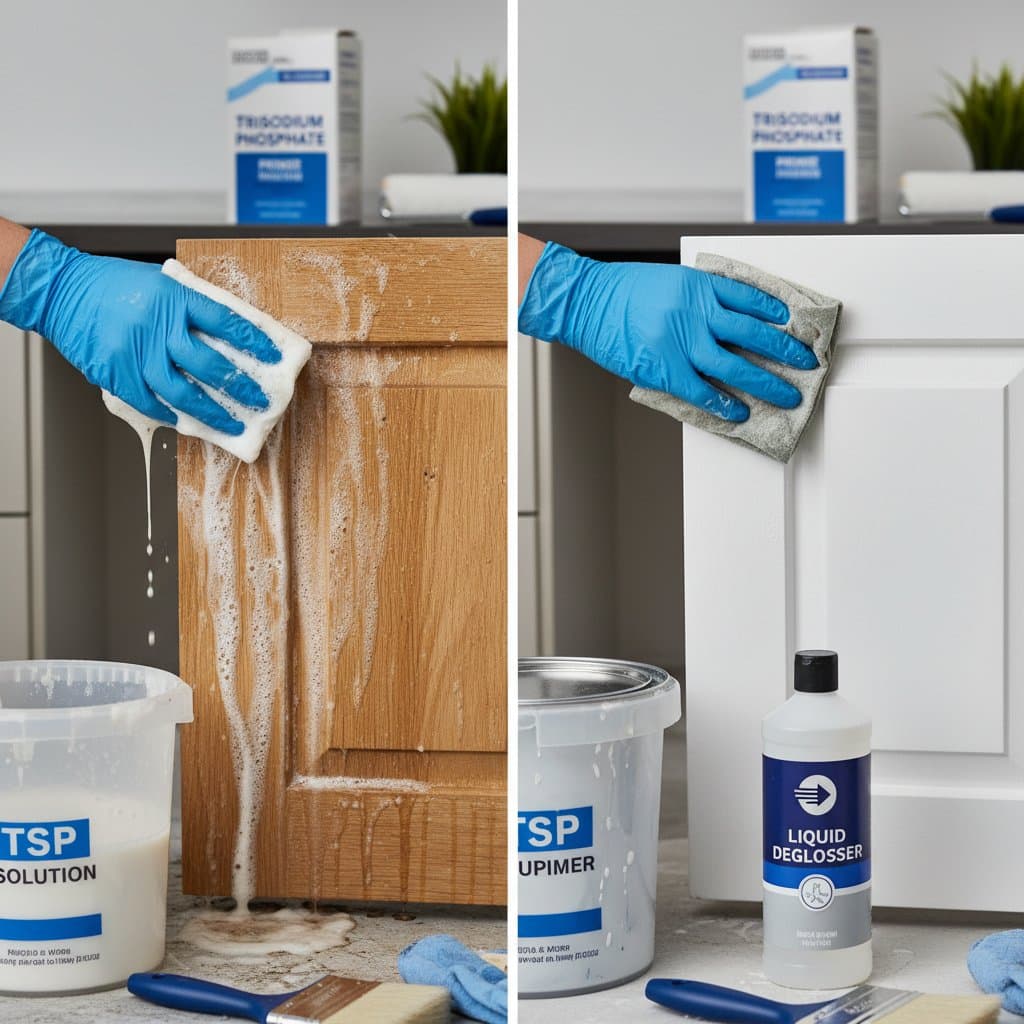
Consider refreshing glossy kitchen cabinets with lingering grease from daily use. Begin by addressing cleanliness to avoid compromising the finish.
- First, clean the surfaces using a mild detergent solution or TSP to eliminate grease and oils.
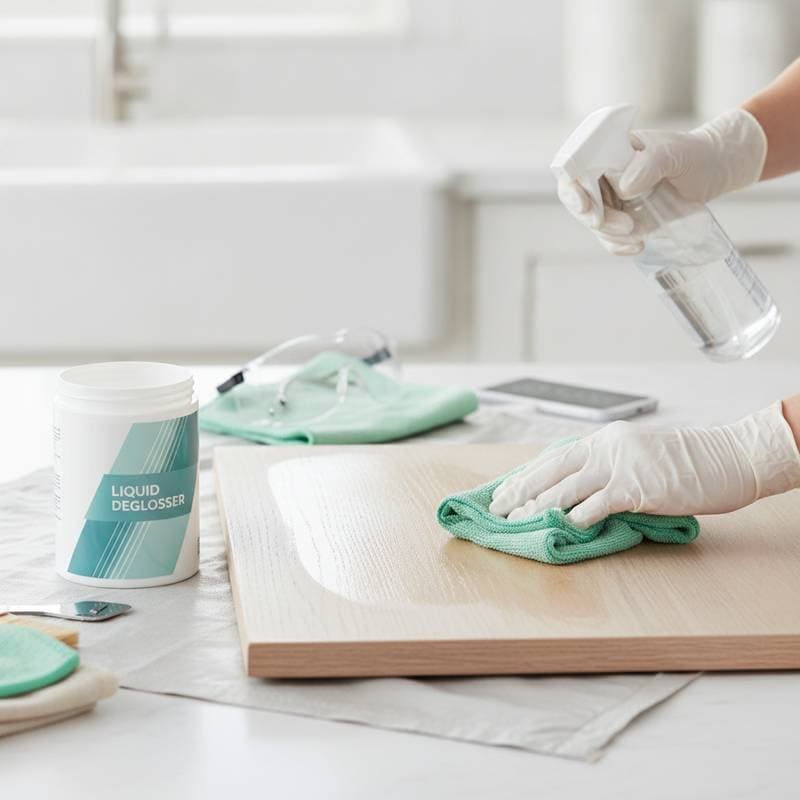
- Next, apply Liquid Deglosser to reduce gloss and promote adhesion.
- Finish with a bonding primer followed by your selected paint color.
This sequential approach combines thorough cleaning with surface modification for superior durability. The result is a smooth, professional coating that withstands regular wear.
Professional Techniques for Flawless Results
In demanding environments like media productions, where lighting highlights imperfections, precise preparation is crucial. These field-tested methods ensure consistent quality.
- Inspect sheen levels by angling a light source over the surface to identify glossy patches requiring additional treatment.
- Perform a tape adhesion test: Apply painter's tape to a prepared area and remove it. If residue lifts, continue cleaning or deglossing until secure.
- Divide large surfaces into manageable sections to maintain efficiency during cleaning, deglossing, and painting.
- Employ microfiber cloths for wiping, as they capture fine particles without leaving lint or streaks.
Adopting these practices yields finishes that appear impeccable under scrutiny and perform reliably in everyday settings.
Integrating TSP and Liquid Deglosser for Optimal Outcomes
Experienced painters often pair these products rather than selecting one exclusively. TSP handles decontamination, while Liquid Deglosser enhances mechanical bonding by lightly abrading the surface.
This synergy maximizes adhesion on varied substrates, from wood to previously painted areas. The combined method minimizes failures like bubbling or flaking.
Recommended Workflow
- Clean with TSP solution, rinse meticulously, and allow to dry.
- Apply Liquid Deglosser evenly with a lint-free cloth, following product guidelines for dwell time.
- Proceed to priming and topcoating once the surface is dry and matte.
Achieving Durable Paint Finishes
Investing effort in preparation safeguards your project's longevity and aesthetic appeal. TSP addresses contamination for a solid start, and Liquid Deglosser accelerates readiness on glossy materials. By matching the method to your surface conditions, you secure finishes that endure daily use and reflect professional craftsmanship.