Why TSP Substitutes Compromise Paint Adhesion
Professional painters often encounter the advice to wash surfaces with trisodium phosphate (TSP) before repainting. This approach appears straightforward and reliable. However, most contemporary TSP substitutes fail to deliver the expected results. They leave residues that interfere with adhesion, neglect to dull glossy finishes adequately, and ultimately undermine the durability of new paint layers. Professional painters rely on deglossers as a superior alternative. These products streamline preparation, ensure robust bonding, and produce finishes that withstand everyday use.
The following sections examine the shortcomings of TSP substitutes on modern surfaces and explain how deglossers provide effective preparation for superior paint results.
Advantages of Deglossers in Surface Preparation
Deglossers, sometimes referred to as liquid sandpaper or surface preparation solutions, perform tasks that TSP substitutes cannot achieve. They chemically soften existing finishes to promote strong bonding with subsequent coats. While they offer light cleaning, their primary benefit lies in creating microscopic surface alterations. These changes open the finish's pores, allowing new paint or primer to adhere securely.
This process enhances efficiency significantly. Users apply deglossers without the need for rinsing, residue removal, or extended drying periods. The solutions evaporate rapidly, leaving surfaces immediately ready for coating. Professionals, including painters and set designers, select deglossers for projects with tight schedules where finishes must appear flawless under scrutiny.
Paint adhesion relies on mechanical grip and chemical bonding. Glossy surfaces lack both elements. Deglossers address these issues by partially dissolving the gloss and forming a receptive bonding layer. In contrast, TSP substitutes merely remove surface dirt without altering the underlying structure.
Preparation Options Across Budget Levels
Effective surface preparation suits various budgets and project scales. The options below integrate deglossing techniques to achieve professional outcomes.
Entry-Level or DIY Projects:
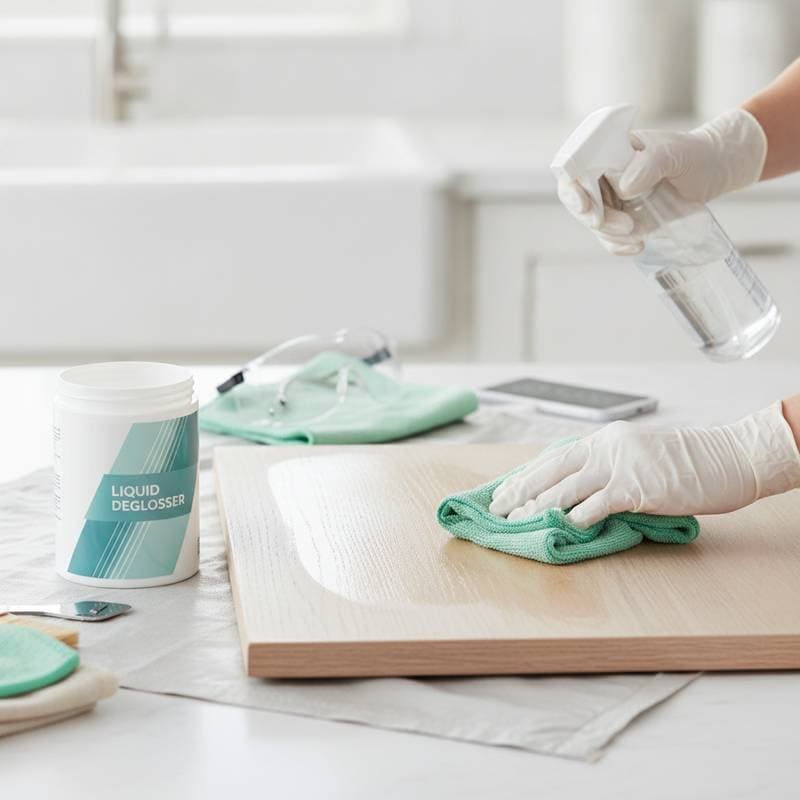
Select a standard liquid deglosser available at hardware stores. Apply it using a lint-free cloth in even, circular motions across the surface. Allow it to dry completely, then proceed with painting. This method requires minimal investment, eliminates extensive sanding, and provides reliable adhesion for tasks such as refinishing furniture or updating doors.
Mid-Range Projects:
Opt for a professional-grade surface preparation liquid designed for cabinetry. These formulations incorporate mild cleaners and adhesion enhancers. Although the cost per quart increases, the time savings prove substantial. Such products suit applications like built-in cabinetry, trim work, or complete room updates where finish quality remains paramount.
Premium or Commercial Applications:
Employ a combined system featuring deglosser and bonding primer. Commercial painters frequently use this approach in high-traffic environments. The deglosser prepares the surface, while the primer secures any residual elements. This combination yields exceptional durability suitable for hospitality venues or retail settings.
Regardless of budget, select preparation methods that align with the specific surface type. TSP substitutes attempt universal application but often fall short. Deglossers, by comparison, adapt effectively to diverse finishes and project requirements.
Avoiding Frequent Preparation Errors
Even effective products require proper application to succeed. The errors listed below commonly occur during preparation, along with strategies to prevent them.
Error 1: Ignoring Product Instructions.
Deglossers vary in required dwell times; some activate in one minute, while others need up to five. Consult the label to determine the optimal duration for maximum effectiveness.
Error 2: Employing Contaminated Applicators.
Rags with dust or oil transfer contaminants back to the surface. Always use clean, lint-free cloths and replace them as needed during application.
Error 3: Neglecting Proper Ventilation.
Low-odor deglossers still benefit from airflow. Open windows or operate fans to maintain a safe and comfortable workspace.
Error 4: Applying Paint Prematurely.
A tacky surface indicates incomplete evaporation. Allow additional time until the surface feels dry to ensure optimal bonding.
Error 5: Combining Incompatible Products.
Avoid layering cleaners, TSP substitutes, and deglossers on the same surface. Dedicate each area to a single preparation method to preserve chemical integrity and prevent residue buildup.
Mastering these practices elevates preparation to professional standards.
Chemical Principles Behind Effective Preparation
Deglossers earn their reliability through targeted formulations. They blend cleaning solvents with gentle etching agents that remove surface oils and thin the top finish layer minimally. This action generates a subtly textured profile ideal for paint adhesion. Although invisible to the eye, the result becomes evident in smooth brush application free from defects like fisheyes or streaks.
TSP substitutes, however, focus solely on dirt removal without influencing surface tension. Initial paint appearance may seem satisfactory, yet failures such as peeling emerge under conditions like humidity fluctuations or physical impact. Deglossers foster reliability by addressing both chemical and mechanical aspects of preparation. Each application layer benefits from this thorough approach.
Sustaining Finishes Through Proper Maintenance
After completing a painting project, ongoing care simplifies upkeep. Surfaces prepared with deglossers retain paint integrity longer, resist chipping, and maintain appearance amid regular use. This durability extends the lifespan of the design.
For renters or shared spaces, such preparation proves especially valuable. A single thorough prep session supports lasting results without frequent reapplication. Whether staging a property or enhancing a permanent residence, solid preparation instills assurance in the outcome.
Surface preparation forms the essential foundation for visible excellence. Deglossers enable this process efficiently, ensuring every project achieves a professional caliber. Select them over TSP substitutes to enhance adhesion, streamline workflows, and deliver enduring, high-quality finishes.