End Drywall Dust Nightmares with $800 Technology
Drywall sanding ranks among the most challenging aspects of renovation and painting projects. The fine particles from sanding joint compound disperse rapidly, settling on floors, furniture, and even entering the respiratory system. Despite efforts with plastic sheeting and thorough sweeping, this dust infiltrates every nook of a home. For years, homeowners and professionals viewed such mess as inevitable during surface preparation. Recent advancements in dust-free sanding technology challenge that notion, revolutionizing cleanup and health considerations in interior work.
Professional-grade sanding systems, typically priced at approximately eight hundred dollars, deliver cleanliness and efficiency once accessible only to specialists. Homeowners benefit from grasping the mechanics, pricing, and ideal applications of these tools, whether coordinating with contractors or tackling drywall finishing personally.
Understanding Dust-Free Sanding
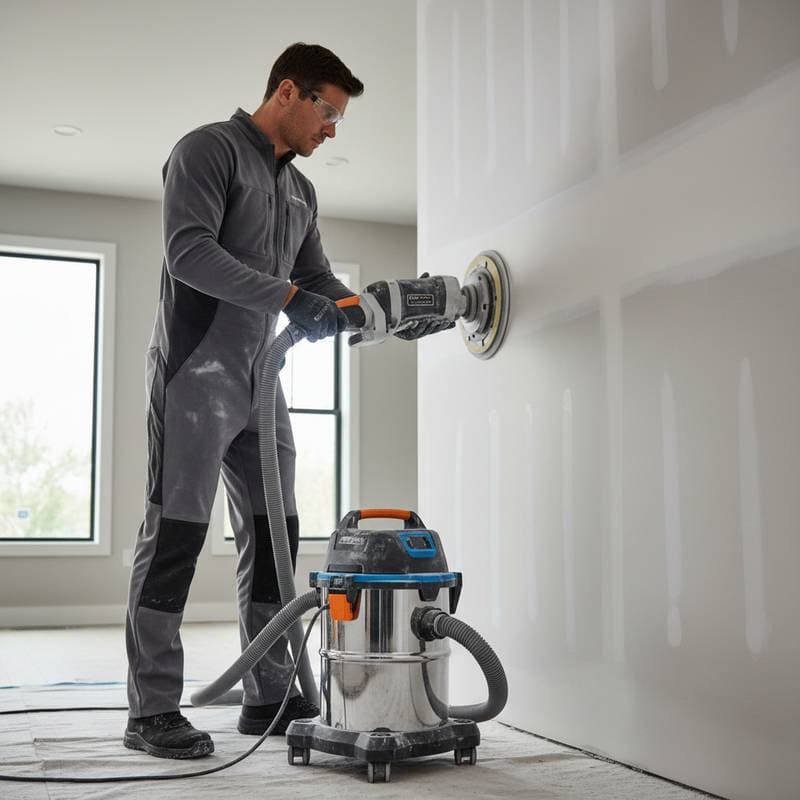
Conventional sanding relies on manual tools or electric sanders that efficiently remove material yet generate substantial airborne particles. Dust-free setups pair a precise sander with a powerful vacuum featuring advanced filtration. This combination captures virtually all dust at the source, maintaining clear air and a workable environment.
Professionals employing these systems handle seams, patches, and ceilings without producing debris clouds. Homeowners enjoy reduced post-work tidying, enhanced indoor air quality, and accelerated timelines, as teams devote less effort to protecting surfaces or clearing residue.
Project Cost Analysis
Typical Price Ranges
- Routine drywall repair with standard sanding: $400 to $700
- Room resurfacing employing dust-free methods: $800 to $1,400
- Comprehensive home project incorporating superior dust management and refined finishing: $1,500 to $3,000
Standard Inclusions
- Labor dedicated to preparation and sanding
- Deployment of efficient dust extraction apparatus
- Protective sheeting for stationary elements
- Post-sanding vacuuming and debris removal
- Evaluation of surfaces for painting suitability
Additional Expenses
- Repairing extensive damage or installing new drywall panels
- Multiple applications of joint compound for premium level-five finishes
- Enhanced filtration upgrades or HEPA enclosures
- Access to elevated or obstructed areas
Influences on Total Expenses
| Factor | Impact on Cost | Illustrations |
|---|---|---|
| Scope of work | Increases overall | Several rooms or expansive ceilings |
| Existing surface state | Moderate rise | Fractured joints or irregular seams |
| Accessibility challenges | Elevates labor | Staircases or high-vaulted spaces |
| Desired finish quality | Incremental addition | Flawless, ready-for-paint surfaces |
| Local wage variations | Fluctuates | City versus countryside differentials |
Adoption of Dust-Free Systems by Professionals
Modern sanding equipment incorporates adjustable suction, ergonomic builds, and dust elimination rates approaching one hundred percent. Models at eight hundred dollars feature customizable airflow, static-resistant tubing, and sanding attachments that maneuver effortlessly over walls. Users note superior outcomes, diminished rework, and elevated client satisfaction.
This evolution reshapes renovations for residents, permitting occupancy during work without exhaustive coverings. Painting proceeds promptly after sanding, bypassing delays for particle settlement. The upfront cost of such gear yields returns via expedited processes, lowered maintenance expenses, and enhanced quality.
Project Duration Insights
Sanding a single room traditionally spans one to two days, encompassing setup and restoration. Dust-free approaches compress this to under a day for equivalent areas. The primary gain lies in abbreviated cleanup, amplifying benefits for extensive undertakings where containment averts spread across spaces and sustains workflow for other specialists.
For those overseeing remodels, outcomes include minimal interruption and condensed schedules. Subsequent trades, such as painters or woodworkers, commence earlier, potentially trimming total duration by days.
DIY Versus Hiring Experts for Sanding
Homeowners often contemplate self-sanding to economize, yet this demands proficiency and equipment for optimal results. Minor fixes suit basic tools, but comprehensive room work necessitates expertise and endurance.
Self-Directed Method
- Required expertise: Moderate for small zones, high for broader coverage
- Duration commitment: Two to three times that of experts
- Essential gear: Extension sander, vacuum, protective mask, protective sheets
- Health and safety issues: Particle inhalation, ocular discomfort, bodily fatigue
- Achieved standard: Prone to inconsistencies absent adequate illumination and method
Expert Method
- Required expertise: Certified or seasoned finisher
- Duration commitment: Streamlined, typically one day
- Essential gear: Vacuum-integrated sander, HEPA filters, inspection lighting
- Health and safety issues: Controlled via industrial containment
- Achieved standard: Even, paint-compatible surface with negligible residue
Opting for a specialist with dust-free capabilities justifies the premium for impeccable results and sanitary conditions. The equipment expense amortizes over numerous jobs, rendering services cost-effective relative to advantages.
Selecting a Suitable Contractor
When engaging services for finishing or preparation, inquire about dust mitigation strategies. Commitment to vacuum-assisted tools signals dedication to excellence and convenience. Follow these steps:
- Seek equipment verification: Confirm usage of vacuum-linked sanders with HEPA capabilities.
- Examine client testimonials: Inquire on sanitation and completion quality.
- Assess detailed proposals: Verify inclusion of protection and restoration.
- Confirm credentials: Ensure coverage and qualifications to mitigate risks and subpar execution.
- Outline finish specifications: Specify needs from standard to advanced level-five.
Reputable providers detail dust management effects on efficiency and budgeting.
Home Preparation Strategies
Dust-free tools minimize issues, yet proactive steps preserve order. Relocate furnishings from walls, shield valuables, and clear equipment routes. Facilitate power access for vacuums. Alert specialists to vulnerable devices or air systems requiring safeguards.
Anticipate temporary operational sounds from sanding and extraction. Rewards encompass pristine environs and swift restoration to routine.
Realize Cleaner Renovations
Dust-free sanding elevates beyond indulgence to essential practice for those prioritizing hygiene and productivity. Eight hundred dollar systems tangibly enhance air purity and surface refinement. Paired with adept execution and foresight, outcomes demonstrate clear superiority. Engaging equipped professionals converts chaotic endeavors into streamlined, superior processes.