How Sanding Robot Rentals Reduce Surface Prep Time by 60%
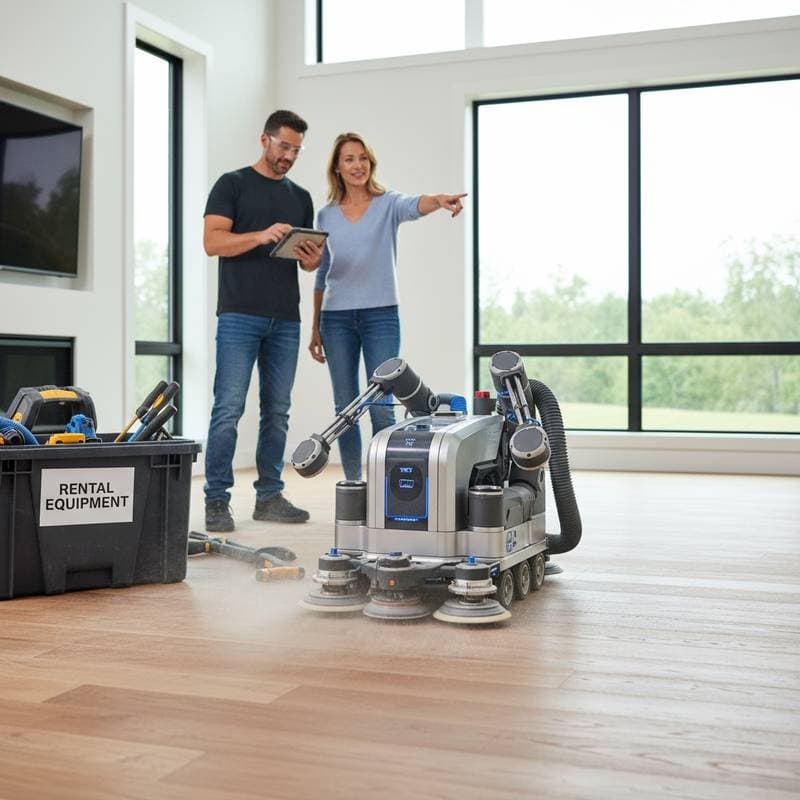
Surface preparation remains a labor-intensive phase in painting and refinishing projects. Homeowners and contractors recognize the importance of thorough sanding for achieving smooth, long-lasting finishes. Advances in automated sanding technology now enable users to finish these tasks up to 60 percent faster than manual approaches. This guide details the costs, advantages, and key considerations for renting sanding robots in residential and commercial settings.
Rental Cost Overview
Daily rental fees for sanding robots range from $250 to $600, varying by model, size, and automation features. Weekly options typically cost $1,000 to $2,500, and monthly rates average $3,500 to $6,000. These fees generally cover essential accessories and basic sanding pads, though specialized tools or dust extraction units may incur additional charges.
Manual sanding often demands two to three times the effort and involves multiple team members. Factoring in labor, automated options yield significant savings, particularly on expansive or recurring jobs.
Cost Ranges by Project Scale
- Small projects (up to 300 square feet): $250 to $400 per day
- Medium projects (300 to 800 square feet): $400 to $1,200 over multiple days
- Large projects (over 800 square feet): $1,500 to $3,000 for longer rentals
Per-Square-Foot Cost Breakdown
Automated sanding averages $0.50 to $2.00 per square foot, encompassing:
- Equipment rental: $0.30 to $1.00 per square foot
- Consumable materials: $0.10 to $0.40 per square foot
- Labor for oversight or setup: $0.10 to $0.60 per square foot
These figures apply to typical indoor scenarios like hardwood floors, drywall, or wood paneling. Intricate surfaces, curved elements, or outdoor work can elevate expenses.
Key Factors Influencing Rental Costs
Multiple elements shape the pricing and effectiveness of sanding robot rentals. Grasping these allows users to choose equipment that aligns with specific project demands.
Type of Equipment and Automation Degree
Units with advanced features like lidar sensors, pressure regulation, and motion tracking command higher fees than semi-automated versions. Premium models scan surfaces, adapt sanding intensity, and ensure uniform results independently. For simpler tasks, intermediate options deliver adequate accuracy at reduced rates.
Surface Characteristics and State
Irregular or deteriorated surfaces extend preparation and necessitate extra passes. Areas with layered coatings, textured finishes, or thick paint accumulation require robust pads and prolonged use, increasing both rental duration and material expenses.
Power Needs and Dust Control
Certain robots demand specific power supplies or robust dust collection setups. Rentals without these may require separate add-ons. Dust systems add $50 to $150 daily but enhance air quality and streamline post-job cleanup.
Geographic Location and Supply
Rates differ by area due to demand, stock levels, and transport logistics. Busy urban centers with frequent renovations often feature competitive prices, whereas remote locations may include surcharges for delivery. Transport fees span $50 to $200 based on mileage.
Operator Expertise and Initial Setup
These machines prioritize ease of use, yet calibration and mapping take time. Providers sometimes offer setup assistance for $100 to $300, ensuring accurate performance and avoiding operational issues.
Cost Analysis by Component
| Category | Basic Range | Standard Range | Premium Range | Key Differences |
|---|---|---|---|---|
| Equipment Rental | $250 - $400/day | $400 - $700/day | $700 - $1,000/day | Speed, automation, and accuracy levels |
| Consumables | $30 - $60/day | $60 - $120/day | $120 - $200/day | Pad strength and material adaptability |
| Dust Extraction | $50 - $100/day | $100 - $150/day | $150 - $200/day | Vacuum strength and filtration quality |
| Setup and Training | $0 - $100 | $100 - $250 | $250 - $400 | Calibration, navigation, and user support |
Assessing Value and Returns
Sanding robots provide tangible benefits in efficiency and output quality. Professionals gain from shorter labor periods, accelerating job completion and trimming wage expenses. Homeowners experience less interruption and quicker progression to final coats.
Potential for Ongoing Savings
Despite elevated initial costs, time efficiencies lower overall budgets. Consider a 1,000-square-foot floor: manual sanding might occupy two workers for two days, whereas a robot handles it in one, saving $400 to $800 in labor.
Enhanced Finish Uniformity
Robots apply steady pressure and paths, yielding even surfaces with minimal over-sanding risks. This reliability cuts rework and conserves supplies.
Investment Evaluation
Frequent users like contractors or managers find repeated rentals or outright purchases economical long-term. One-off projects suit short rentals, delivering expert outcomes without upkeep burdens.
Strategies to Minimize Expenses
- Combine rentals: Pair sanders with extractors for bundled discounts.
- Time projects wisely: Book during low-demand seasons for favorable pricing.
- Prepare independently: Clear spaces, shift items, and mask areas to shorten rental duration.
- Select appropriate abrasives: Align grit levels with surfaces to extend pad life and optimize results.
- Request guidance: Utilize free or inexpensive training to sidestep errors.
Building a Project Budget
Effective budgeting supports seamless execution and avoids surprises. Calculate total area, then apply the per-square-foot average. Include a 10 to 15 percent reserve for materials and unexpected challenges like irregular terrain.
Sample Budget for 600 Square Feet
- Equipment rental: $600
- Consumables: $100
- Setup and training: $150
- Contingency (15%): $130
Total estimate: $980
This outline shows mid-scale jobs remain accessible and effective with rentals.
Professional and DIY Applications
For Professionals
Teams leverage robots to alleviate worker strain and boost output. Operators can manage several units, halving prep timelines. In vast commercial venues, the reliability and pace warrant the outlay.
For DIY Enthusiasts
Individuals rent for floor refinishing, drywall smoothing, or deck restoration. Contemporary designs incorporate intuitive interfaces, directives, and safeguards suitable for novices. Challenges center on initial alignment, resolvable via brief instruction.
Efficiency and Outcome Comparison
Manual work on 300 square feet requires 10 to 12 hours; robots finish in 4 to 5. Automation eases physical demands and elevates precision without expert knowledge.
Levels of Equipment Performance
Entry-Level Options
Basic robots suit compact spaces or uniform surfaces. They offer reliable sanding but need repositioning and oversight. These prove economical for budget-conscious users seeking quality upgrades.
Mid-Tier Models
These incorporate irregularity detection and pressure adjustments. They merge capability, affordability, and simplicity for typical home or minor business tasks.
Advanced Systems
Top-tier units operate autonomously, scanning areas, dodging barriers, and ensuring comprehensive coverage. Higher costs yield swift execution and superior smoothness, perfect for extensive professional work.
Market and Timing Influences
Demand drives rate variations. Peak seasons like spring and summer increase bookings and fees amid renovation surges. Opting for off-season slots secures availability and discounts.
Local economics and competition affect pricing. Dense urban zones with multiple vendors provide economical daily rates; isolated regions often add logistics premiums.
Launching Your Sanding Project
Assess needs by noting surface details, dimensions, and finish goals. Reach out to nearby suppliers for rate comparisons, specs, and inclusions. Confirm agreements include support, upkeep, and pad provisions.
Site readiness proves crucial: vacate rooms, seal openings, and ventilate well. Position dust controls for optimal conditions. After setup, check progress at intervals to verify balance.
Integrating thoughtful preparation with robotic efficiency equips users for superior surface readiness at reduced time and expense.
Frequently Asked Questions
What Does a Home Sanding Robot Rental Typically Cost?
Daily rates range from $250 to $600, based on model and features. Weekly fees average $1,000 to $2,500. Add-ons like extractors or custom pads increase totals.
What Factors Drive Sanding Robot Rental Prices?
Influences include equipment type, surface complexity, power and dust needs, location, and setup demands. Automation sophistication and regional availability also play roles.
How Do Sanding Robots Compare to Manual Methods in Time Savings?
Robots reduce prep by up to 60 percent, often completing tasks in half the duration. This stems from consistent operation and minimal supervision.
Are Sanding Robots Suitable for DIY Projects?
Yes, with user-friendly controls and safety features. Basic training handles setup, making them accessible for homeowners tackling floors or walls.
What Savings Can Professionals Expect?
Labor reductions cut costs by $400 to $800 per large job. Faster turnarounds enable more projects, boosting revenue.
When Should You Rent for Optimal Pricing?
Off-peak periods, such as winter, offer lower rates and better availability. Avoid high-demand seasons to minimize fees and wait times.