Breaking Down Popcorn Ceiling Removal Costs in 2026
Popcorn ceiling removal ranks among the most frequent updates for owners of older homes. These textured surfaces once helped with sound control and concealed flaws. Modern preferences favor smooth surfaces that reflect light evenly and support higher property values.
Accurate cost knowledge supports effective planning. Expenses hinge on square footage, material condition, access challenges, and asbestos risks.
Typical Project Costs
Most homeowners pay between 1,200 and 3,000 dollars for an average residence. The per square foot rate usually falls between 1.50 and 3 dollars. Small or straightforward jobs land at the lower end while complex conditions push totals higher.
Costs by Room Size
- Small room up to 150 square feet: 300 to 600 dollars
- Medium room 150 to 300 square feet: 500 to 1,000 dollars
- Large room 300 to 500 square feet: 900 to 1,500 dollars
- Entire home 1,500 to 2,000 square feet: 2,500 to 4,500 dollars
Per Square Foot Breakdown
Materials account for 0.15 to 0.25 dollars. Labor represents 1 to 2.50 dollars. Preparation and cleanup add 0.25 to 0.75 dollars. Asbestos testing or repairs contribute an extra 0.50 to 1 dollar.
Key Influences on Final Price
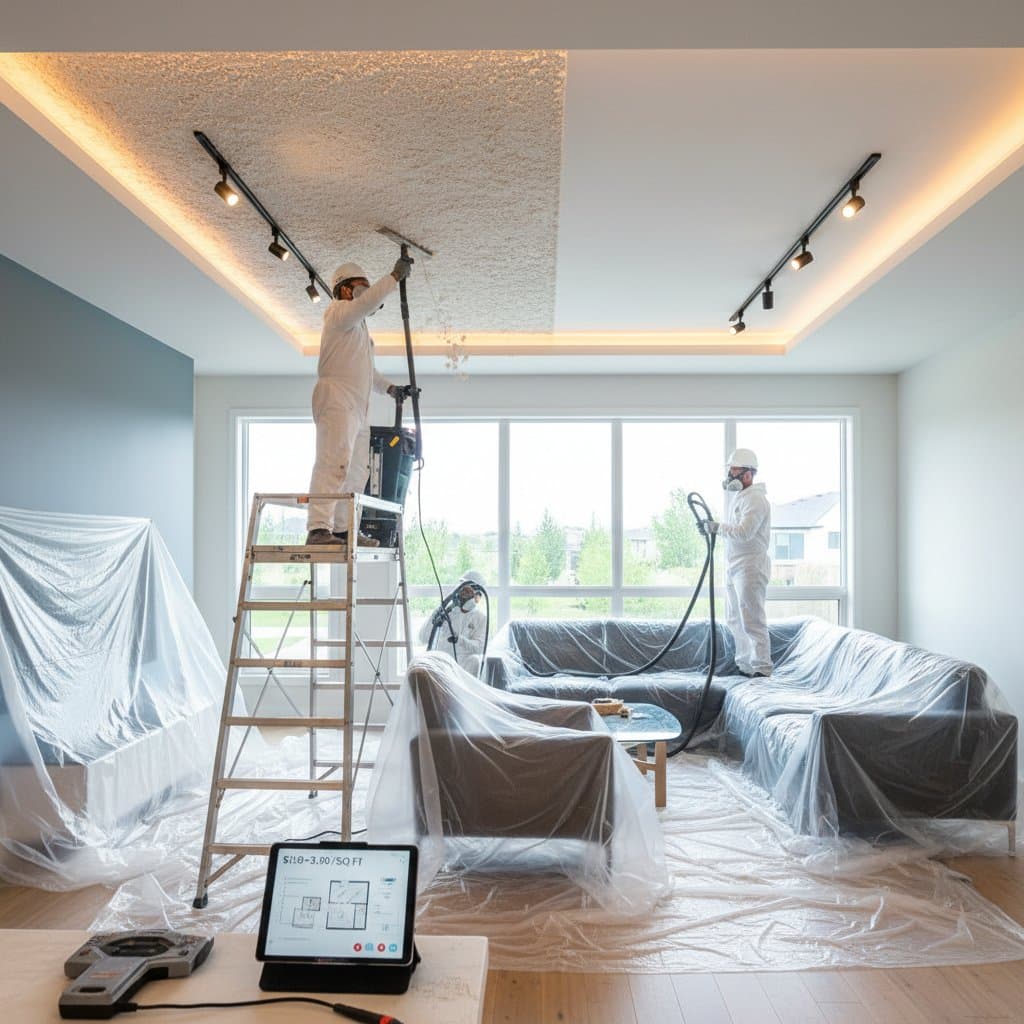
Several variables determine the total investment. Larger ceilings and higher clearances require more time and equipment. Homes built before current standards often need asbestos testing that adds 3 to 6 dollars per square foot.
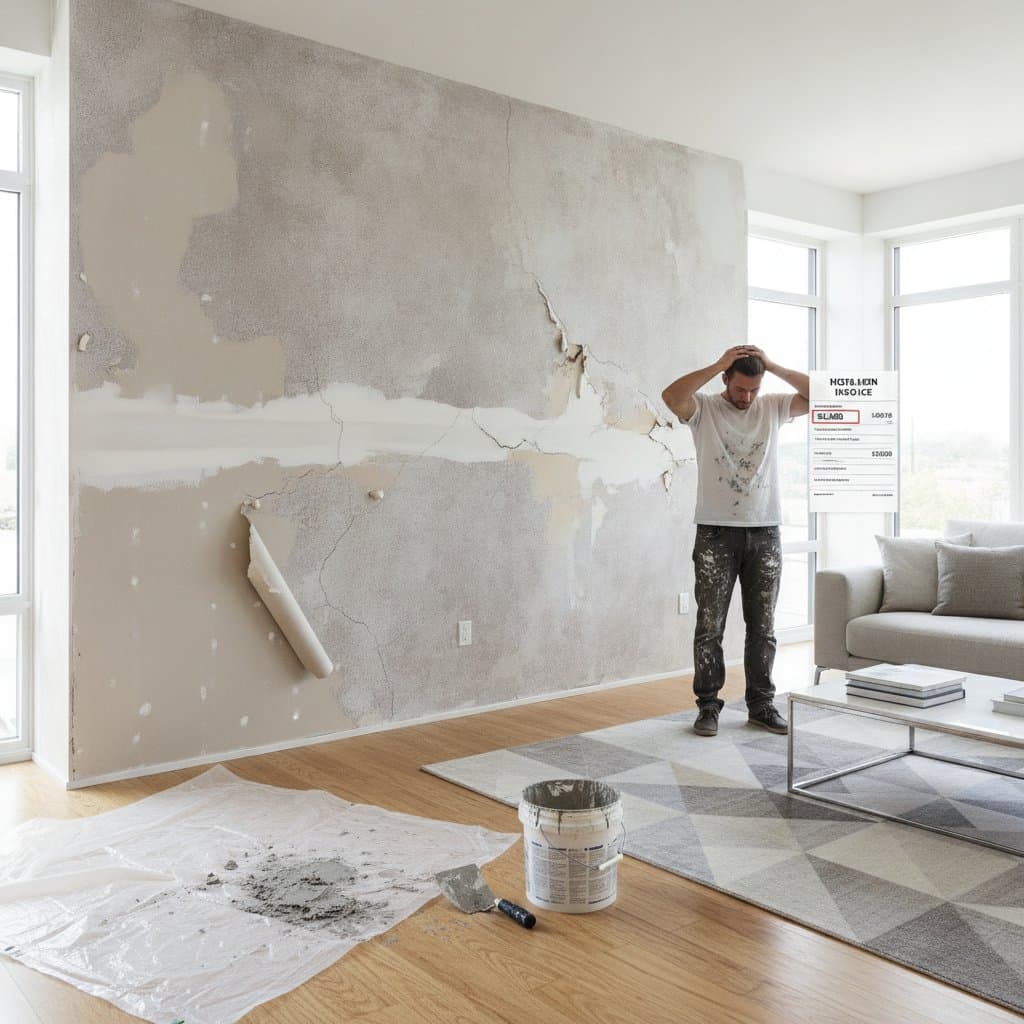
Multiple paint layers increase scraping difficulty and may require drywall replacement. Complex room layouts demand extra protection and setup. Post removal finishing such as skim coating adds 1 to 2.50 dollars per square foot. Local labor rates also vary by market.
Finish Options and Associated Ranges
Basic drywall repair ranges from 1 to 2.50 dollars per square foot. A smooth ceiling finish costs 2 to 6 dollars and involves skim coating plus sanding. Reapplication of a modern knockdown or orange peel texture falls between 1.50 and 5 dollars.
Room Specific Estimates
A 10 by 15 foot space typically totals 400 to 600 dollars. Removal, preparation, finishing, and cleanup each contribute portions of that range. A 15 by 20 foot room runs 700 to 1,100 dollars with skim coating forming a larger share.
A 20 by 25 foot room reaches 1,200 to 1,800 dollars. These figures assume no asbestos or water damage. Contingency planning of 10 to 15 percent covers unexpected drywall issues.
Primary Cost Drivers
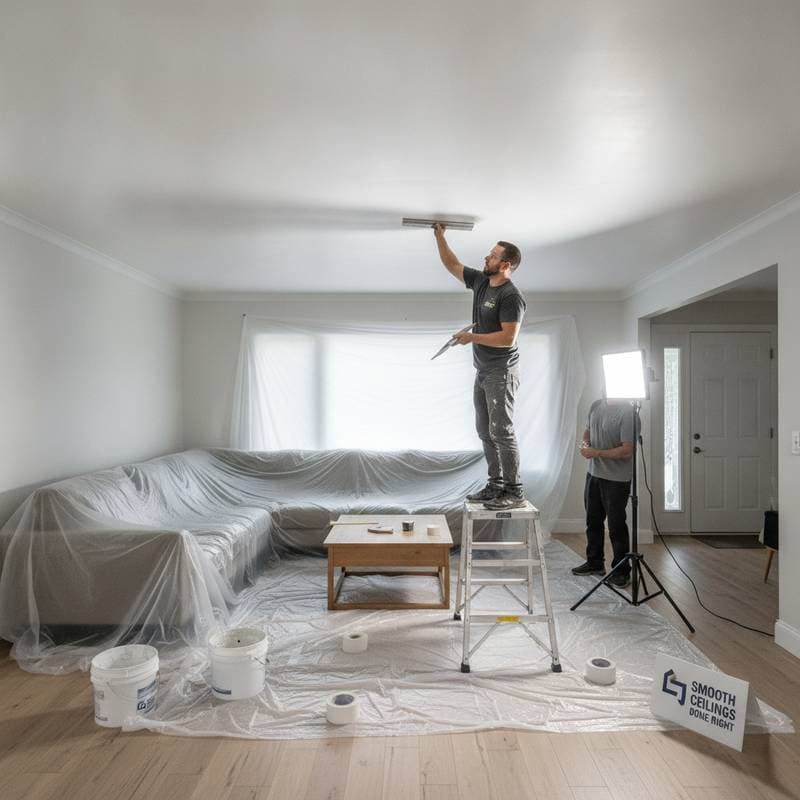
Safety measures and containment remain essential even without asbestos. Labor intensity dominates the budget because workers must soften, scrape, and refinish surfaces without damaging the substrate. Finish selection also matters. A light texture hides minor imperfections at lower cost than a perfectly smooth surface.
Return on Investment
Smooth ceilings improve perceived cleanliness and brightness. Updated homes sell faster and often command stronger offers. The change also simplifies future repainting and maintenance.
Practical Ways to Reduce Expense
Coordinate ceiling work with painting or fixture updates to limit setup time. Move furniture and remove fixtures yourself before crews arrive. Select a light texture finish rather than full smoothing. Schedule during slower contractor periods for better availability. Obtain three detailed quotes that list every service included.
Budget Planning Steps
Request written estimates that separate testing, removal, finishing, and disposal. Verify contractor licensing and insurance. Confirm the project timeline and cleanup standards before signing an agreement. These steps produce reliable numbers and protect against surprises.