The Real Reasons for $8 Per Square Foot Venetian Plaster
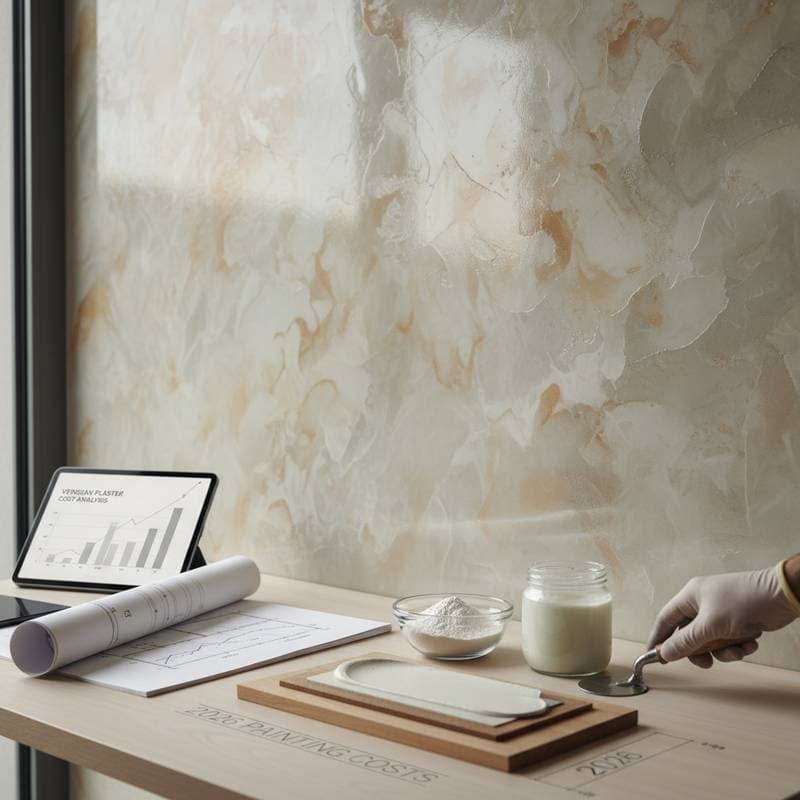
Venetian plaster ranks among the most desirable [decorative wall finishes](https://www.oconnorpaintingllc.com/skip-trowel-vs-knockdown-impact-on-home-resale-value) in contemporary interior design. The material produces a smooth, marble-like surface with subtle movement and tonal depth that imparts a timeless luxury beyond the capabilities of ordinary paint. Homeowners often hesitate upon learning that genuine Venetian plaster installation averages $8 per square foot. A clear understanding of the elements contributing to this price reveals the inherent value of the finish and supports effective project planning.
Average Cost Ranges by Project Scope
Professional Venetian plaster applications commonly average $8 per square foot, though expenses fluctuate according to project scale.
- Small accent wall: $1,200 to $2,000
- Medium room (150 to 200 square feet): $3,000 to $5,000
- Large space or multiple rooms: $6,000 to $12,000
These estimates encompass materials, labor, surface preparation, and finishing coats. Projects demanding enhanced sheen or additional layers may incur higher totals.
Cost Breakdown per Square Foot
Installation of Venetian plaster generally falls between $6 and $12 per square foot, with the following components:
- Materials: $2 to $3 per square foot
- Labor: $4 to $7 per square foot
- Preparation and repairs: $1 to $2 per square foot
- Finishing and polishing: $1 to $3 per square foot
Every element shapes the total expense. The process extends beyond simple painting to involve skilled, time-intensive layering that demands expertise.
Factors Affecting Venetian Plaster Costs
Material Quality
Authentic Venetian plaster incorporates lime-based formulas blended with marble dust, eschewing acrylic alternatives. These natural components command higher prices while providing exceptional depth, breathability, and endurance. Synthetic options lower expenses but frequently compromise on patina development and long-term performance.
Surface Preparation
Walls require an impeccably smooth base prior to plaster application, as any flaws become visible through the translucent layers. Preparation entails patching cracks, sanding irregularities, priming surfaces, and sealing specific substrates. This phase can contribute $1 to $2 per square foot yet guarantees a seamless outcome.
Application Technique and Layers
The technique employs several thin layers, each applied and troweled manually. A basic two-layer application incurs less cost than a three- or four-layer variant with heightened gloss. Additional layers yield greater richness and reflectivity, proportionally extending labor duration and overall investment.
Finish Level and Sheen
Matte variants apply more swiftly and align with the lower price spectrum. Polished Venetian plaster necessitates extra burnishing steps and potential wax application, potentially adding $3 per square foot. The enhanced light play and surface depth justify the premium for upscale settings.
Regional Labor Rates and Market Conditions
Rates for skilled applicators differ by location. High-demand urban areas charge more for luxury services. Rural or less competitive markets provide reduced pricing, though access to experienced professionals may prove limited. Seasonal factors also play a role, with contractors facing peak workloads in favorable weather periods.
Detailed Cost Analysis by Finish Type
| Finish Type | Basic Range | Standard Range | Premium Range | Key Differences |
|---|---|---|---|---|
| Matte Lime Plaster | $5 to $7 | $7 to $9 | $9 to $11 | Smooth texture, natural appearance, minimal sheen |
| Polished Venetian Plaster | $6 to $8 | $8 to $10 | $10 to $12 | Glossy surface, marble-like depth |
| Metallic Venetian Finish | $7 to $9 | $9 to $11 | $11 to $14 | Reflective pigments, decorative shimmer |
Premium options demand specialized materials alongside extended burnishing and sealing processes.
Value and Long-Term Benefits
The $8 per square foot figure may appear elevated relative to conventional paint. However, Venetian plaster offers enduring advantages, including mold resistance, vapor permeability, and longevity spanning decades with basic upkeep. Its dynamic surface enhances aesthetic appeal and bolsters property marketability. Refreshing the finish involves straightforward polishing or re-waxing, unlike the frequent reapplication required for paint.
Money-Saving Strategies
Homeowners achieve cost control while preserving quality through targeted methods:
- Apply plaster selectively as an accent feature, such as on a wall behind a bed or in an entry space, to maximize impact at reduced expense.
- Opt for standard matte or textured finishes over glossy or metallic ones when shine holds lesser priority.
- Perform preliminary tasks like cleaning and minor patching independently before contractor involvement.
- Time the project for off-season periods, when rates may prove more favorable.
- Commission sample panels for review to confirm preferences prior to full commitment.
These tactics reconcile opulence with fiscal prudence, upholding artisanal integrity.
Planning Your Budget
To establish a budget, calculate total wall surface area and multiply by the estimated per-square-foot rate. Allocate a 10 percent buffer for unforeseen repairs or refinements. Communicate project scope and deadlines precisely with the contractor, confirming inclusion of materials, labor, and protective sealing in the proposal.
Venetian plaster transcends ordinary wall coverings as a durable aesthetic enhancement merging classic elegance with robust functionality. For those pursuing a sophisticated, organic finish, grasping the pricing dynamics behind $8 per square foot facilitates assured planning and deeper appreciation of the craft.
Frequently Asked Questions
What is the typical cost of Venetian plaster?
The average cost ranges from $6 to $12 per square foot, with $8 representing a standard figure for professional installation including materials and labor.
How does Venetian plaster differ from regular paint?
Venetian plaster creates a textured, marble-esque surface through layered application, offering greater durability and breathability compared to paint's flat coverage.
Is Venetian plaster suitable for bathrooms?
Yes, its mold-resistant properties make it ideal for humid environments like bathrooms, provided proper sealing accompanies installation.
How long does Venetian plaster last?
With minimal maintenance, Venetian plaster endures 20 to 50 years, far outlasting traditional paint.
Can Venetian plaster be applied over existing paint?
Application over paint requires thorough preparation, including sanding and priming, to ensure adhesion and prevent peeling.
When is the best season to schedule Venetian plaster work?
Spring or fall provide optimal conditions with moderate temperatures and low humidity, minimizing drying issues and allowing efficient application.