Why Skipping Grit Sequence in Drywall Sanding Costs $500
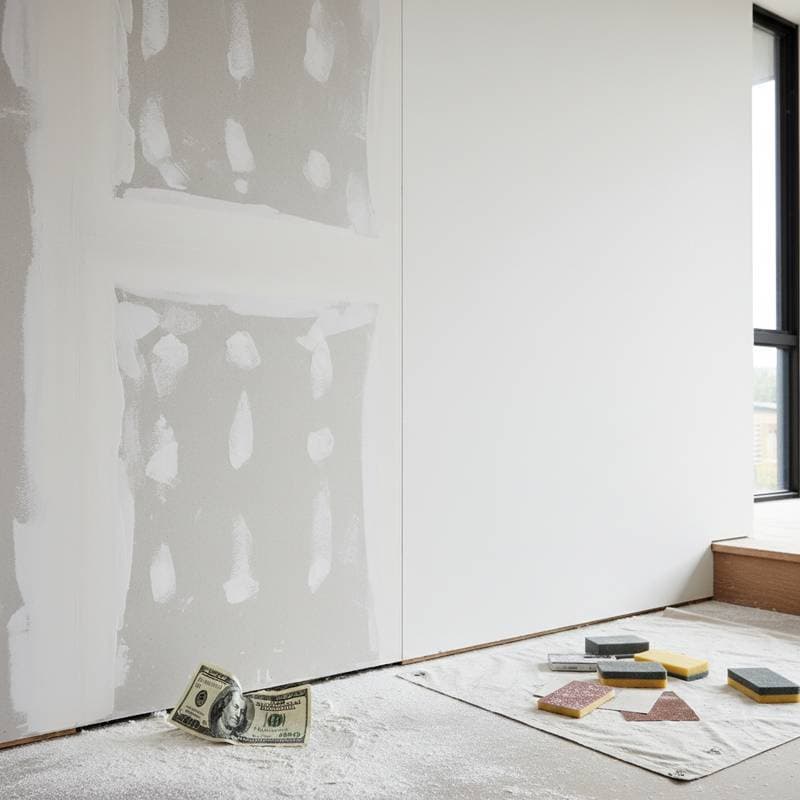
Drywall sanding represents a critical yet often overlooked stage in interior finishing projects. Homeowners frequently believe that applying a single sheet of sandpaper and sanding until the surface feels smooth suffices. However, bypassing the proper grit sequence during drywall sanding results in uneven textures, prominent seams, and extensive rework expenses that surpass $500. Grasping the mechanics of grit sequence and its importance enables individuals to sidestep these pitfalls and secure a seamless, paint-ready surface.
Understanding Grit Sequence in Drywall Sanding
Grit sequence denotes the systematic progression of sandpaper coarseness employed to progressively refine the drywall surface. This method commences with coarser grits designed to eliminate ridges from joint compound and advances to finer grits that address minute scratches and irregularities.
A standard progression involves initiating with 100-grit sandpaper for leveling, advancing to 150-grit for refinement, and concluding with 220-grit to prepare the surface for painting. Omitting intermediate steps in this progression retains sanding marks and irregular areas that emerge prominently after the application of paint or primer.
The Hidden Expenses of Omitting Grit Steps
Individuals often forgo multiple grit levels to conserve time or supplies. The reasoning appears straightforward: one vigorous sanding session should suffice instead of three separate passes. Regrettably, such shortcuts frequently yield adverse outcomes. Inconsistent sanding produces swirl patterns and coarse spots that cause paint to adhere unevenly, resulting in mottled appearances and evident flaws.
Rectifying these defects demands additional labor, fresh materials, and potential full repaints of the affected zone. Accounting for materials, professional labor, and project delays, the total remediation expense for a single room readily exceeds $500. Implementing the full grit sequence from the outset averts these avoidable outlays.
Breakdown of Typical Costs from Sanding Errors
| Cost Category | Average Range | Reason for Expense |
|---|---|---|
| Labor for Rework | $200 - $300 | Experts resand and retexture the surfaces |
| Material Replenishment | $50 - $100 | Extra joint compound, primer, and sandpaper |
| Paint and Accessories | $100 - $150 | Additional layers to mask inconsistencies |
| Project Delays | $50+ | Prolonged timelines and rescheduling fees |
This table illustrates how an initial oversight escalates into substantial financial burdens upon necessitating surface corrections.
Elements That Amplify Remediation Expenses
1. Joint Compound Composition
Denser joint compounds necessitate additional sanding phases. Neglecting grit progression on these materials generates profound scratches challenging to conceal. Softer varieties tend to clog coarse sandpaper, producing ridges that demand thorough resurfacing.
2. Illumination and Flaw Detection
Spaces featuring intense natural or focused lighting accentuate every blemish. Bypassing grit stages in such environments typically incurs expenses for post-paint adjustments once defects surface.
3. Selected Paint Sheen
High-gloss or semi-gloss formulations amplify light reflection, rendering sanding imperfections starkly apparent. Adhering to grit sequence proves essential prior to these coatings. Neglect in this area can double repainting expenditures.
4. Hourly Labor Fees
Skilled drywall specialists bill by the hour, with rates spanning $50 to $75. Addressing sanding discrepancies extends labor time, propelling a room's correction fees toward $500 when combining labor and supplies costs.
Long-Term Benefits of Adhering to Grit Sequence
Employing the appropriate grit sequence extends beyond rework prevention; it bolsters the longevity and visual quality of the completed wall. A meticulously sanded surface promotes uniform primer and paint adhesion, minimizing future issues like peeling or bubbling.
In terms of property value, impeccably smooth walls signal superior craftsmanship. Inspectors and prospective buyers detect irregular paint applications, potentially diminishing home appeal. Investing additional effort in thorough sanding yields financial savings and upholds residential aesthetics.
Recommended Grit Progression for Standard Drywall Tasks
| Step | Suggested Grit | Objective | Additional Guidance |
|---|---|---|---|
| 1 | 100 - 120 | Primary leveling | Eliminates ridges from joint compound and tape |
| 2 | 150 - 180 | Mid-level refinement | Smooths scratches and seam transitions |
| 3 | 220 | Ultimate preparation | Readies surface for primer and paint |
Each successive grit enhances the prior stage's work. Transitioning directly from 100-grit to 220-grit preserves coarse abrasions that finer paper fails to eradicate, leading to post-paint visible defects.
Practical Tips to Optimize Sanding and Cut Costs
- Select appropriate sanding equipment. Pole sanders or specialized drywall sanders deliver uniform pressure and coverage, minimizing gouges.
- Evaluate surfaces with illumination. Direct a work light across the wall to identify elevations and depressions prior to painting.
- Dust surfaces between stages. Clean thoroughly after each grit to avoid contaminating subsequent passes with abrasive particles from coarser paper.
- Apply primer ahead of paint. This seals the wall and exposes lingering flaws, facilitating fixes before the final application.
- Exercise deliberate pacing. Progressing methodically through grit levels guarantees a refined, expert-level outcome.
Allocating Funds for Drywall Completion
Budgeting for drywall tasks requires accounting for supplies and possible corrections. A well-executed sanding and finishing endeavor averages $1 to $1.50 per square foot. Sanding lapses triggering surface problems append $0.50 to $1 per square foot in fixes.
For a 500-square-foot area, this variance accumulates to $250 through $500 in unforeseen charges. Reserve 10 percent of the overall finishing allocation as a buffer for prep modifications to handle surprises effectively.
Weighing Professional Assistance Against Self-Performed Sanding
Self-directed sanding trims labor expenses, provided execution remains precise. Experts deploy advanced tools and methods to sustain steady grit advancement, yielding consistent outcomes. Novices commonly encounter over-sanding or texture disparities due to inexperience.
For self-managed efforts, adhere strictly to the outlined grit sequence, utilize premium sandpaper, and scrutinize progress under optimal lighting. In expansive or prominent areas, engaging professionals proves more cost-effective over time by averting expensive revisions.
Common Queries on Drywall Sanding
What Does Remedying Subpar Drywall Sanding Typically Cost?
Correcting a deficiently sanded wall spans $300 to $500 for a standard room. Factors include local labor rates, required materials, and repaint necessities.
Which Errors Most Frequently Trigger Additional Work?
Omitting grit steps, excessive seam sanding, and neglecting inter-stage cleaning rank highest. Such missteps generate irregular textures that manifest post-painting.
In What Ways Can Homeowners Reduce Drywall Sanding Expenditures?
Observe complete grit progression, employ suitable tools, and inspect under lighting before priming. Proactive measures in prevention outweigh the savings from hasty approaches.
Is Professional Sanding Advisable?
For minor repairs, careful DIY suffices. Extensive or visible zones gain from expert intervention, delivering impeccable results and curbing rework risks.
How Should One Budget for Drywall Finishing and Sanding?
Project $1 to $1.50 per square foot for thorough work. Incorporate a 10 percent reserve for prep variances or minor adjustments.
When Does Sanding Drywall Yield Optimal Results?
Perform sanding post full joint compound curing in stable humidity environments. Controlled settings mitigate uneven drying and resultant surface anomalies.
Adhering to grit sequence and sound sanding practices empowers homeowners to evade surplus costs, attain professional-grade finishes, and maintain drywall initiatives on budget.