Why Pros Charge 30% More for Ceiling Painting
Ceiling painting often surprises homeowners with higher estimates compared to wall painting. Professional painters typically charge about 30 percent more for ceilings. The reasons extend beyond simple labor differences. Painting a ceiling demands special preparation, unique materials, and more demanding working conditions that influence both time and cost. Homeowners who understand these factors can plan more effectively and avoid unexpected budget increases.
Ceiling Painting Cost Overview
The average cost of professional ceiling painting ranges from $1.25 to $2.75 per square foot, depending on ceiling height, texture, and condition. Most homeowners pay around $350 to $600 for a standard 12-by-12-foot room. This amount exceeds wall painting costs, which usually fall between $0.90 and $2.00 per square foot.
Prices scale with room size as follows:
- Small rooms (up to 150 sq. ft.): $200 - $400
- Medium rooms (150 to 300 sq. ft.): $350 - $600
- Large rooms (300 to 500 sq. ft.): $600 - $1,000
These ranges account for professional labor, paint, preparation, and cleanup. Specialty ceilings, such as vaulted or textured designs, can elevate costs further.
Cost Breakdown per Square Foot
Professional ceiling painting incorporates several components per square foot:
- Materials: $0.30 - $0.75
- Labor: $0.80 - $1.50
- Preparation and setup: $0.10 - $0.30
- Additional factors: $0.05 - $0.20
The extra 30 percent premium arises from labor intensity and the need for specialized tools in overhead work.
Factors Influencing Ceiling Painting Costs
Several elements drive up the cost of ceiling painting. Each one impacts the duration of the job and the materials required.
1. Ceiling Height and Accessibility
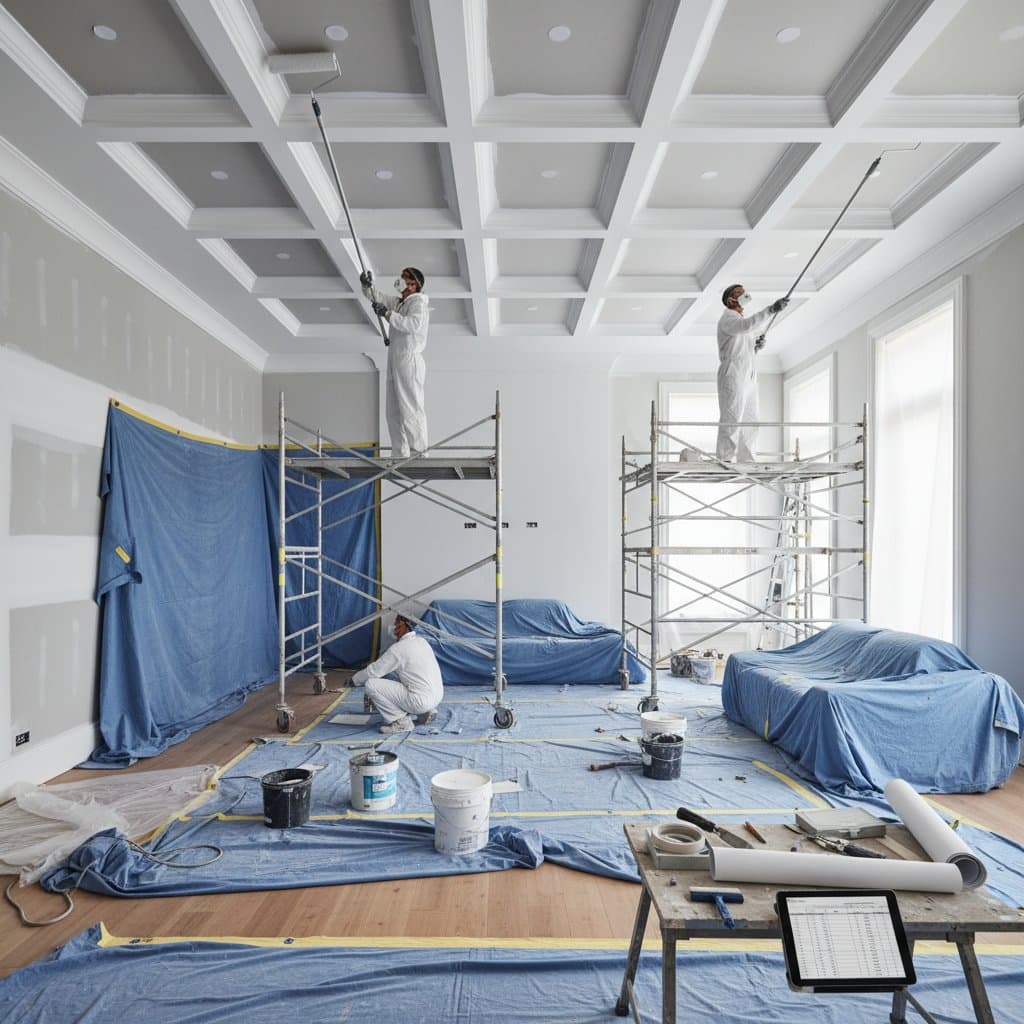
Working overhead on ladders or scaffolding increases fatigue and slows progress. Ceilings taller than 9 feet introduce added complexity. They demand specialized equipment for safe access, which extends labor time and raises expenses. For instance, painters might use adjustable scaffolding for ceilings over 10 feet, adding setup time.
2. Surface Texture and Condition
Smooth drywall ceilings allow for quicker and easier painting. Textured surfaces, like popcorn or knockdown, demand thicker paint layers and precise application to prevent uneven coverage. Homeowners facing textured ceilings may need to budget for removal or repair, which can increase costs by $200 to $500 per room.
3. Paint Type and Quality
Ceiling paint differs from wall paint in formulation. It resists drips, ensures even coverage on overhead surfaces, and frequently includes stain-blocking features. Opt for paints with anti-drip additives to minimize runs; premium options cost 20 to 30 percent more but reduce the need for multiple coats.
4. Preparation and Masking Time
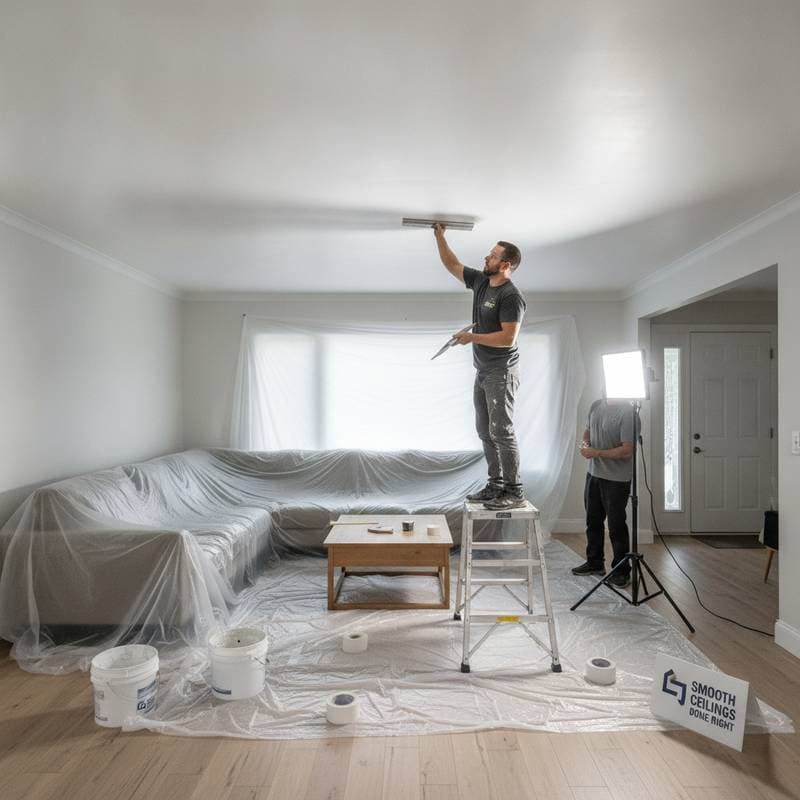
Before applying paint, professionals cover furniture, tape edges along walls, and shield flooring from potential drips. Gravity directs paint downward, so ceilings require extensive protective measures compared to walls. This thorough setup can add 15 to 30 minutes per room to the labor estimate.
5. Lighting and Visibility Challenges
Ceilings interact with light in unique ways, complicating the detection of missed spots. Painters often employ portable LED lights or apply additional coats for uniform results. Such measures extend labor by up to 20 percent and may increase paint usage.
Detailed Cost Analysis by Ceiling Type
| Ceiling Type | Basic Range | Standard Range | Premium Range | Key Differences |
|---|---|---|---|---|
| Flat drywall | $1.00 - $1.50 | $1.50 - $2.25 | $2.25 - $3.00 | Easiest to paint; requires minimal prep |
| Textured (popcorn, knockdown) | $1.75 - $2.50 | $2.50 - $3.25 | $3.25 - $4.00 | Absorbs more paint; demands slower application |
| Vaulted or cathedral | $2.00 - $3.00 | $3.00 - $4.25 | $4.25 - $5.50 | Needs scaffolding and enhanced safety measures |
| Stained or water-damaged | $1.75 - $2.50 | $2.50 - $3.00 | $3.00 - $4.00 | Often requires stain-blocking primer or surface repairs |
Why the 30% Increase Exists
The 30 percent premium for ceiling painting stems from heightened labor demands, a slower work pace, and elevated safety risks. Painters endure physical strain from prolonged overhead positions. They also manage increased cleanup and adhere to strict safety protocols. Specialized paints and tools prevent drips and enhance finish quality. When combined, these elements justify the higher rate relative to wall painting.
Hidden Costs Homeowners Overlook
Certain expenses subtly inflate the final bill yet escape initial budget considerations:
- Primer layers for stained or uneven ceilings
- Fixes for nail pops or drywall seams
- Removal of existing ceiling texture
- Relocation of furniture and initial room setup
- Post-painting cleanup and restoration
These items can boost the total by 10 to 20 percent, based on project specifics. Review your estimate line by line to identify them early.
Value and ROI Considerations
Ceiling painting carries a higher price tag, yet it yields significant visual and practical advantages. Fresh ceilings brighten spaces and create an illusion of greater volume. They also seal surfaces against dust accumulation and boost light reflection. For those selling a home, updated ceilings improve curb appeal and can elevate market value by 1 to 2 percent.
Professional application prolongs paint durability. Expert methods avoid peeling or streaking issues that lead to costly repairs. In the long term, this investment curbs ongoing maintenance expenses.
Money-Saving Strategies
Homeowners can control ceiling painting costs through targeted actions:
- Bundle ceiling and wall projects to share setup and cleanup efforts.
- Clear the room and dust surfaces in advance to cut painter labor.
- Select mid-grade paints that offer drip resistance and solid coverage at a moderate price.
- Book during off-peak periods, such as winter months, for discounted rates.
- Obtain at least three detailed quotes to compare services and pricing transparently.
Planning Your Budget
To estimate a ceiling painting budget accurately, factor in direct and indirect expenses. Allocate roughly 70 percent to labor, 20 percent to materials, and 10 percent to preparation and cleanup. Multi-room undertakings may attract bulk discounts, whereas isolated jobs could incur minimum fees. Verify that quotes cover primer, drop cloths, and final tidying.
Professionals deliver safe and efficient results. Although DIY approaches appear economical, the challenges of overhead application, drip management, and tool requirements make expert hiring preferable for optimal outcomes.
Frequently Asked Questions
1. What is the average cost for ceiling painting in 2026?
Most homeowners pay between $1.25 and $2.75 per square foot, with a typical room costing $350 to $600. Variations depend on ceiling height, texture, and paint selection.
2. What factors have the biggest impact on ceiling painting costs?
Key drivers include ceiling height, surface texture, paint quality, and preparation needs. Elevated or vaulted designs necessitate scaffolding and safety gear, while textures require more paint and extended application time.
3. How can I save money on ceiling painting without sacrificing quality?
Pair ceiling work with walls to minimize overhead costs, prepare the area beforehand, and opt for reliable mid-tier paints. Timing projects for slower seasons often secures favorable pricing.
4. Should I hire professionals or attempt this as a DIY project?
DIY suits simple jobs but proves taxing due to overhead demands. Professionals wield specialized rollers, poles, and gear for superior, drip-free finishes. The 30 percent premium typically ensures efficiency and quality.
5. How do I budget for unexpected costs in ceiling painting?
Build in a 10 to 15 percent buffer for potential repairs, primers, or refinements. Address these with your contractor upfront to prevent mid-project adjustments.
6. When is the best time to start ceiling painting for the lowest costs?
Spring's early months or fall's later weeks see reduced demand, enabling flexible bookings and competitive quotes. Steer clear of summer peaks when schedules tighten and prices climb.