Why Most DIY Venetian Plaster Projects Cost $800 More Than Expected
Venetian plaster delivers an elegant, sophisticated finish that adds depth and subtle movement to walls, turning standard surfaces into artistic elements. Homeowners often view it as an accessible DIY project due to its availability in stores and abundance of online guides. However, the process demands precise skills, and errors lead to frustration, subpar results, and unexpected expenses exceeding $800. Recognizing these challenges empowers better project planning and informed choices about professional assistance.
The Appeal of Venetian Plaster for DIY Projects
At first, Venetian plaster appears straightforward: mix the material, spread it with a trowel, and polish for shine. Retail kits and video tutorials reinforce this perception, promising transformative results with minimal effort. In practice, achieving the signature translucent glow requires mastery of layering, burnishing, and curing times. Inconsistent application produces flat, uneven surfaces that diminish the material's potential and necessitate costly corrections.
Breaking Down Project Expenses
Typical Cost Estimates
- DIY materials kit: $200 to $400, covering basic plaster, tools, and sealers
- Professional service rates: $8 to $15 per square foot for labor and materials
- Complete room by professionals: $1,600 to $3,500 for a standard 200-square-foot area
Core Components of Expenses
- Materials: Lime-based plaster, custom pigments, adhesion primer, and protective sealer
- Labor steps: Thorough wall preparation, multiple trowel applications, and final polishing
- Completion work: Surface buffing, debris removal, and quality checks
Additional Expenses to Consider
- Repairs to damaged or irregular walls prior to plastering
- Upgraded options like marble-infused plaster or metallic tints
- Extra layers needed for enhanced color depth or texture
Influences on Total Project Costs
| Factor | Impact Level | Specific Examples |
|---|---|---|
| Wall surface state | High | Cracks or bulges demand extensive patching |
| Plaster authenticity | Medium | Genuine lime-based versions exceed synthetics in price |
| Design intricacy | High | Layered effects or high-gloss polishing extend labor |
| Applicator skill | High | Experienced specialists command premium rates for superior outcomes |
Common Pitfalls in DIY Venetian Plaster Applications
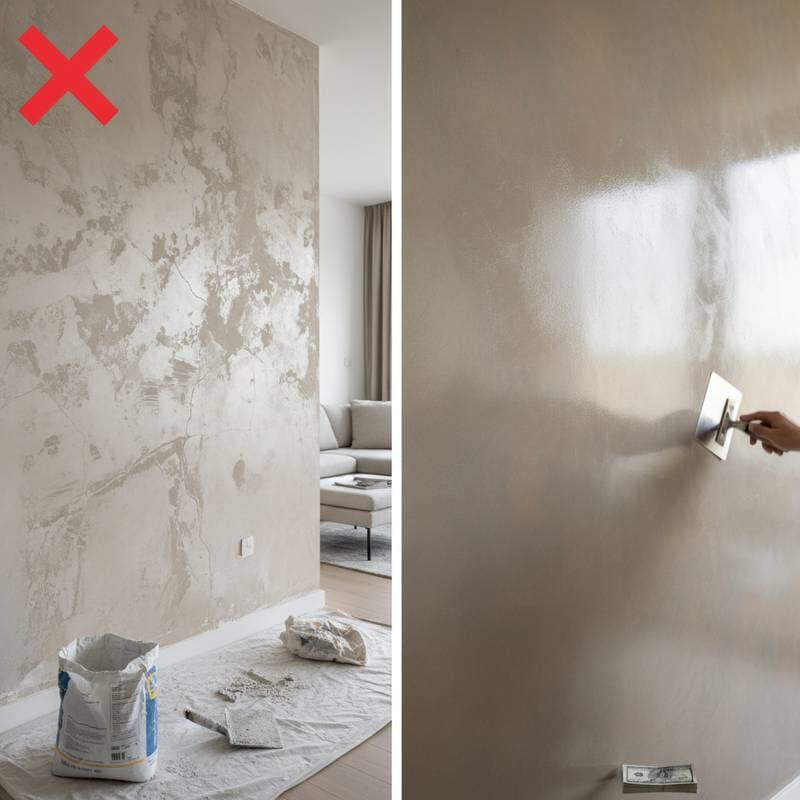
DIYers frequently overlook the advanced craftsmanship required, treating Venetian plaster like standard wall texture. Layers demand thin, uniform spreading with exact drying intervals between applications. Variations in trowel pressure or angle disrupt light reflection, yielding patchy or matte areas that fail to capture the material's inherent beauty.
Surface readiness proves equally critical. Unlike forgiving paints, Venetian plaster amplifies underlying flaws such as drywall seams or dust residue. Experts dedicate hours to cleaning, filling, and sanding for a seamless base; shortcuts result in irreparable defects, forcing full removal and reapplication at added expense.
Waste accumulates through imprecise mixing and over-application. Formulas require exact ratios for consistent hue across batches, yet beginners often prepare excess that hardens unused or mismatched shades that clash. Combined with supplemental purchases for fixes, these issues tally around $800 in avoidable outlays for many projects.
Steps Professionals Take for Superior Results
Experienced applicators employ a methodical sequence to produce enduring, radiant finishes.
- Prepare the surface: Scrub walls to remove contaminants, repair imperfections, and sand for smoothness.
- Apply primer: Use a specialized bonding agent to promote strong adhesion without altering texture.
- Lay the base layer: Spread a thin, even coat to establish foundational coverage.
- Add successive layers: Introduce additional coats during partial set times to develop dimensional depth.
- Perform burnishing: Rub dry surfaces with steel trowels to enhance natural sheen and marble-like patina.
- Apply sealer: Coat with a wax or resin top layer to protect against wear, humidity, and discoloration.
Timing governs every stage; deviations weaken adhesion or dull the luster, underscoring the value of trained execution.
Comparing DIY and Professional Approaches
| Aspect | DIY Execution | Professional Execution |
|---|---|---|
| Required expertise | Advanced, self-taught skills | Handled by certified specialists |
| Time commitment | Multiple weekends with delays | Efficient completion in 2-3 days |
| Material usage | High waste from errors | Optimized mixing minimizes excess |
| Result durability | Variable, prone to fading | Consistent, long-lasting performance |
| Overall value | Inflated by fixes and redo | Initial investment yields decades of beauty |
Initial DIY savings evaporate when accounting for tools, disposables, and remediation efforts. Professionals streamline the workflow, delivering finishes that resist cracking and maintain vibrancy over years.
Strategies for Your Venetian Plaster Initiative
Begin by clarifying project scope: envision the desired effect, measure the area, and evaluate wall conditions. For prominent rooms seeking premium aesthetics, engage certified applicators to guarantee precision. Test DIY on modest features like a single wall, committing to thorough practice and quality supplies for viable outcomes.
Key Questions on Venetian Plaster Projects
How much will professional Venetian plaster cost?
Costs range from $8 to $15 per square foot, varying with preparation needs, material selections, and finish details. Intricate designs or specialty additives push expenses higher, but detailed quotes clarify expectations.
What timeline applies to a Venetian plaster installation?
Professionals complete a standard room in two to three days, encompassing prep, layering, and drying phases. DIY efforts extend beyond this due to iterative corrections and slower pacing.
Does Venetian plaster suit novice DIYers?
Beginners face steep challenges from its demand for steady hands and timing. Those with texturing background may succeed on small scales; expansive applications benefit from expert involvement to preserve integrity.
How to select a reliable Venetian plaster contractor?
Review portfolios and client testimonials, confirm credentials and coverage, and examine physical samples. Seek bids detailing processes, timelines, and warranties; prioritize responsive teams for seamless collaboration.
What occurs during the Venetian plaster process?
Contractors handle repairs, priming, and phased plastering in a dust-controlled environment. Ventilation supports drying, culminating in a polished, resilient surface ready for use.
Which DIY errors most undermine Venetian plaster?
Inconsistent troweling, inadequate priming, and excessive burnishing create inconsistencies in tone and gloss. Mitigate risks by rehearsing techniques on scrap boards and sourcing professional-grade implements.
Achieving Lasting Value with Informed Choices
Opting for Venetian plaster elevates interiors with timeless appeal, provided execution aligns with its demands. Weigh personal skills against professional efficiencies to minimize waste and maximize enjoyment. This approach secures a finish that enhances home value and daily living for years ahead.