How Flat Ceilings Reduce Painting Costs by 25%
Homeowners frequently focus on walls and trim during interior painting projects, yet the ceiling plays a crucial role in overall expenses. Selecting a flat ceiling design eliminates complexities associated with textured surfaces, such as popcorn or knockdown finishes. This choice streamlines preparation, accelerates application, and minimizes material requirements, potentially lowering total costs by 25 percent.
Understanding Average Ceiling Painting Costs
Flat ceilings typically range from $1 to $2.25 per square foot, covering materials, labor, and basic preparation. Lightly textured ceilings increase to $2.25 to $3.50 per square foot due to added application challenges. Heavily textured or popcorn ceilings demand $3.50 to $5 per square foot, as painters invest more time in achieving uniform coverage.
These figures reflect national averages adjusted for location and project scale. Smoother surfaces allow painters to apply paint evenly with standard tools, reducing the hours needed for the job.
Breaking Down Costs per Square Foot
Materials account for $0.50 to $1.25 per square foot, including primer and paint suited to the surface. Labor constitutes $0.75 to $2 per square foot, varying with access and complexity. Preparation and masking add $0.25 to $0.75, while cleanup or minor repairs contribute $0.10 to $0.50.
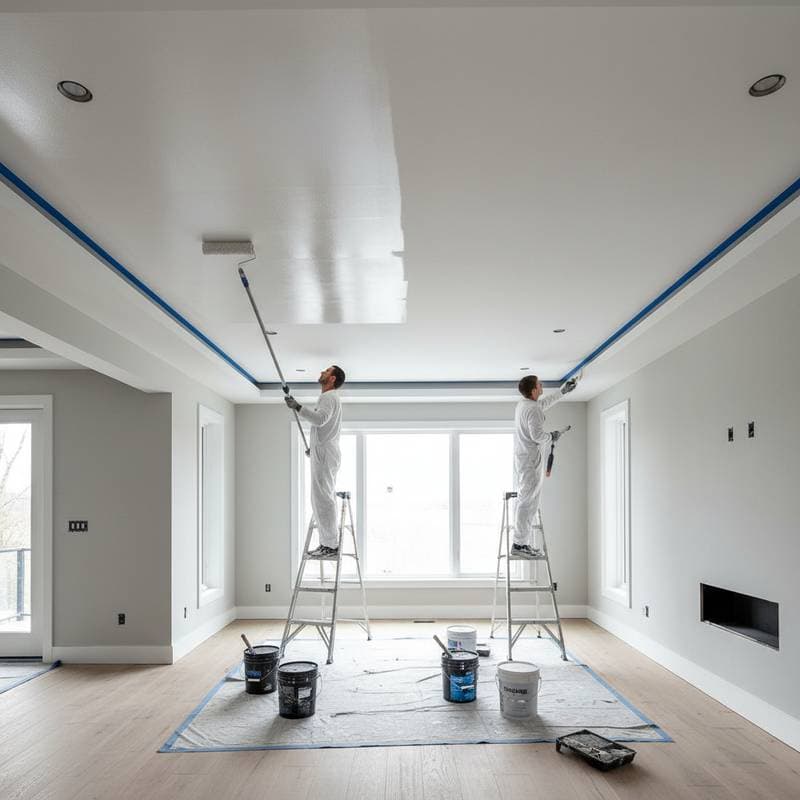
With flat ceilings, preparation simplifies to basic dusting and priming, avoiding the removal of debris from textures. Rollers and brushes suffice for even application, enabling crews to cover more area without specialized equipment like sprayers.
Key Factors Influencing Ceiling Painting Expenses
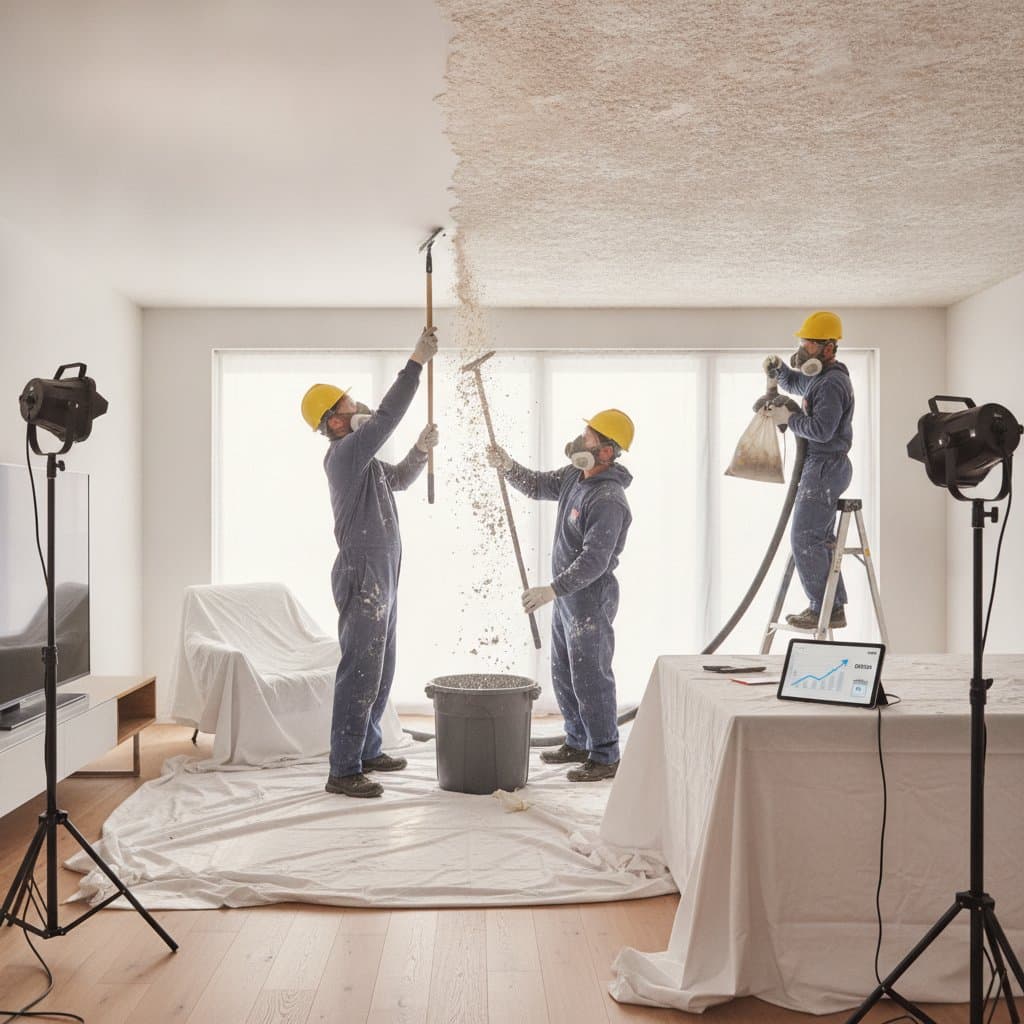
Surface texture stands out as a primary driver of costs. Textured elements expand the effective painting area and necessitate thicker layers to fill irregularities, extending labor time significantly.
Ceiling height also impacts pricing. Standard eight-foot heights permit straightforward access with step ladders, maintaining efficiency. Taller ceilings, exceeding ten feet, require scaffolding or extension tools, which elevate both time and safety considerations.
The existing surface condition matters equally. Address cracks or stains promptly to avoid extensive patching and sanding. A well-maintained, primed flat ceiling minimizes these interventions, preserving budget allocations.
Analyzing Costs by Finish Type
| Finish Type | Basic Range | Standard Range | Premium Range | Key Differences |
|---|---|---|---|---|
| Flat ceiling paint | $1 - $2 | $2 - $3 | $3 - $4 | Quick roller application, low prep needs |
| Textured ceiling paint | $2 - $3 | $3 - $4 | $4 - $5 | Sprayer required, extended labor hours |
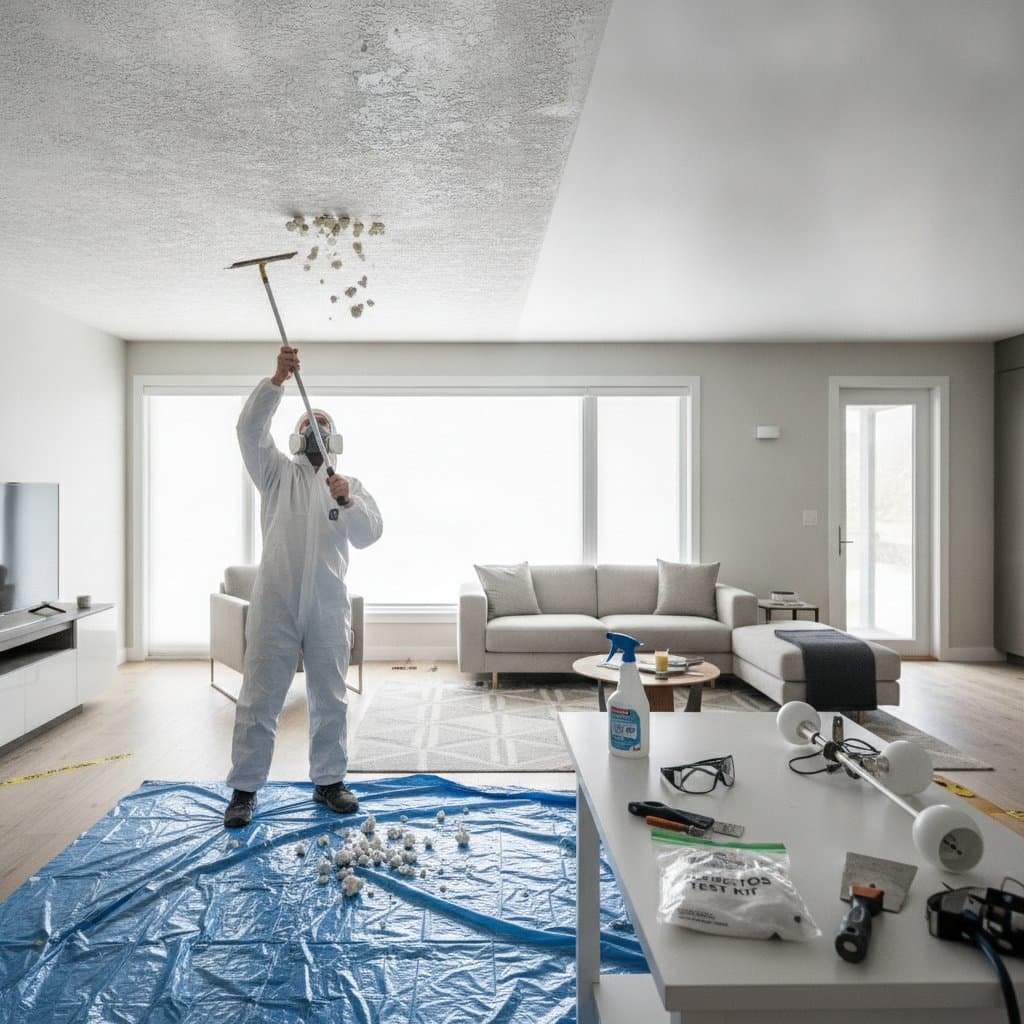
| Popcorn removal and repaint | $3 - $4 | $4 - $5 | $5 - $6 | Involves scraping, sanding, and full refinish |
This table highlights how flat finishes deliver consistent savings across quality levels. Opt for mid-range options to balance durability and affordability without compromising results.
Long-Term Value of Flat Ceilings
Beyond initial savings, flat ceilings enhance ongoing home maintenance. Cleaning requires only a damp cloth, preventing buildup that textures attract. Future repaints proceed swiftly, often in half the time of textured alternatives.
These surfaces pair seamlessly with contemporary upgrades, such as recessed lighting or smart fixtures. In resale scenarios, smooth ceilings appeal to buyers seeking updated aesthetics, potentially boosting property value by aligning with current trends.
Practical Strategies to Maximize Savings
Prepare the space in advance by shifting furniture to the center and protecting floors with drop cloths. This reduces the painters' setup time and associated charges.
Select standard flat latex paint formulated for ceilings, which offers excellent coverage without the premium price of textured or specialty products.
Combine ceiling painting with wall work to consolidate trips and equipment setup, distributing fixed costs across a larger project.
If experienced with painting, request labor-only bids and provide your own high-quality supplies to control material expenses.
Time projects for off-peak periods, such as late fall or early spring, when contractors face lower demand and offer competitive rates.
Building a Realistic Painting Budget
Start by measuring your ceiling area accurately, multiplying length by width to determine square footage. Factor in regional labor rates, which can vary by 20 to 30 percent between urban and rural areas.
Allocate 10 to 15 percent of the total for contingencies, such as unexpected repairs or material adjustments. Consult multiple quotes to compare inclusions, ensuring transparency on prep and cleanup.
Track savings from flat ceilings by comparing against textured estimates; this insight guides future renovations and underscores the design's financial benefits.
Frequently Asked Questions
What Does It Cost to Paint a Flat Ceiling on Average?
Expect to pay $1 to $2.25 per square foot, influenced by height, paint selection, and local wages. For a 200-square-foot room, this translates to $200 to $450 total.
Why Are Textured Ceilings More Expensive to Paint?
Textures create uneven surfaces that demand more paint volume and careful application to avoid drips or gaps. Additional prep, like masking edges, further extends the timeline.
Is DIY Painting Feasible for a Textured Ceiling?
While possible, it presents hurdles without professional sprayers or ladders. Uneven results often lead to callbacks, making expert assistance more cost-effective long-term.
In What Ways Do Flat Ceilings Boost Property Value?
They facilitate easier upkeep and repainting, while complementing modern interiors. Buyers associate smooth finishes with quality craftsmanship, enhancing marketability.
What Hidden Expenses Arise in Ceiling Painting?
Common add-ons include extra primer for stains, small repairs for cracks, and equipment rentals for high ceilings. Budget accordingly to avoid surprises.
When Should You Schedule Ceiling Painting for Best Rates?
Aim for shoulder seasons between peak summer and winter holidays. Availability increases, allowing negotiations for discounts on labor.