Why DIY Drywall Sanding Adds $800 to Your Project Costs
Drywall sanding appears straightforward. Homeowners often equip themselves with sandpaper, a pole sander, and basic supplies to prepare walls for painting. However, this approach frequently results in expenses that exceed professional services by approximately $800. These costs arise from overlooked factors such as dust management, material waste, and corrective repairs.
Recognizing these elements enables better decision-making for home improvement projects. Proper drywall preparation forms the base for a durable paint finish. Errors at this stage lead to visible imperfections like ridges or discoloration, which demand additional effort and funds to resolve.
Typical Costs for Drywall Sanding
Hiring professionals for drywall sanding generally ranges from $0.50 to $1.50 per square foot, based on the wall's condition and desired smoothness. In a standard 12-by-15-foot room, this equates to $150 to $400 for labor alone. Initial DIY outlays seem modest, with supplies like sandpaper, poles, and masks totaling $50 to $100.
Nevertheless, comprehensive calculations reveal a different picture. Factors including discarded materials, structural fixes, thorough cleaning, and valued time elevate DIY totals by $600 to $900 over professional fees. Such increments cover re-sanding, patching, and repainting to address dust-related issues.
Per-Room Cost Comparison
| Item | DIY Cost | Professional Cost | Additional DIY Expenses |
|---|---|---|---|
| Sandpaper and Tools | $50 - $100 | Included | - |
| Dust Barriers | $100 - $200 | Included | $200+ for inadequate setup |
| Repairs from Over-Sanding | $150 - $300 | Minimal | $150+ |
| Cleaning and Filtration | $100 - $200 | Included | $200+ for overlooked dust |
| Repainting from Contamination | $150 - $300 | Avoided | $150+ |
| Total | $550 - $1,100 | $150 - $400 | $800 Difference |
This table illustrates how initial savings dissolve. Professionals incorporate protective measures and achieve even results. DIY efforts introduce uncertainties that necessitate further investments.
Elements Driving Up DIY Expenses
Dust Management Shortcomings
Drywall dust particles prove extremely fine and pervasive. They infiltrate vents, settle on furnishings, and adhere to floors without containment. Inadequate measures extend cleanup over several days and may require specialized services, adding $200 to $400.
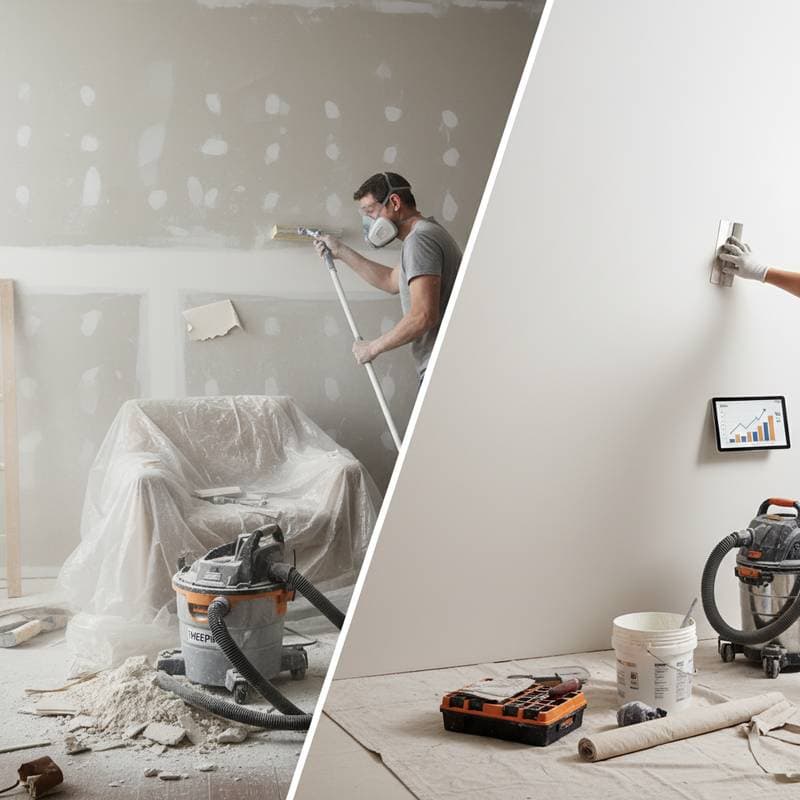
Several pounds of dust emerge from one room, potentially obstructing HVAC components. Professionals deploy vacuum-integrated sanders and plastic enclosures to confine particles. Homeowners using fans or open windows risk wider dispersal, which impairs paint bonding and prompts rework.
Flawed Sanding Methods
Excessive pressure during sanding produces depressions and irregularities needing fresh compound. Each fix prolongs drying periods and consumes more supplies, with gouge repairs costing $100 to $300. Insufficient sanding, conversely, leaves joint lines detectable under paint layers, necessitating repeated preparation.
Experienced teams apply structured techniques, angled lighting, and progressive grits for uniformity. Without such methods, homeowners encounter post-paint inconsistencies, incurring frustration and added charges.
Equipment Constraints
Manual tools common in DIY setups lack integrated dust capture and accuracy. Professional-grade options, including vacuum sanders and mesh-padded poles, streamline processes and enhance outcomes. Acquiring or renting these items runs $50 to $150 daily, diminishing perceived economies.
Extended Time Commitments
Sanding a room demands 10 to 12 hours for a novice. Professionals finish in 2 to 3 hours through efficiency. Rushed efforts yield subpar seams, visible after painting and requiring $200 to $300 in materials and effort for corrections.
Supply Inefficiencies
Errors lead to excess use of compound, primer, and paint. Correcting depressions involves reapplication and extended waits. Precise professional application conserves resources and shortens timelines.
Expense Breakdown by Type
| Category | Basic | Standard | Premium | Main Variations |
|---|---|---|---|---|
| Materials | $50 - $100 | $100 - $150 | $150 - $200 | Superior grits and filters cut waste |
| Time Value | 10+ hours | $150 - $300 pro | $250 - $400 expert | Pros minimize revisions |
| Containment | $50 - $200 | Included | $300 vacuum setup | Barriers avert cleaning fees |
| Fixes | $100 - $300 | Minimal | Minimal | Errors trigger patching costs |
| Post-Work Cleaning | $100 - $200 | Included | Included | DIY demands multiple passes |
Assessing Long-Term Benefits
A refined drywall surface elevates home aesthetics and market value. Uneven bases accelerate paint wear, inviting sooner refreshes. Professional execution prevents such degradation and reduces future maintenance.
Enhanced smoothness boosts light diffusion, creating brighter, cohesive interiors. This improvement strengthens property appeal during sales.
Practical Tips to Control DIY Costs
Homeowners opting for self-managed sanding benefit from deliberate preparations.
Surface Readiness
Clear loose material and check for fissures before starting. Pre-filling flaws shortens sanding and avoids severe damage. Angled lighting reveals discrepancies promptly.
Effective Dust Handling
Acquire durable sheeting, tape, and a vacuum suited for fine particles under $100. Seal vents and entrances with zippered covers. These steps offset potential cleanup and system repair bills.
Suitable Equipment Selection
Choose pole sanders with mesh for broad, clog-free coverage. Rent vacuum models for extensive areas to halve cleaning demands. Progress from 120-grit to 220-grit for optimal texture.
Phased Approach
Apply gentle strokes across sessions to preserve compound levels and limit dust. Damp wiping between phases maintains control.
Recognizing Completion
Cease when surfaces feel uniform by hand, reserving primer for final flaw detection. This prevents overwork and excess material use.
Budgeting for Drywall Preparation
Account for every phase in project estimates. Essential allocations include:
- Initial patching, taping, and drying
- Tool rentals or buys like sanders and lights
- Barrier supplies, filters, and airflow aids
- Disposal, vacuuming, and surface treatments
- 10 percent reserve for surprises
Thorough planning curbs overruns and supports seamless execution. Many discover professionals prove more economical overall.
Evaluating Professional Versus Self-Directed Options
Experts provide specialized gear, knowledge, and speed unattainable for most. Their outputs remain reliable, sidestepping cost escalations. Though DIY promises upfront reductions, aggregated figures favor hiring.
| Aspect | DIY | Professional |
|---|---|---|
| Initial Outlay | Lower | Moderate |
| Full Expense | Elevated | Reduced |
| Result Consistency | Inconsistent | Reliable |
| Effort Required | Substantial | Limited |
| Cleaning Demands | Intensive | Negligible |
| Future Gains | Modest | Substantial |
Small-scale fixes suit DIY with careful methods. Larger scopes warrant pros for superior returns.
Launching Your Drywall Project
Assess area size and finish standards first. Advanced levels demand meticulous work, often best left to specialists. Test on one wall if pursuing DIY to assess feasibility.
Emphasize safety with goggles, respirators, and exclusion zones for occupants. Advance scheduling yields cleaner results and efficiency.
Common Questions on Drywall Sanding
What Does Drywall Sanding Typically Cost?
Professionals charge $0.50 to $1.50 per square foot, varying by condition and standards. DIY supplies run $50 to $100, yet full costs surpass $800 with ancillary factors.
Which Elements Most Affect Sanding Expenses?
Dust lapses, technique errors, fix needs, and rework time dominate. Limited tools and absent controls amplify outlays.
How to Cut Costs While Maintaining Standards?
Employ barriers, vacuum tools, and staged grits. Prep thoroughly and halt at tactile smoothness.
Professionals or DIY: Which to Choose?
DIY fits minor tasks. Extensive work benefits from pro precision, speed, and net savings.
Budgeting for Surprises in Sanding?
Reserve 10 percent for fixes, tools, or extras. Factor in controls, primers, and adjustments.
Optimal Timing for Sanding Projects?
Low-humidity periods aid drying and pacing. Off-peak scheduling secures pro discounts.