The $800 Mistake in Sanding That Pros Always Avoid
A flawless paint finish starts long before the first brush stroke. Professional painters know that surface preparation defines the outcome, and sanding between coats stands as one of the most overlooked steps by homeowners. Many DIY painters skip or rush this stage, only to realize later that the mistake can cost as much as $800 in repairs, extra materials, and wasted time. Understanding why this happens, and how professionals prevent it, helps homeowners plan smarter, budget accurately, and achieve long-lasting results without costly setbacks.
What the $800 Mistake Really Means
That $800 figure represents what it often costs to fix a poorly sanded surface after painting. It includes sanding back hardened paint layers, applying new primer, and repainting entire sections. Labor costs alone for repainting walls or cabinetry can easily exceed $400 to $600, while additional paint and materials may add another $200. The mistake does not always appear immediately. Uneven finishes, peeling, or raised textures may emerge after the final coat dries, revealing the consequences of inadequate sanding.
Professionals treat sanding as a quality control step, not a chore. Skipping it can double the time and cost of a project, especially when high-gloss or cabinet finishes are involved. The key lies in understanding what sanding between coats accomplishes, what goes wrong when it is neglected, and how much each corrective step costs.
Cost Overview of Sanding Between Paint Coats
The cost of proper sanding between coats usually ranges from $0.50 to $1.50 per square foot when included in a professional paint job. This minor cost prevents expensive corrections later. When skipped, remediation can range from $5 to $8 per square foot, depending on surface type, paint quality, and accessibility.
Average Cost Ranges by Project Type
- Interior walls: $1.25 - $3.50 per square foot for repair and repainting
- Cabinetry or trim: $4.00 - $7.00 per square foot for refinishing
- Doors and furniture: $3.00 - $6.00 per square foot for sanding and repainting
Cost Breakdown per Step
| Category | Basic Range | Standard Range | Premium Range | Key Differences |
|---|---|---|---|---|
| Sanding between coats | $0.50 - $1.00 | $1.00 - $1.50 | $1.50 - $2.00 | Quality of abrasives, surface smoothness, and time spent |
| Re-sanding after mistakes | $2.50 - $4.50 | $4.50 - $6.00 | $6.00 - $8.00 | Includes stripping, priming, and repainting |
| Material replacement | $50 - $150 | $150 - $300 | $300 - $500 | Paint, primer, sandpaper, and protective gear |
| Labor correction | $300 - $600 | $600 - $800 | $800 - $1,000 | Professional labor to fix poor surface prep |
What starts as a small oversight can quickly escalate into a full-scale repainting project. Professionals avoid this by applying consistent sanding techniques between every coat, ensuring the next layer adheres perfectly.
Why Sanding Between Coats Matters
Sanding between paint coats removes imperfections, dust nibs, and raised fibers that appear as the paint dries. It also provides a slightly roughened texture known as "tooth" that helps the next layer bond securely. Without it, the new coat may sit loosely on the surface, leading to peeling, cracking, or dull spots.
Core Benefits of Proper Sanding
- Improved Adhesion: Each coat bonds better when the previous layer is lightly abraded.
- Smooth Finish: Fine sanding eliminates bubbles, roller marks, and uneven sheen.
- Longer Durability: Properly prepared surfaces resist moisture and wear better.
- Consistent Color Depth: Even sanding ensures uniform absorption and optical consistency.
Skipping this step saves a few hours but can reduce the lifespan of the finish by several years. The cost of early repainting often exceeds the original savings many times over.
Factors Affecting Sanding and Paint Costs
Different surfaces and conditions influence the cost and outcome of sanding between coats. Understanding these factors helps homeowners anticipate where problems and expenses may arise.
1. Surface Material
Drywall, wood, metal, and laminate all respond differently to paint and sanding. Wood surfaces often require multiple sanding passes with different grits, while drywall needs careful touch-ups to avoid gouging. Labor intensity and material type directly affect total cost.
2. Paint Type and Finish
High-gloss and semi-gloss paints highlight every flaw. They require finer sanding between coats, usually using 220 to 320 grit sandpaper. Matte finishes prove more forgiving but still need light sanding to ensure adhesion. Specialty paints, such as enamel or epoxy, add both material and labor costs.
3. Environmental Conditions
Humidity, dust, and temperature affect drying time and sanding results. If the paint cures too quickly, sanding becomes more difficult and may damage the surface. Professionals use controlled environments or adjust timing to maintain smooth transitions between coats.
4. Project Scale and Accessibility
Larger surfaces reduce per-square-foot cost but increase overall labor. Tight spaces, cabinets, or trim work require careful hand-sanding that drives up costs. Professionals use specialized tools to maintain consistent pressure and finish quality.
5. Skill and Equipment Level
DIY sanding often lacks the precision of professional equipment. Random orbital sanders, vacuum attachments, and fine-grit abrasives minimize dust and streaking. Investing in these tools can cost $150 to $400, while hiring a professional painter ensures consistent results without equipment purchases.
Detailed Analysis of the $800 Mistake
When sanding between coats is skipped or done incorrectly, several problems occur that lead to extensive repairs.
1. Poor Adhesion
Without sanding, upper layers may not adhere properly to the previous coat. Over time, this results in peeling or flaking. Repairing adhesion failures requires stripping the paint back to the primer, adding new coats, and refinishing the surface.
Typical cost impact: $300 to $600 for walls, $500 or more for cabinetry.
2. Uneven Surface Texture
Brush marks or debris trapped between coats create rough textures that reflect light unevenly. To fix this, painters must sand the entire surface again and apply new finishing coats.
Typical cost impact: $200 to $400 in labor and materials.
3. Color and Sheen Inconsistency
When surfaces are not properly sanded, paint absorption varies, creating dull patches or glossy streaks. Achieving uniform sheen requires additional coats, increasing both paint consumption and labor.
Typical cost impact: $150 to $300 depending on paint type.
4. Reduced Paint Longevity
Improper adhesion and uneven layering shorten the life of the finish. Homeowners may find themselves repainting within a few years instead of enjoying a finish that lasts a decade.
Long-term cost impact: $400 to $800 in premature repainting expenses.
Value and ROI of Proper Sanding
Spending a few extra hours on sanding between coats yields one of the highest returns in painting projects. The added labor cost of $100 to $250 for an average room prevents up to $800 in future repairs. For cabinetry or trim work, where finishes are under close visual scrutiny, the return proves even higher.
A well-prepared surface also increases perceived quality for potential buyers. Smooth, flawless finishes reflect professional craftsmanship, improving the overall value of the home.
Money-Saving Strategies Without Sacrificing Quality
Homeowners can reduce sanding-related costs with careful planning and smart technique.
- Use the Right Grit: Start with 180 or 220 grit between coats to smooth imperfections without cutting too deep.
- Clean Thoroughly: Wipe surfaces with a tack cloth after sanding to remove dust that can ruin the next coat.
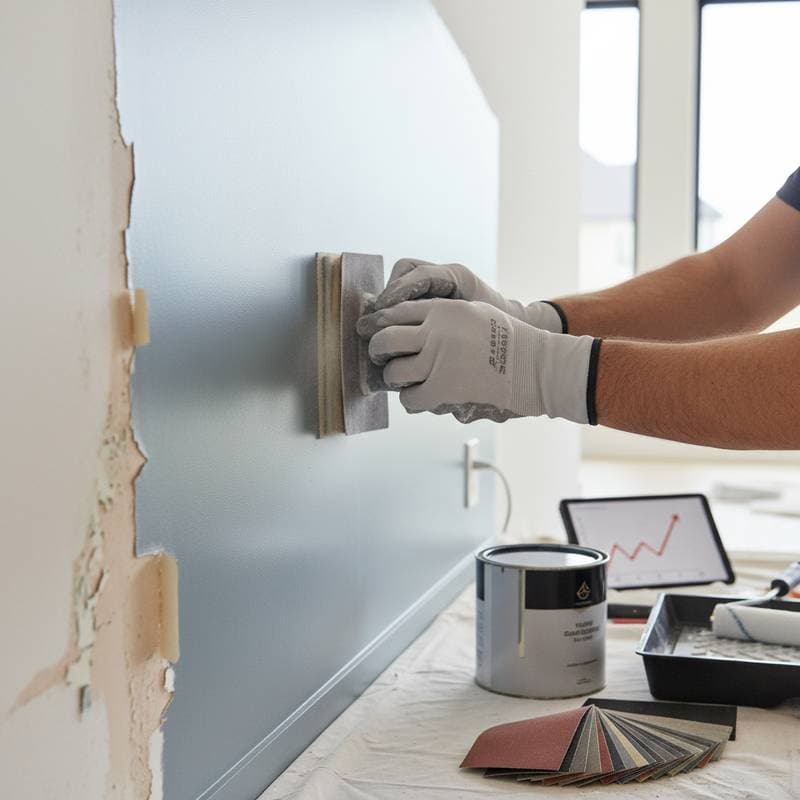
- Invest in Quality Tools: A good sanding block or orbital sander improves efficiency and reduces fatigue.
- Do Preliminary Sanding DIY: Homeowners can handle the initial sanding steps, leaving final finishing to professionals.
- Schedule Efficiently: Plan painting sessions to allow full drying between coats, avoiding rushed sanding that causes damage.
These small adjustments keep the project on budget while maintaining professional-level results.
Planning Your Budget
When estimating painting projects, include a line item for surface preparation, not just painting materials. A good rule of thumb is to allocate 15 to 25 percent of the total project cost to preparation, including sanding. For example, if painting costs $2,000, plan for $300 to $500 in prep work. This allowance covers sanding, patching, and priming that ensure the final finish lasts.
Always request detailed quotes that separate preparation, materials, and painting. This transparency prevents surprise charges later. Homeowners should also confirm that sanding between coats is included in the scope of work. Some contractors skip this step to reduce time, but reputable professionals will emphasize its necessity.
Frequently Asked Questions
1. What is the average cost to fix poor sanding between paint coats?
Repairing surfaces affected by skipped or poor sanding typically costs between $400 and $800 for a standard-sized room. This includes sanding down hardened paint, applying primer, and repainting. Complex surfaces like cabinetry or trim can reach $1,000 or more.
2. Which factors increase the cost of sanding between coats?
Costs rise with project size, paint type, and surface complexity. Glossy paints need finer sanding, while detailed trim requires more labor. Environmental conditions, such as high humidity, can also extend drying and sanding time, raising labor costs.
3. How can I prevent the $800 sanding mistake?
Prevent the mistake by sanding lightly between each coat using 220-grit sandpaper, wiping away dust with a tack cloth, and allowing full drying time. Hire professionals for high-stakes projects like cabinetry, and always inspect surfaces before applying the next coat to catch issues early.
4. Is it worth doing the sanding myself to save money?
Sanding yourself can save $100 to $300 in labor costs for simple projects, but only if you use proper tools and techniques. For complex surfaces or glossy finishes, professional sanding ensures better results and avoids costly fixes. Weigh your skill level against potential rework expenses.
5. What should I include in my painting budget for sanding and prep?
Include 15 to 25 percent of the total budget for prep, covering sandpaper ($20 to $50), tools ($50 to $200 if buying), and labor ($100 to $300). Factor in primer ($30 to $100) and cleaning supplies to account for full surface preparation needs.
6. When is the best time to schedule sanding and painting for lower costs?
Schedule during off-peak seasons like winter or early spring, when contractors offer discounts of 10 to 20 percent. Book mid-week or during slower months to avoid premium rates, and combine multiple rooms for bulk pricing that reduces per-square-foot costs.
Securing Lasting Results Through Smart Preparation
Investing time in sanding between coats transforms a standard paint job into a durable, professional finish. Homeowners who prioritize this step enjoy smoother surfaces, fewer repairs, and greater long-term savings. Consult with experienced painters to tailor preparation to your specific project, ensuring every dollar spent delivers maximum value.