Terracotta's Resurgence in 2026 Paint Trends
Terracotta paint returns with compelling appeal, delivering warmth, grounding, and distinctive character to interiors. This earthy palette, which includes soft clay pinks and deep burnt sienna shades, redefines cozy and assured living spaces. It bridges natural textures with contemporary vitality, making it an enjoyable choice for diverse applications.
From experience transforming residential, commercial, and production environments, terracotta excels in both visual and practical contexts. The color conveys warmth effectively in photographs while providing sophistication and tranquility in daily use. Suitable for limited or expansive budgets, terracotta imparts enduring elegance to any area.
Reasons for Terracotta's Renewed Popularity
Design trends cycle, yet terracotta's revival transcends mere reminiscence. Individuals seek comfort and genuineness, qualities terracotta embodies. Evoking sun-warmed clay, artisanal pottery, and textured walls with history, it balances modern sleekness with the depth of organic elements.
In production settings, terracotta renders well under intense illumination, minimizing glare and enhancing skin tones with a flattering effect. Within residences, it anchors spaces without overwhelming them, achieving a delicate equilibrium that fuels its prominence.
Terracotta suits multiple aesthetics. Accent it with crisp white moldings for Mediterranean flair, or integrate it with patinated brass and walnut for traditional depth. For a bohemian approach, incorporate woven fabrics, foliage, and lightweight linens.
Exploring Terracotta's Shade Variations
Terracotta encompasses a broader spectrum than commonly assumed, allowing customization to suit ambiance, illumination, and individual style. Consider these primary categories:
- Soft Clay Tones: Light peach and blush variants foster a serene, spacious atmosphere. Ideal for bedrooms, reading corners, or compact areas requiring subtle warmth. These shades complement ivory, beige, and light oak finishes.
- Classic Terracotta: The familiar medium tone offers richness and invitation. It energizes living rooms, dining zones, or corridors by merging vitality with ease.
- Burnt Sienna Depths: Intense and striking, these serve accent walls or cabinetry effectively. Balance them with stone elements, matte black accents, or pale grays for stability.
Shades evolve with lighting conditions, so sample generously. Apply broad patches on multiple surfaces and evaluate across daily light cycles. Illumination alters perception significantly.
Implementing Terracotta on Varied Budgets
Effective design remains accessible regardless of financial constraints, and terracotta exemplifies this principle. Follow these strategies for three budget tiers.
Minimal Budget:
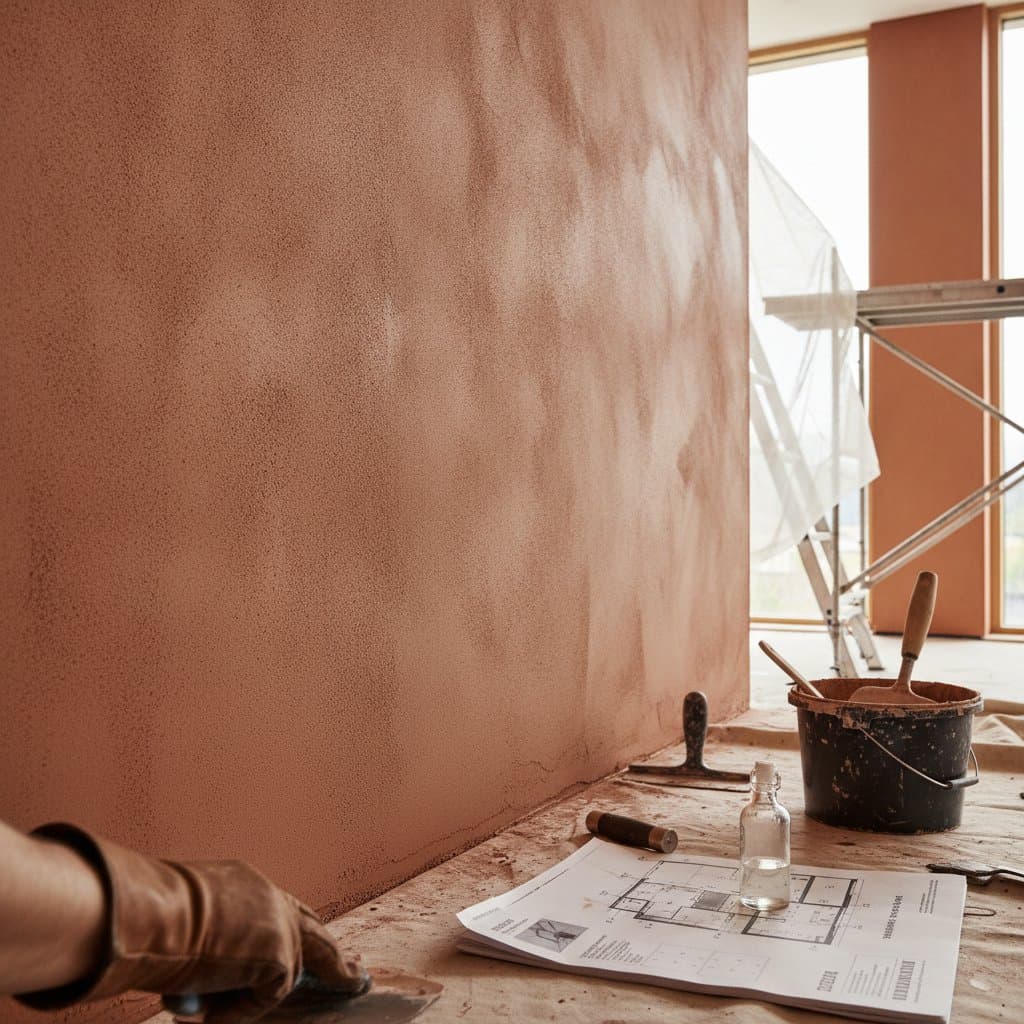
- Dilute existing paint with water for a terracotta wash, applying it irregularly to mimic plaster effects.
- Refresh planters, frames, or a wall stripe with the color for immediate impact.
- Introduce terracotta hues via fabrics such as cushions, blankets, or rugs, or through printed artwork in complementary earth tones.
Moderate Budget:
- Coat a full room or passage with durable, cleanable matte paint.
- Incorporate matching items like ceramic lighting, earthen vessels, or shaded fixtures.
- Blend with warm neutrals or sage accents to build a cohesive, deliberate scheme.
Generous Budget:
- Pair terracotta surfaces with textured plaster, microcement, or limewash for added luxury.
- Enhance moldings or ceilings in complementary shades for a sophisticated, monochromatic effect.
- Source bespoke pieces in aligned woods or leathers to harmonize with the color's undertones.
Consistency in hue and intentional texture layering ensures success at any level.
Complementary Materials and Finishes
Terracotta pairs optimally with elements that reflect its organic origins, yielding visually and tactilely pleasing results. Proven pairings include:
- Wood: Pale oak, walnut, or salvaged lumber provides warmth and variation.
- Metal: Weathered brass, bronze, or non-reflective black hardware amplifies terracotta's vibrancy.
- Stone: Travertine, limestone, or polished concrete introduces substantial texture depth.
- Textiles: Linen, hemp, or cotton maintains an airy, welcoming quality.
Opt for matte or eggshell sheens to accentuate terracotta's inherent subtlety, as they diffuse light and promote enveloping coziness. Reserve gloss for contemporary interpretations.
In photographic or video contexts, select warmer lighting temperatures to accentuate terracotta's depth and avoid subdued or overly warm appearances.
Applying Terracotta Across Room Types
Terracotta flexes to accommodate various room purposes and styles with ease.
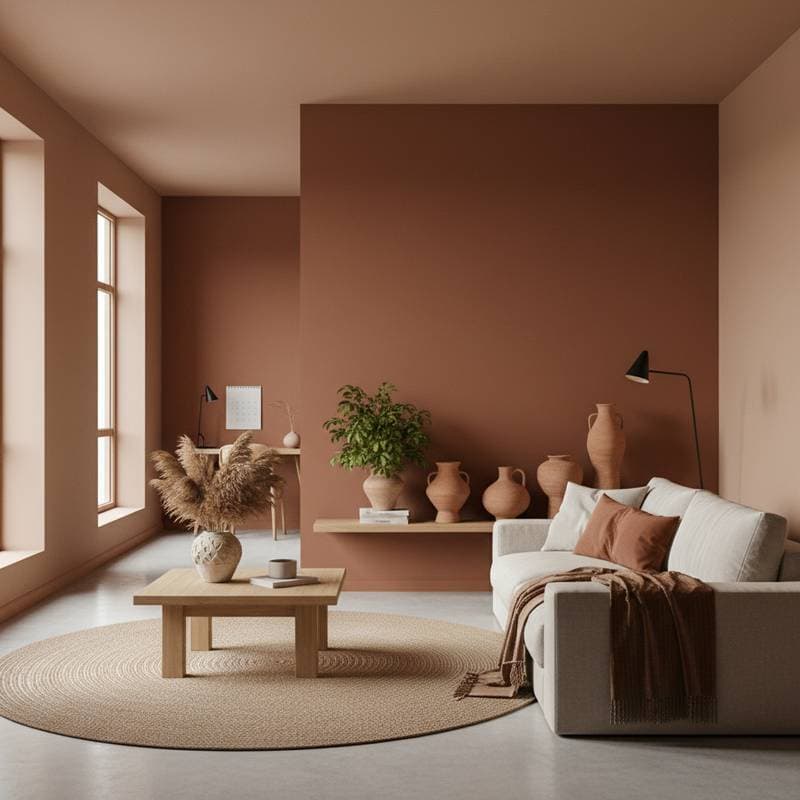
Living Areas: Full terracotta walls cultivate intimacy in communal spaces. Offset with neutral gray furnishings and brass illumination, incorporating plants for vitality.
Kitchens: Apply to base cabinets alongside off-white uppers for dimension without dominance. Terracotta ceramic tiles or adhesive backsplashes offer understated integration.
Bedrooms: Gentle clay or rosy terracotta induces relaxation and comfort. These tones enhance linens from bright white to midnight blue. Renters may paint solely behind the bed for a simulated headboard.
Bathrooms: Combine with terrazzo, natural stone, or heritage tiles. Matte paints withstand moisture while preserving a gentle, natural radiance.
Outdoor Applications: Terracotta excels externally, syncing with greenery and daylight. Employ it on entry doors, window surrounds, or containers for subtle enhancement without full repainting.
Terracotta's Influence on Products and Branding
Terracotta extends beyond surfaces into product innovation and visual identity. In packaging, it conveys reliability and artisanal quality. For furnishings, it delivers accessible opulence. Designers crafting domestic items benefit from its perpetual relevance, blending modernity with credibility.
Collaborations with producers have yielded clay-derived collections that mature attractively. Marks from use enhance rather than detract, embodying sustainable design.
For paint or product ranges, provide terracotta options in multiple finishes: matte for broad surfaces, satin for edges, and semi-gloss for functional areas. This versatility supports both experts and hobbyists while upholding hue uniformity.
Essential Testing and Application Techniques
Terracotta's nuances demand thorough evaluation under real conditions. Proceed as follows:
- Apply expansive samples across at least two walls, assessing in ambient and supplemental light.
- Observe interactions with flooring and decor; warm timbers intensify redness, while cool stones temper it.
- Employ premium primer for uniform adhesion, particularly over light or neutral bases.
- Mix paint fully prior to application, as denser pigments settle readily.
- Layer two full coats, allowing complete drying between them for optimal richness.
To build confidence, initiate with minor elements like furniture, shelving interiors, or trim edges. Such trials permit low-risk exploration.
Sustaining Terracotta's Appeal Over Time
Terracotta matures elegantly, gaining depth akin to aged leather or masonry. This evolution represents one of its strongest attributes, supporting long-term satisfaction.
Refresh periodically by rotating accessories with seasonal shifts, such as woolen fabrics in winter or brighter tones for levity. Terracotta accommodates adaptations seamlessly, ensuring ongoing cohesion.
Routine maintenance through mild cleansing and spot repairs preserves its vibrancy and durability. A meticulously applied terracotta surface functions as integrated artwork, enveloping inhabitants in enduring warmth, ingenuity, and assurance.
Terracotta's resurgence celebrates organic allure, emotional solace, and design integrity. From isolated accents to comprehensive overhauls, it bestows personality, substance, and delight. Such excellence merits inclusion in every dwelling, and terracotta provides it authentically.