TSP vs Degreaser: Save $500 on Paint Prep
Surface preparation forms the foundation of any successful paint project. Proper cleaning ensures strong adhesion and durable finishes, whether the task involves kitchen cabinets, trim, or walls. The choice between TSP and a degreaser influences both results and costs. This guide compares the two options and outlines strategies to save up to $500 on preparation without compromising quality.
Understanding TSP
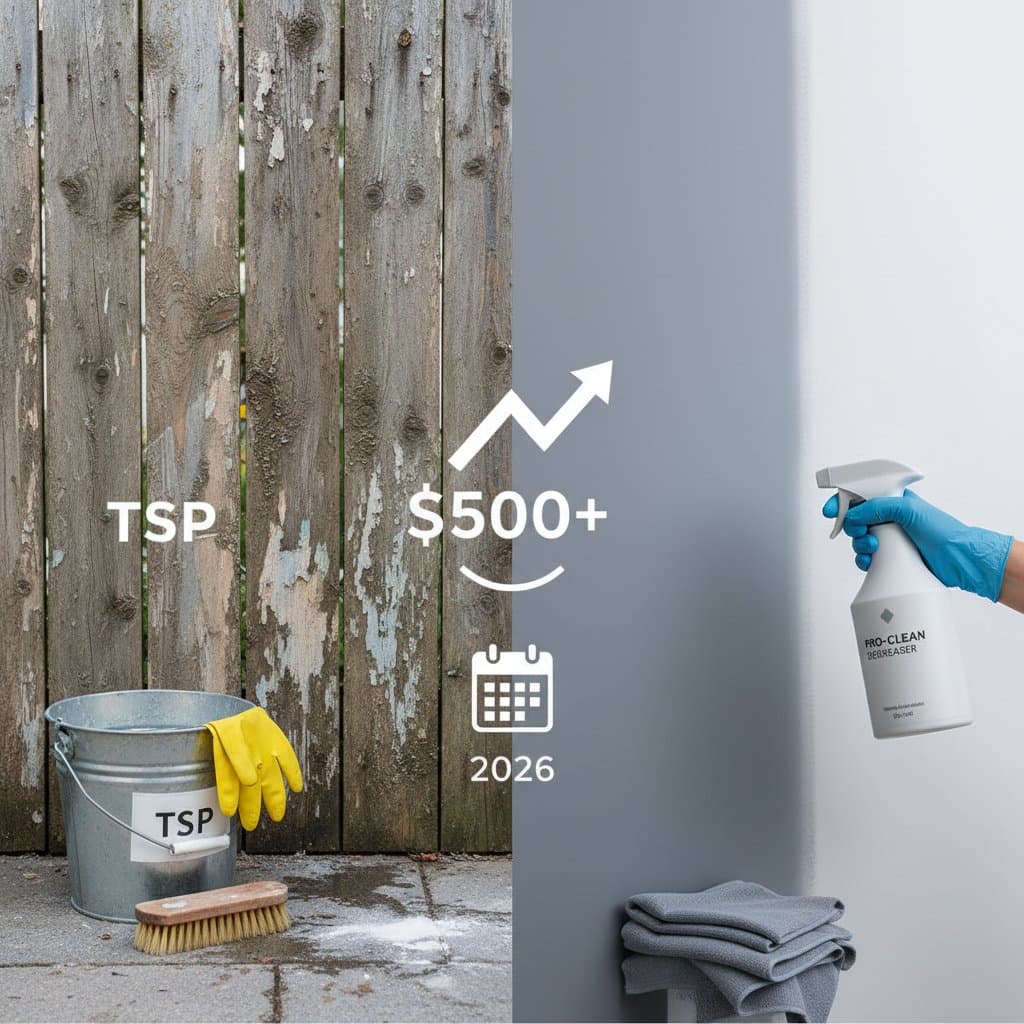
TSP stands for trisodium phosphate, a powdered cleaner used by painters for many years. When mixed with water, it removes grime, grease, mildew, and glossy residues. The solution also etches surfaces lightly, which improves paint adhesion on previously coated areas.
Professionals value TSP for its potency against heavy buildup, such as kitchen grease or smoke residue. It reduces the need for extensive sanding on glossy trim. However, users must wear gloves and eye protection, as contact can irritate skin. Thorough rinsing prevents residue that might interfere with paint. Environmental regulations in some regions limit phosphate products, so phosphate-free alternatives provide similar cleaning power with reduced ecological impact.
Comparing TSP and Degreaser
The following table highlights key differences between TSP and degreasers to guide selection based on project needs.
| Feature | TSP | Degreaser |
|---|---|---|
| Strength | Very strong | Mild to strong, varies by formula |
| Best For | Heavy grease, smoke, glossy trim | Everyday grime, kitchens, light prep |
| Safety | Requires gloves and eye protection | Safer for skin and surfaces |
| Residue | Must rinse thoroughly | Some formulas leave film; test first |
| Environmental Impact | Phosphates may harm waterways | Many options are biodegradable |
| Cost Range | Low per use, concentrated powder | Moderate, often ready-to-use |
| Ease of Use | Requires mixing and multiple rinses | Spray and wipe for quick application |
TSP excels in demanding scenarios, while degreasers offer convenience for routine tasks. Select based on the surface condition and available time.
Step-by-Step Cleaning Process
Follow these steps to achieve a clean, paint-ready surface.
- Remove Loose Debris. Dust or vacuum the area first to avoid spreading particles during wet cleaning.
- Prepare the Cleaner. Dissolve TSP powder completely in warm water according to package instructions. For degreasers, apply directly from the spray bottle or dilute as directed.
- Apply and Scrub. Spread the solution evenly with a sponge or cloth. Allow it to dwell for one to two minutes on stubborn areas, then scrub gently with a non-abrasive pad to avoid surface damage.
- Rinse Thoroughly. Use clean water and fresh cloths to remove all cleaner residue. Change the rinse water frequently to prevent recontamination.
- Verify Cleanliness. The surface should feel matte and free of slickness. Wipe with a dry cloth; if it picks up residue, repeat rinsing.
- Inspect Closely. Use a light source to check for missed spots or streaks. Clean any irregularities before proceeding to painting.
These steps minimize errors and promote optimal paint performance.
Cost Analysis and Savings Approach
Effective preparation controls expenses by preventing rework. TSP powder costs approximately $8 for a quantity sufficient to clean an entire interior when diluted properly. Add minimal costs for protective gear and tools.
Degreaser concentrates range from $15 to $25, covering most home projects without the need for mixing equipment. Professional cleaning services, if required due to poor prep, can add hundreds in labor fees for repairs like peeling paint.
By selecting the appropriate cleaner and following precise methods, homeowners avoid these extra costs. Savings of $300 to $500 become achievable on a full repaint, covering materials and time efficiencies.
Field-Tested Preparation Tips
Incorporate these practices for professional outcomes.
- Label buckets clearly: designate one for cleaning solution and another for rinse water to maintain separation.
- Refresh rinse water regularly to ensure it remains effective.
- Employ two cloths: one dampened with cleaner and one dry for wiping.
- Focus on corners and trim edges, where dirt accumulates and becomes visible after painting.
- Allow ample drying time: paint applied to damp surfaces risks bubbling or poor adhesion.
Such details elevate the final result from satisfactory to exceptional.
Integrating TSP and Degreaser
In complex projects, combine both products for comprehensive cleaning. Begin with a degreaser to address general dirt, followed by a diluted TSP solution on persistent grease spots. This method suits kitchen cabinets or heavily used trim, delivering thorough results without excessive chemical exposure.
For larger surfaces like hallways or exteriors, apply solutions with a garden sprayer for uniform distribution. Rinse immediately and completely to eliminate any potential streaking.
Maintaining Painted Surfaces
After application, preserve the finish through gentle cleaning routines. Use mild soaps on fresh paint and avoid abrasive tools. Proper initial preparation extends the lifespan of the paint, reducing the frequency of touch-ups and enabling future design changes with ease.
Investing effort in preparation yields enduring beauty and cost efficiencies. Choose tools wisely, apply techniques diligently, and enjoy a flawless, long-lasting transformation.