Why Smart Homeowners Test Five Samples for 2026 Trends
Color selection offers one of the quickest methods to revitalize a living space, and discerning homeowners understand that evaluating paint samples ensures satisfaction with the outcome. The optimal strategy involves five samples. This number, rather than fewer, provides comprehensive insight without excess effort. Trend-aware individuals entering the upcoming design era demonstrate that comparing multiple shades yields results that appear deliberate, contemporary, and uniquely suited to the environment. The following sections explore the rationale behind this practice.
Establishing Color Confidence
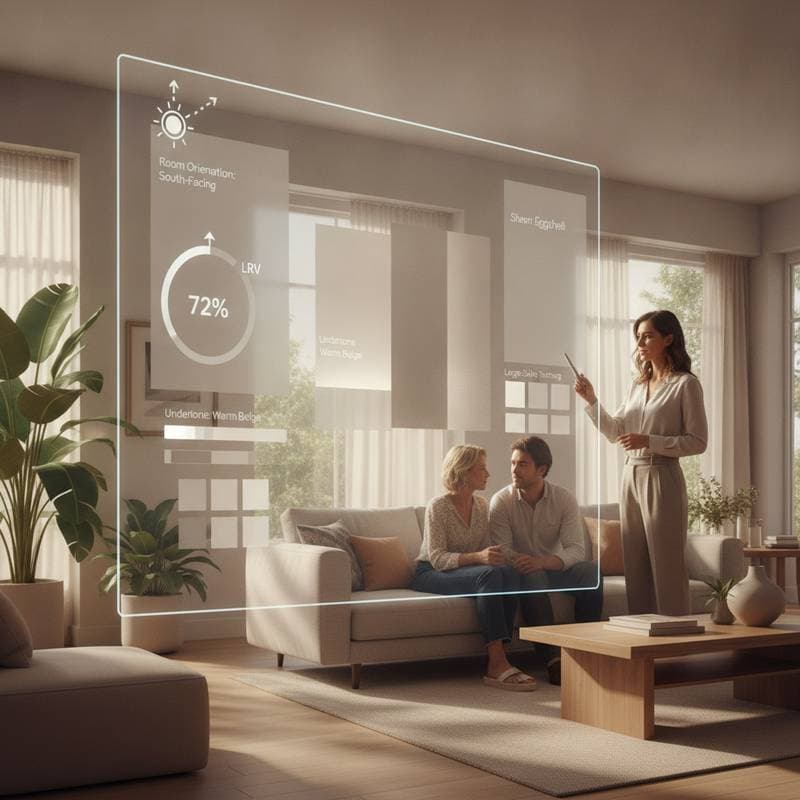
Current design movements emphasize intricate color narratives. Rather than relying on straightforward neutrals, preferences now include layered warmth, gradual shifts, and hues that evolve with illumination. Consequently, decisions based solely on paint chips prove inadequate. Homeowners who evaluate five samples observe the performance of subtle undertones across the day.
For instance, an ideal beige may shift toward pink under morning light, whereas a muted green assumes a dramatic, refined quality by evening. Application across various walls and under diverse lighting sources identifies the shade that maintains appeal consistently. Professionals apply this technique in television production and magazine photography, and it translates effectively to residential settings.
The Rationale for Five Samples
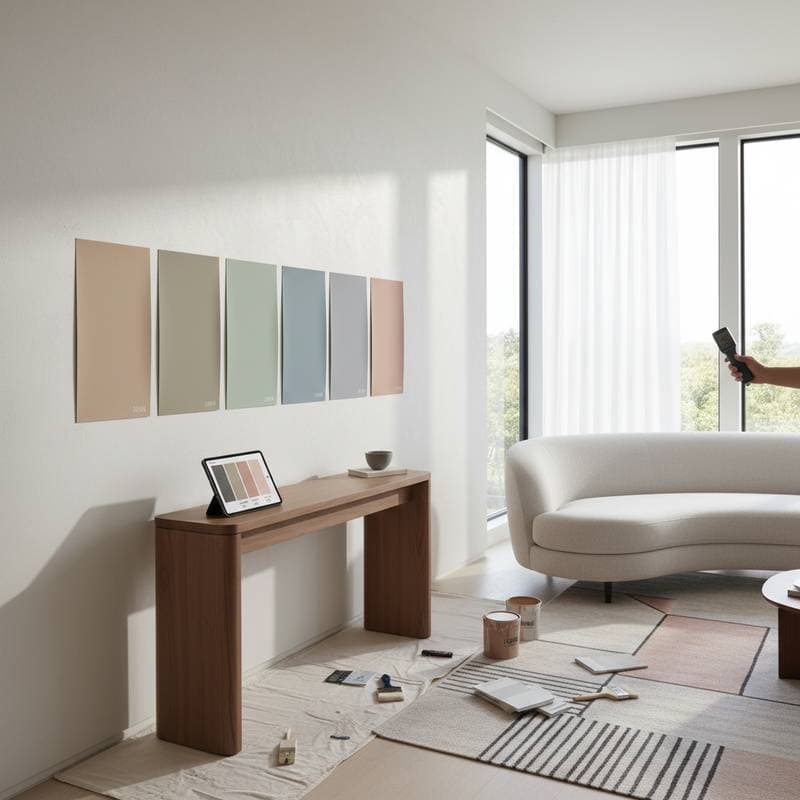
A single or pair of samples may deceive perception. Four or five reveal accurate interactions. Frequently, the fifth option emerges as the preferred choice upon full comparison. Consider the arrangement as a compact color analysis session on the wall. It highlights differences in cool and warm undertones, light and intense saturation levels, and compatibility with flooring and trim.
To implement effectively, apply samples in substantial areas, approximately two feet square, or utilize adhesive sample sheets. Label each clearly. Observe the space at various times, from morning to evening. The suitable color remains harmonious regardless of lighting conditions.
Cost-Effective Evaluation Methods
Assessing five samples requires minimal expenditure. Numerous paint manufacturers supply small containers for a nominal fee, and others offer removable adhesive options. Consider these approaches based on budget:
- Limited budget: Employ sample pots on poster boards. Secure them in place and reposition as needed.
- Moderate budget: Select peel-and-stick sheets for effortless changes. These suit renters or those minimizing preparation and cleanup.
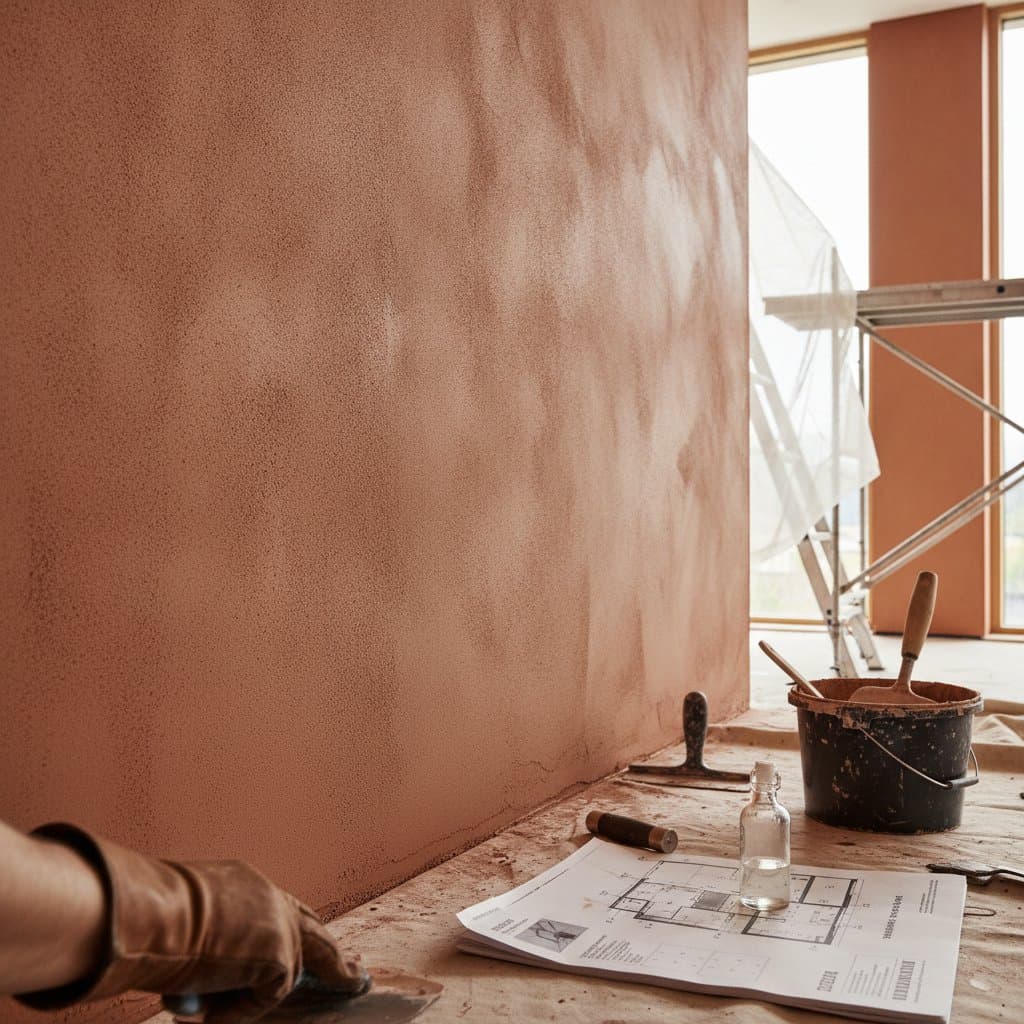
- Generous budget: Engage a professional service such as O’Connor Painting LLC to apply samples directly on-site. This guarantees even application and optimal lighting assessment.
Such preliminary investment averts the need for subsequent repaints. It functions as essential design protection, providing reassurance in the selection process.
Insights from Professional Productions
Experience in television projects illustrates that illumination alters hues dramatically. A shade appearing flawless on screen may appear overly blue under incandescent lighting or lackluster in natural daylight. Multiple evaluations precede final decisions in these contexts. The identical logic applies to home environments.
In areas with combined light sources, such as natural daylight from one direction and artificial warmth from another, test samples in each zone. Aim for uniformity. Does the subtle greige retain serenity across all areas? Does the navy wall preserve depth without muddiness? Five samples facilitate immediate detection of these variations.
Interpreting 2026 Color Trends
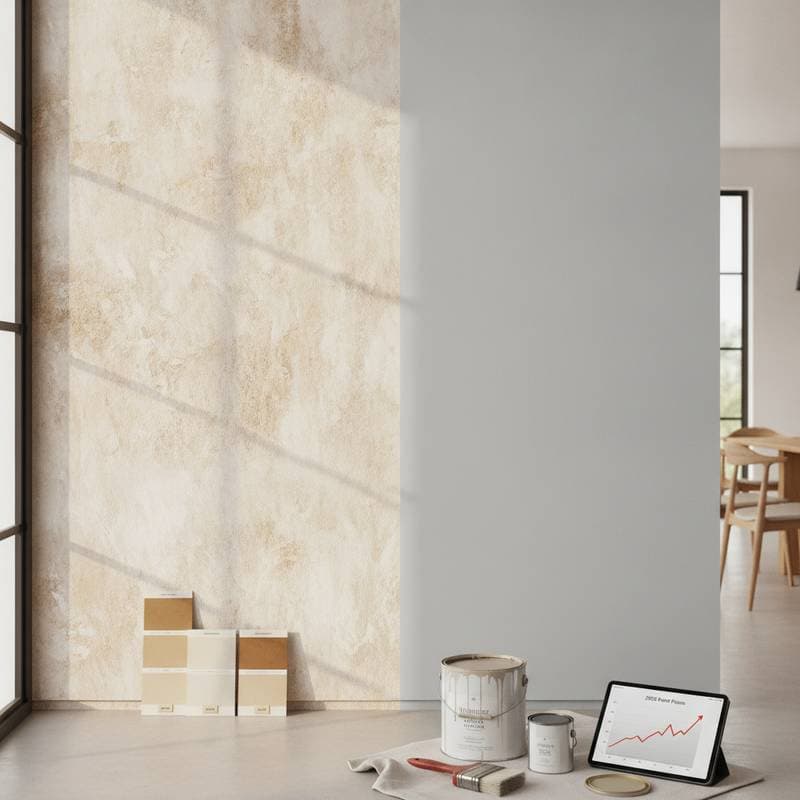
Anticipated trends for 2026 incorporate nuanced palettes. Grounded neutrals with organic depth, hazy greens, and softened terracottas promise a blend of novelty and enduring appeal. These draw from natural elements, artisanal influences, and notions of ease. However, representations in design publications may not align with real-world applications.
Evaluating five options permits customization to specific conditions. A popular clay tone might overwhelm a north-facing room, yet a paler, peach-infused variant enhances it. Through direct comparison, homeowners integrate trends thoughtfully rather than imitate them superficially. This represents informed design practice.
Aligning Color with Room Functionality
Beyond aesthetics, color influences mood, movement, and utility within a space. Testing confirms that the chosen tone enhances intended use. A kitchen hue should invigorate without dominating, while a bedroom color promotes relaxation without monotony.
One effective technique involves capturing samples in grayscale photography. This discloses tonal contrast, indicating depth relative to trim or furnishings. A shade that fades in monochrome may integrate excessively in color.
Evaluation also supports seamless transitions between rooms. Positioning samples adjacent to established areas reveals cohesive progressions. Coordinated color schemes contribute to a polished, unified appearance throughout the home.
Leveraging Limitations for Innovation
Some view testing as a solution for indecision. In reality, it fosters exploration. It enables discovery of unforeseen combinations and shades overlooked in initial selections. For a client seeking a traditional white, comparing five variants uncovered one with a gentle gray undertone that accentuated marble surfaces. Absent this process, the opportunity would have been lost.
In scenarios with constrained schedules or palettes, testing proves indispensable. It avoids costly revisions and maintains project timelines. Whether selecting for a prominent wall or understated trim, five samples anchor choices in observation rather than assumption.
Essential Techniques for Effective Testing
- Apply samples to several walls to capture lighting variations.
- Use two coats to achieve true color representation.
- Allow full drying time before final assessment.
- Record observations for morning, midday, and evening views.
- Maintain distance and rely on initial impressions; the intuitive choice often prevails.
Color application remains an individual endeavor, with each home responding uniquely. Testing delivers precision and assurance. Moreover, it transforms selection into an engaging experience rather than a burden. Observing hues integrate with the space generates enthusiasm.
Embracing Lasting Design Choices
Ultimately, thorough sample testing equips homeowners to make enduring decisions. It aligns 2026 trends with personal contexts, yielding spaces that evolve gracefully. This methodical approach not only elevates aesthetics but also enhances daily living, ensuring every application reflects intention and harmony.