Opt for Level 4 Drywall Finishing to Save $800
Homeowners frequently debate whether to invest in Level 5 drywall finishing for superior smoothness. Such a surface appeals to those seeking perfection, yet Level 4 often provides equivalent visual and functional outcomes at significantly reduced expense. Grasping the distinctions between these levels empowers you to cut costs by hundreds of dollars while maintaining wall integrity and appearance.
Drywall Finishing Levels Explained
Drywall finishing follows a standardized system of five levels, each indicating the extent of joint compound application, sanding, and overall refinement. These levels accommodate varying room types and illumination scenarios.
- Level 1 serves as the minimal option, suitable for concealed areas like those behind cabinets or in mechanical spaces.
- Level 2 involves a light coat over taped joints, ideal for low-visibility zones such as storage rooms.
- Level 3 achieves greater evenness, preparing surfaces for textured paints or heavy wall treatments.
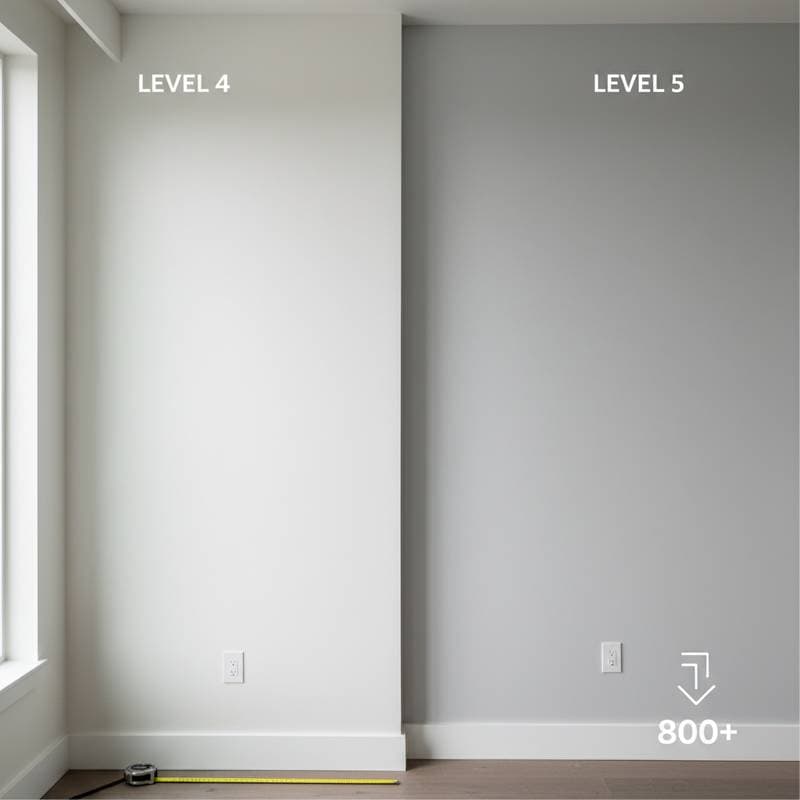
- Level 4 establishes the benchmark for residential painting, offering a ready-to-paint surface in everyday interiors.
- Level 5 demands comprehensive skim coating across all surfaces for seamless perfection.
The transition from Level 4 to Level 5 escalates expenses due to intensive labor and material demands.
Cost Comparison: Level 4 Versus Level 5
Drywall finishing expenses fluctuate based on location and scale, but national averages provide a reliable benchmark.
Costs by Room Dimensions
- Small room (up to 150 square feet):
- Level 4: $450 to $700
- Level 5: $900 to $1,400
- Medium room (150 to 300 square feet):
- Level 4: $750 to $1,200
- Level 5: $1,500 to $2,000
- Large room (over 300 square feet):
- Level 4: $1,200 to $1,800
- Level 5: $2,000 to $2,800
Advancing to Level 5 typically incurs an additional $1.50 to $2.50 per square foot. This premium arises from the full-surface skim coat, extensive sanding passes, and meticulous inspections. In standard households, forgoing Level 5 yields savings of about $800 per room.
Per-Square-Foot Cost Analysis
| Component | Level 4 | Level 5 | Primary Distinction |
|---|---|---|---|
| Materials | $0.50–$1.00 | $0.75–$1.25 | Additional compound for skim coating |
| Labor | $1.25–$2.25 | $2.75–$4.00 | Extended time for coating and sanding |
| Preparation | $0.25–$0.50 | $0.50–$0.75 | Enhanced protection during detailing |
| Total | $2.00–$3.50 | $4.00–$6.00 | Level 5 approximately doubles expense |
Influences on Drywall Finishing Expenses
Multiple elements shape the decision between Level 4 and Level 5, ensuring alignment with your specific needs.
Lighting in the Space
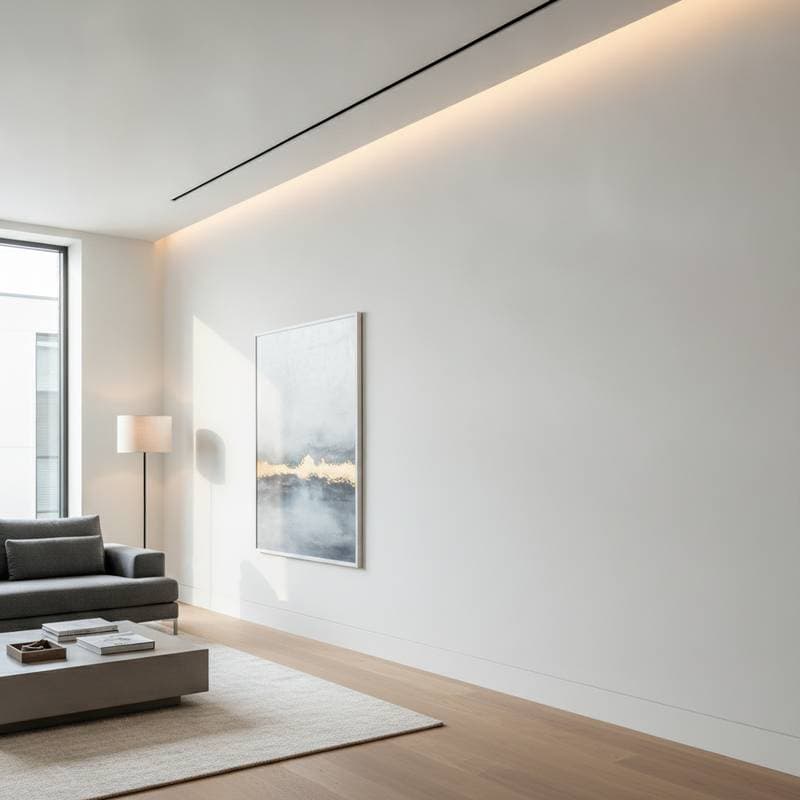
Intense natural light from windows or artificial sources like recessed fixtures can expose subtle surface flaws. Level 5 proves valuable in rooms with skylights or dramatic lighting setups. Standard areas, including living spaces and corridors with moderate illumination, benefit from Level 4's painted finish, which appears seamless.
Selection of Paint Sheen
High-sheen paints, such as gloss or semi-gloss, amplify light reflection and highlight irregularities. Opt for flat or matte sheens to scatter light and mask slight variances. With these choices, Level 4 rivals Level 5 in perceived quality.
Application of Texture or Coverings
Textured applications, wallpapers, or specialty coatings obscure minor discrepancies inherently. Level 5 adds no tangible edge here, positioning Level 4 as the economical selection.
Regional Labor Rates
Skilled labor commands varying fees influenced by market conditions and contractor expertise. Metropolitan regions amplify the Level 5 premium. Across most locales, Level 4 strikes an optimal balance of excellence and economy.
Extent of the Project
Expansive undertakings may negotiate bulk rates, yet the disparity between levels persists proportionally. In comprehensive remodels spanning several rooms, Level 4 safeguards substantial budget allocations.
Assessing Value and Return on Investment
Level 4 suits the majority of home interiors, yielding a paintable surface that satisfies common design standards. It offers robust durability and aesthetic appeal relative to investment.
Level 5 excels in luxury builds, commercial venues, or focal points demanding flawless light diffusion. Although visually striking, it seldom boosts property resale value sufficiently to justify the outlay.
Practical Ways to Reduce Costs
- Evaluate Surfaces Early: Check for underlying issues like uneven framing or settling insulation that could lead to cracks. Addressing these upfront prevents costly corrections later.
- Handle Initial Preparations: Remove furniture, dust surfaces, and protect adjacent areas to streamline professional workflows.
- Select Sheens Strategically: Employ eggshell or flat paints to enhance Level 4's smoothness without added finishing expenses.
- Combine Project Elements: Integrate finishing with painting or minor repairs to leverage contractor discounts.
- Time Work Appropriately: Arrange services in quieter periods, such as late fall, when availability increases and rates decrease.
Building a Realistic Budget
Establish your drywall finishing budget by calculating square footage and selecting the appropriate level based on room functions. Factor in regional averages, then allocate 10 to 15 percent for contingencies like material fluctuations or minor adjustments. Consult local contractors for precise quotes, and prioritize Level 4 for non-critical areas to maximize savings without compromising results. Track expenses through a simple spreadsheet, categorizing materials, labor, and prep to maintain control over the total outlay.
Common Questions on Drywall Finishing
What Accounts for the Typical Price Gap Between Level 4 and Level 5?
The difference stems from $1.50 to $2.50 per square foot, driven by skim coating and extra labor. In a 200-square-foot room, expect an $800 increase for Level 5 over Level 4.
Which Elements Most Influence Finishing Expenses?
Illumination intensity, paint reflectivity, prevailing labor costs, and project dimensions play key roles. Harsh lights or shiny paints accentuate flaws, while elevated rates in busy areas raise overall figures.
How to Cut Finishing Costs While Preserving Standards?
Favor Level 4 in general spaces, pair it with low-sheen paints, and complete preliminary tasks yourself. Booking during low-demand seasons further trims labor fees.
Is Professional Hiring Preferable to DIY for Drywall Finishing?
Professional services ensure uniformity, especially for Levels 4 and 5, using specialized equipment. DIY suits minor patches but demands considerable time and precision for full rooms.
Strategies for Handling Unforeseen Finishing Expenses?
Reserve 10 percent of your estimate as a buffer for items like extra patching or waste. Obtain multiple bids to identify potential overruns early.
Optimal Timing for Drywall Finishing Projects?
Target late winter through early spring, when contractors face fewer bookings and often extend competitive pricing.