Biophilic Greens: Why They Outsell Neutrals in 2026
Green hues inspired by nature capture widespread attention in contemporary design. Previously overshadowed by beige and gray, biophilic greens now dominate choices among homeowners and professionals alike. This shift stems from a collective desire for connection, tranquility, and genuineness, qualities that green provides effectively.
Examine the factors driving this preference and explore methods to integrate these colors into personal spaces, regardless of budget or experience level.
Reasons Green Surpasses Neutrals Currently
1. Emotional Reassurance
Green symbolizes renewal and vitality. Professionals in visual media describe it as breathable, a perception rooted in its balanced effect on the human eye, which eases stress. In areas dedicated to work, meal preparation, or relaxation, this quality proves essential. While neutrals offer security, green imparts a sense of liveliness.
2. Visual Warmth and Versatility
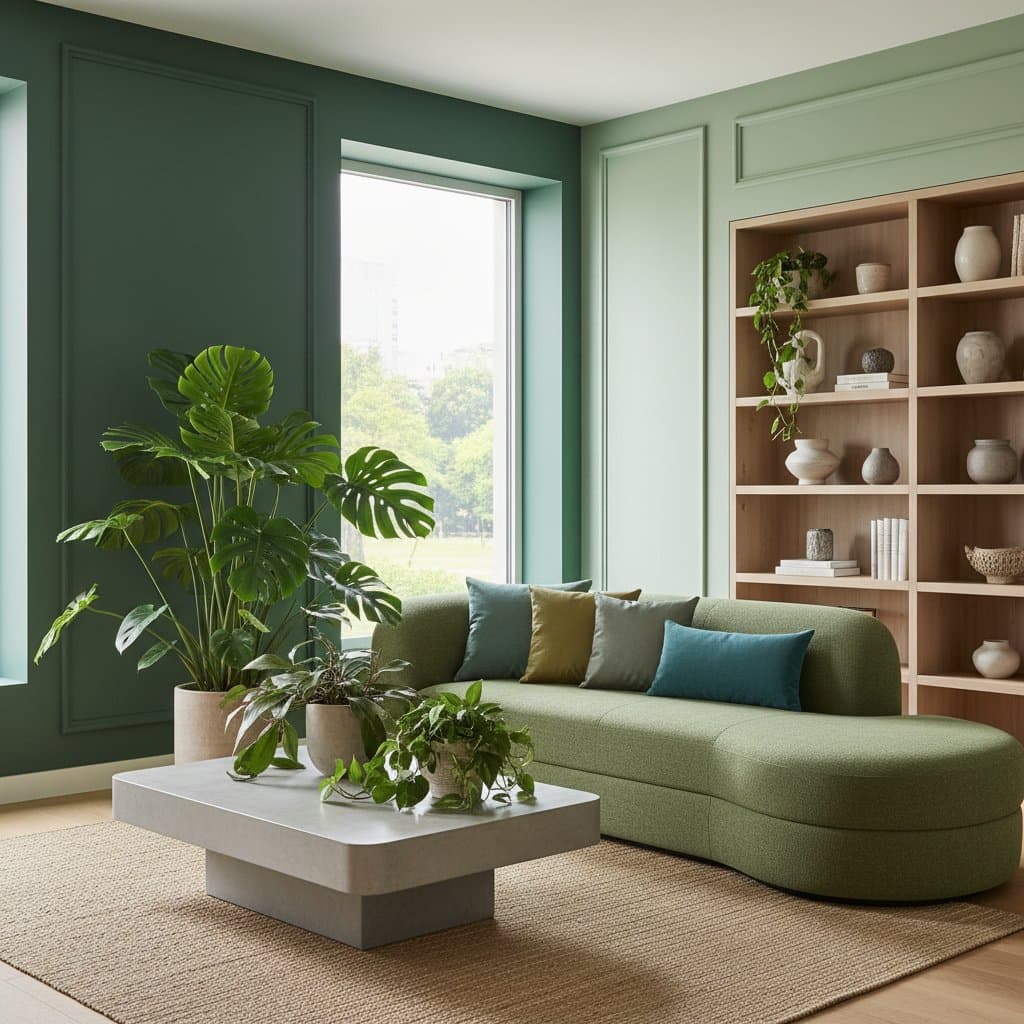
Biophilic greens adjust readily to diverse elements, unlike vibrant reds or cool blues. They harmonize with wood finishes, metallic accents, and stone surfaces. For instance, a soft sage in a kitchen unites stainless steel appliances with wooden countertops. In living areas, a deep pine shade complements leather upholstery and linen fabrics. Such adaptability expands creative possibilities.
3. Appeal in Photography and Media
Experience from media production highlights how green performs under various lighting conditions. Warm grays and taupes frequently appear flat, whereas greens maintain depth and dimension in images. This attribute contributes to their prominence in design publications and broadcasts. As visuals inspire audiences, demand for these colors grows among homeowners, creating a cycle of influence.
Selecting the Ideal Biophilic Green
Identifying the suitable green requires consideration, yet follows straightforward principles. Follow this guide to simplify the process:
- Evaluate natural light exposure. Rooms with north-facing windows benefit from warmer greens featuring yellow undertones to counteract cooler light. South-facing spaces accommodate cooler greens with blue undertones, which enhance brightness.
- Apply multiple samples for comparison. Create 2-foot squares on the wall using three options and monitor their appearance from morning to evening. This reveals the most harmonious choice.
- Assess compatibility with flooring. Warm wooden floors pair well with olive or moss greens. Gray-toned floors align better with eucalyptus or fern shades.
- Consider surface finish impacts. Glossy paints reflect light, lightening darker greens. Matte finishes absorb light, fostering a more intimate atmosphere.
Essential advice: Avoid judgments based on small color swatches alone. Full-scale application often reveals unexpected nuances.
Insights from Television Design Productions
Time-constrained environments in television design foster efficient decision-making and thoughtful layering. Under pressure to transform spaces quickly, teams identify elements that succeed both visually and emotionally. Green consistently emerges as a reliable option.
Key attributes for on-screen performance:
- Depth: Green accommodates shadows effectively without appearing lackluster.
- Balance: It enhances skin tones, portraying individuals as more vibrant and content.
- Continuity: Green unifies varied materials, ensuring cohesive visuals.
During one project, a team constructed a forest-inspired living room within a nondescript studio. Application of sage on walls and trim, combined with potted ferns, evoked a luxurious retreat. The client adopted the same palette for their residence, demonstrating the enduring impact of biophilic elements.
Color Trends and Broader Cultural Influences
Evolving color preferences mirror societal priorities. In periods of uncertainty, individuals gravitate toward comforting, restorative shades. Green conveys optimism and continuity, offering reassurance without overwhelming presence.
Across industries, green gains traction for its market appeal. Restaurants employ it to evoke freshness and environmental consciousness. Offices select sage for conference areas to alleviate tension. Retail displays use green backgrounds to present products in a more organic light. This versatility extends to residential, commercial, and public sectors focused on aesthetic experiences.
Neutrals retain utility, yet biophilic greens provide added emotional resonance that attracts buyers. They transform environments from mere structures into dynamic, supportive settings.
Integrating Biophilic Green with Complementary Colors
Biophilic greens pair effectively with other palettes, enhancing overall design. Consider these combinations:
- Neutral pairings: Soft sage alongside warm white or clay beige maintains serenity while introducing subtle interest.
- Bold accents: Deep forest with saffron or rust creates an grounded, contemporary composition.
- Blue harmonies: Eucalyptus near navy evokes a serene coastal essence.
- Pink contrasts: Muted rose or terracotta introduces balanced warmth.
Incorporate organic textures such as jute rugs, bamboo accents, and linen textiles to amplify the natural essence central to biophilic principles.
Practical Strategies for Implementation
- Sample extensively prior to final selection. Variations in lighting alter perceptions dramatically.
- Incorporate diverse textures. Smooth walls benefit from woven or matte elements in furnishings.
- Utilize layered greens. Combine two or three analogous shades to build dimension and avoid uniformity.
- Prioritize enduring appeal. Select colors aligned with personal taste over fleeting fashions.
- Enhance with foliage. Real plants intensify the inherent vibrancy of painted surfaces.
Advise clients that a space inducing a sense of relief upon entry signifies successful design.
Experiencing Biophilic Green in Daily Life
Adopting biophilic green alters interaction with surroundings. Daylight appears softer in the morning, while evening illumination gains richness. The environment aligns with natural cycles, fostering harmony.
Biophilic greens transcend temporary fads, reconnecting with foundational design values. They cultivate spaces that affirm humanity, stability, and vitality. Selecting sage subtlety or forest intensity equates to crafting an organic foundation for everyday experiences.