Why Santa Fe Texture Will Replace Popcorn Ceilings by 2026
Popcorn ceilings dominated mid-century construction for their speed and cost-effectiveness. These sprayed-on finishes concealed imperfections and added acoustic properties to rooms. However, evolving design preferences now favor smoother, more refined alternatives. Santa Fe texture emerges as the ideal successor, offering dimensional appeal with a polished, handcrafted aesthetic that enhances any interior.
This transition reflects broader trends toward intentional, low-maintenance surfaces. Homeowners seek finishes that balance visual interest with practicality. Santa Fe texture achieves this through its subtle, troweled application, which introduces gentle undulations without overwhelming the space. As a result, it positions ceilings as subtle design elements rather than outdated distractions.
Understanding the Santa Fe Texture
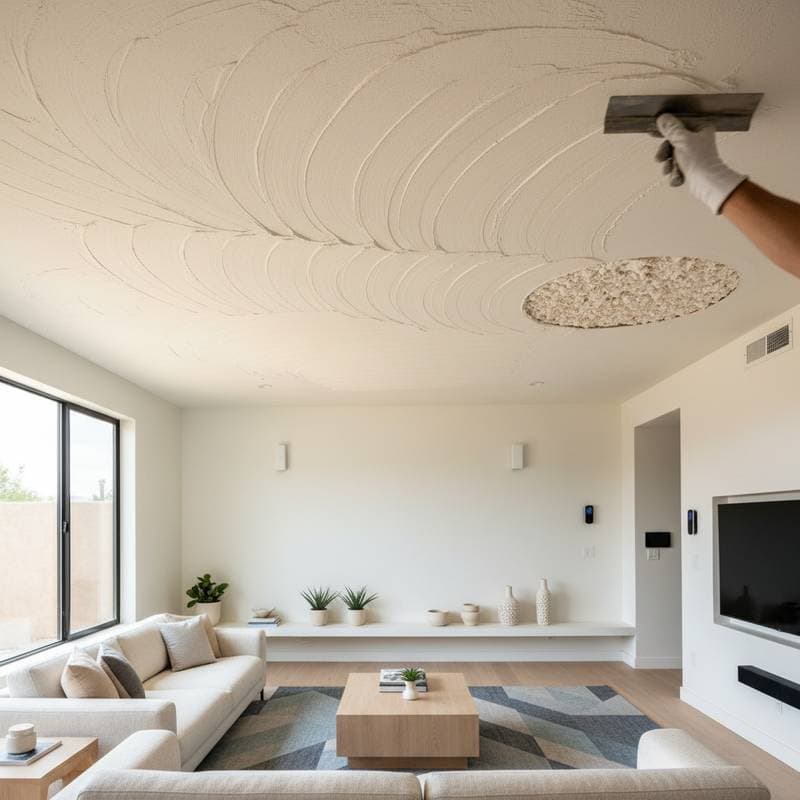
Santa Fe texture draws inspiration from Southwestern architecture, featuring a soft, irregular pattern applied by hand. Professionals mix joint compound to a creamy consistency and spread it with a trowel in overlapping strokes. This method creates varied depths, from shallow valleys to modest peaks, that catch light dynamically throughout the day.
The finish suits diverse styles, from contemporary lofts to traditional ranch homes. Its organic feel avoids the uniformity of flat ceilings while steering clear of popcorn's coarseness. Maintenance proves straightforward: a damp cloth suffices for dusting, and repainting requires only a single coat over the sealed surface.
The Decline of Popcorn Ceilings
Popcorn ceilings, often termed acoustic or stipple finishes, proliferated in the 1950s through 1980s homes. Builders applied them via spray guns for rapid coverage, minimizing labor on vast surfaces. Yet, these textures collect dust in their crevices and complicate cleaning, as vacuums or sponges snag on the uneven bumps.
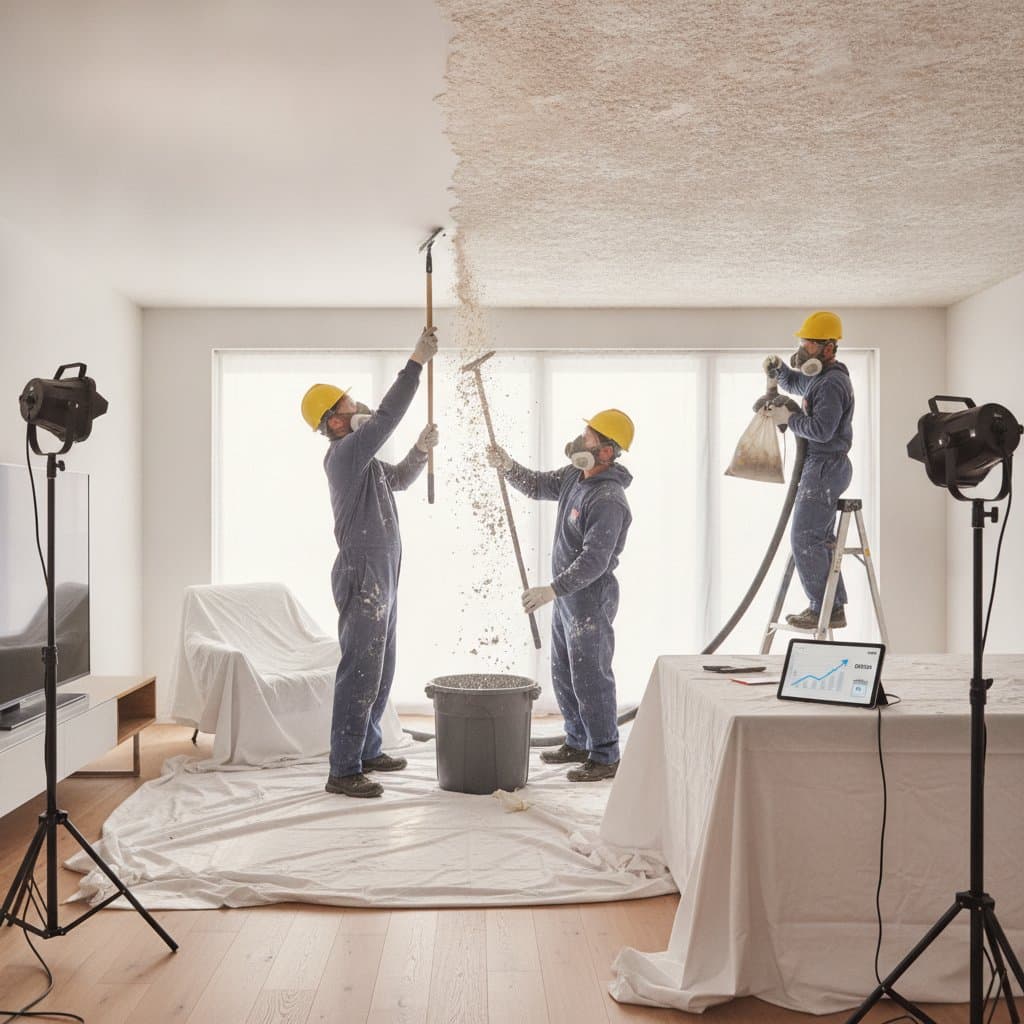
Uneven lighting exacerbates their drawbacks, casting stark shadows that date the room. Many contain asbestos in pre-1980s installations, necessitating professional abatement for safety. Santa Fe texture addresses these issues by providing similar flaw-hiding depth on a smoother plane, which repels particles and supports even illumination.
The Narrative Appeal of Santa Fe Texture
Effective design conveys character through texture, and Santa Fe excels in this regard. Each trowel mark contributes to a narrative of craftsmanship, evoking artisanal techniques over mass production. This quality elevates ordinary ceilings into focal points that harmonize with surrounding elements.
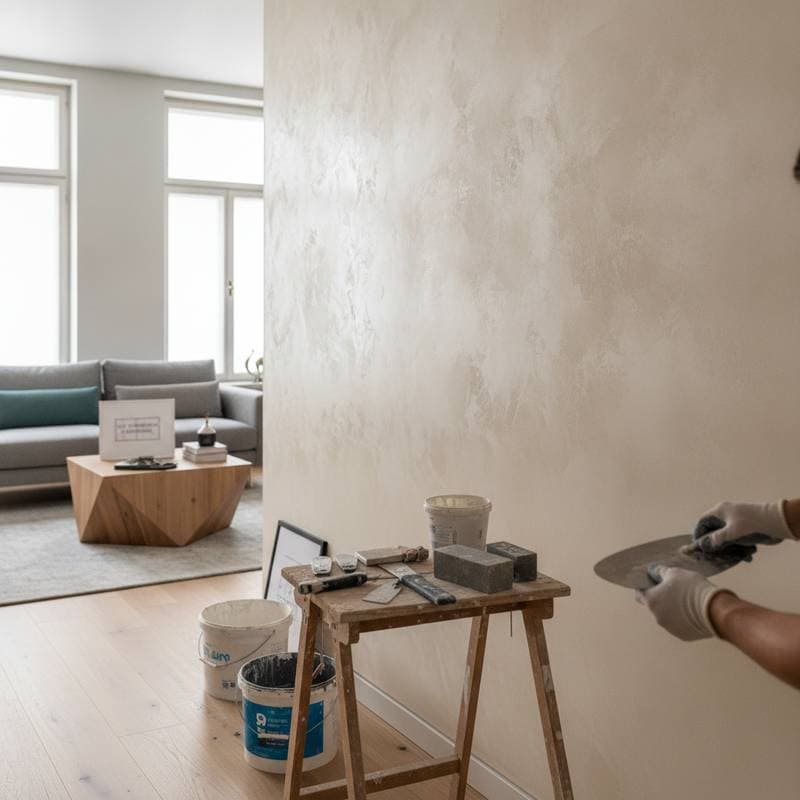
Applied to walls as well, it fosters continuity, visually expanding vertical space. Select earth-toned paints, such as warm taupes or soft creams, to amplify its inviting quality. In lived-in spaces, this finish withstands daily wear, maintaining its allure over years.
Cost-Effective Implementation Strategies
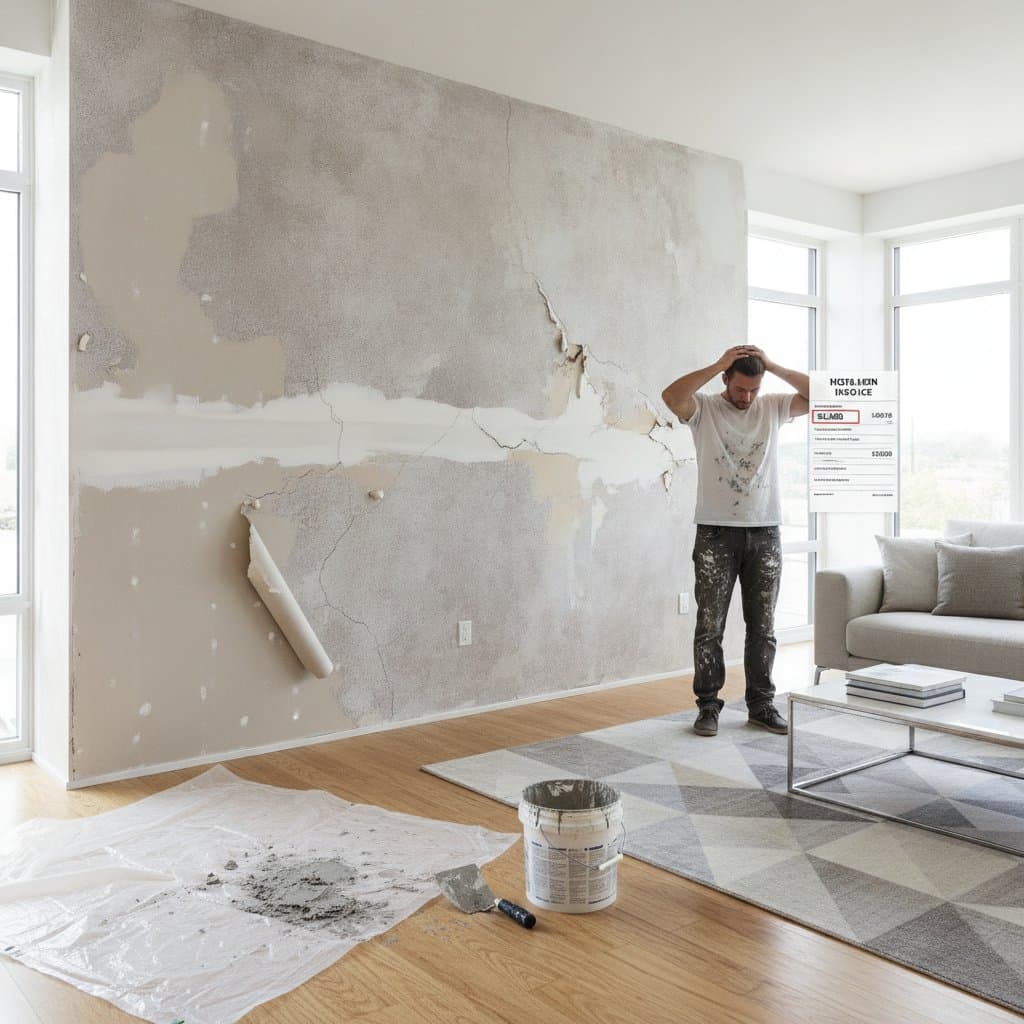
Transitioning to Santa Fe texture accommodates various budgets through phased approaches. Begin by evaluating the existing ceiling: test for asbestos if the home predates 1980, and budget for professional testing if needed.
DIY for Budget-Conscious Projects:
- Scrape popcorn gently with a 6-inch putty knife after wetting the surface with a garden sprayer.
- Apply a thin layer of premixed joint compound using a 10-inch trowel, varying stroke directions for irregularity.
- Sand lightly once dry, then prime with a stain-blocking formula before painting in two coats.
Materials for a 12x12 room typically cost under $150, with completion in a weekend.
Professional Services for Efficiency:
Engage contractors experienced in texture work, such as those at O’Connor Painting LLC, for precise results. They manage removal, priming, and application, often completing a standard room in one day. Costs range from $2 to $4 per square foot, depending on complexity.
Premium Enhancements for Maximum Impact:
Incorporate recessed lighting or metallic paint accents during full renovations. A base skim coat followed by layered troweling yields a bespoke effect. This investment boosts home value by 5-10% through perceived modernity.
Enduring Versatility and Appeal
Santa Fe texture endures as a staple due to its adaptability across aesthetics. It integrates seamlessly with matte plasters, wood paneling, or stone features, creating cohesive environments. Designers favor it for its light-diffusing properties, which soften harsh overhead fixtures.
Media professionals select it for sets because it photographs evenly, avoiding glare or dark patches common in popcorn. Sealed properly, the surface repels stains and supports annual refreshes with low-VOC paints. This durability ensures long-term satisfaction without frequent interventions.
Professional Application Techniques
Experts begin with thorough preparation to guarantee adhesion. Remove loose debris, repair cracks with setting compound, and apply a high-bond primer to the substrate. Mix all-purpose joint compound with water to achieve a spreadable viscosity, avoiding lumps.
Apply in sections: trowel from the center outward, feathering edges to blend seamlessly. Allow 24 hours for drying, then sand with 120-grit paper to refine contours. Finish with two coats of ceiling paint in a flat sheen for optimal diffusion.
Color choices influence mood: crisp whites brighten small areas, while subtle grays add depth to larger volumes. This methodical process yields a professional-grade result accessible to skilled tradespeople.
Photographic and Staging Advantages
In visual media, surface quality determines perceived luxury. Santa Fe texture scatters light gently, flattering both natural and artificial sources without hotspots. This consistency benefits real estate photography, where ceilings often frame key shots.
Staging experts recommend it for open houses, as it signals thoughtful updates to prospective buyers. The finish conceals minor imperfections, allowing focus on furniture and decor. Homes with this texture sell faster, often at a premium, due to its timeless sophistication.
Essential Materials and Tools
Select tools and products that promote ease and longevity. Opt for ready-mixed, lightweight joint compound to minimize cracking during application.
- Application Tools: A flexible stainless-steel trowel (10-14 inches) for controlled spreading; pair with a hawk for holding compound.
- Preparation Supplies: Drywall sander and 100-150 grit paper to smooth transitions.
- Finishing Products: Oil-based primer for adhesion; acrylic latex paint in low-sheen formulas for durability.
Eco-friendly options, including water-based compounds with zero VOCs, support healthier interiors. Store leftovers in airtight containers for future touch-ups.
Building Value Through Strategic Upgrades
From an investment perspective, Santa Fe texture enhances equity with minimal disruption. It modernizes without altering architecture, appealing to broad demographics. Contractors streamline workflows by applying it over prepared surfaces, reducing project timelines.
Service providers differentiate by specializing in this finish, attracting clients seeking authentic Southwest influences. For property owners, it represents a high-return cosmetic improvement, often recouping costs upon resale.
Embracing the Everyday Benefits
Daily life with Santa Fe texture reveals its practicality. The resilient surface masks everyday marks, simplifying upkeep to occasional wiping. It adapts to seasonal decor, enhancing holiday lighting or summer brightness alike.
Repainting refreshes the space effortlessly, reviving the pattern's subtle drama. This finish evolves alongside personal tastes, providing a foundation for lasting comfort. Homeowners appreciate ceilings that contribute to serenity rather than compete for attention.