Why Vaulted Ceilings Triple Painting Costs
Painting vaulted ceilings ranks among the most demanding and costly interior painting endeavors for homeowners. The impressive height and intricate architectural features that enhance visual appeal also demand substantial labor and time. Homeowners frequently discover that these projects cost up to three times more than painting equivalent flat ceilings. Grasping the reasons behind these expenses establishes realistic expectations and supports effective budgeting for renovations involving elevated or angled ceiling areas.
Vaulted Ceiling Painting Cost Overview
Professional painting of vaulted ceilings generally falls between $4 and $10 per square foot, with typical projects averaging $6 to $8 per square foot for basic to mid-level finishes. Flat ceilings, by comparison, range from $1.50 to $3 per square foot. These rates encompass materials, labor, and essential setup.
Average Cost Ranges by Room Size
- Small vaulted room (150 sq. ft.): $600 to $1,200
- Medium vaulted room (250 sq. ft.): $1,000 to $2,000
- Large vaulted room (400 sq. ft.): $1,600 to $3,500
Cost Breakdown per Square Foot
| Cost Category | Typical Range | Description |
|---|---|---|
| Materials | $0.75 - $2.00 | Paint, primer, tape, protective sheeting, and rollers |
| Labor | $3.00 - $7.00 | Skilled painter time, ladder setup, and safety equipment |
| Preparation | $0.50 - $1.00 | Cleaning, patching, and masking high surfaces |
| Equipment | $0.25 - $0.75 | Scaffolding rental, extension poles, and lifts |
These estimates reflect professional services that cover initial setup, thorough cleanup, and precise finishing. Attempting a do-it-yourself approach may cut material expenses but often escalates costs through equipment rentals and prolonged timelines.
Factors Affecting Vaulted Ceiling Painting Costs
Multiple elements drive the elevated pricing for vaulted ceiling projects. Each contributes unique challenges that surpass those of routine ceiling work.
Height and Accessibility
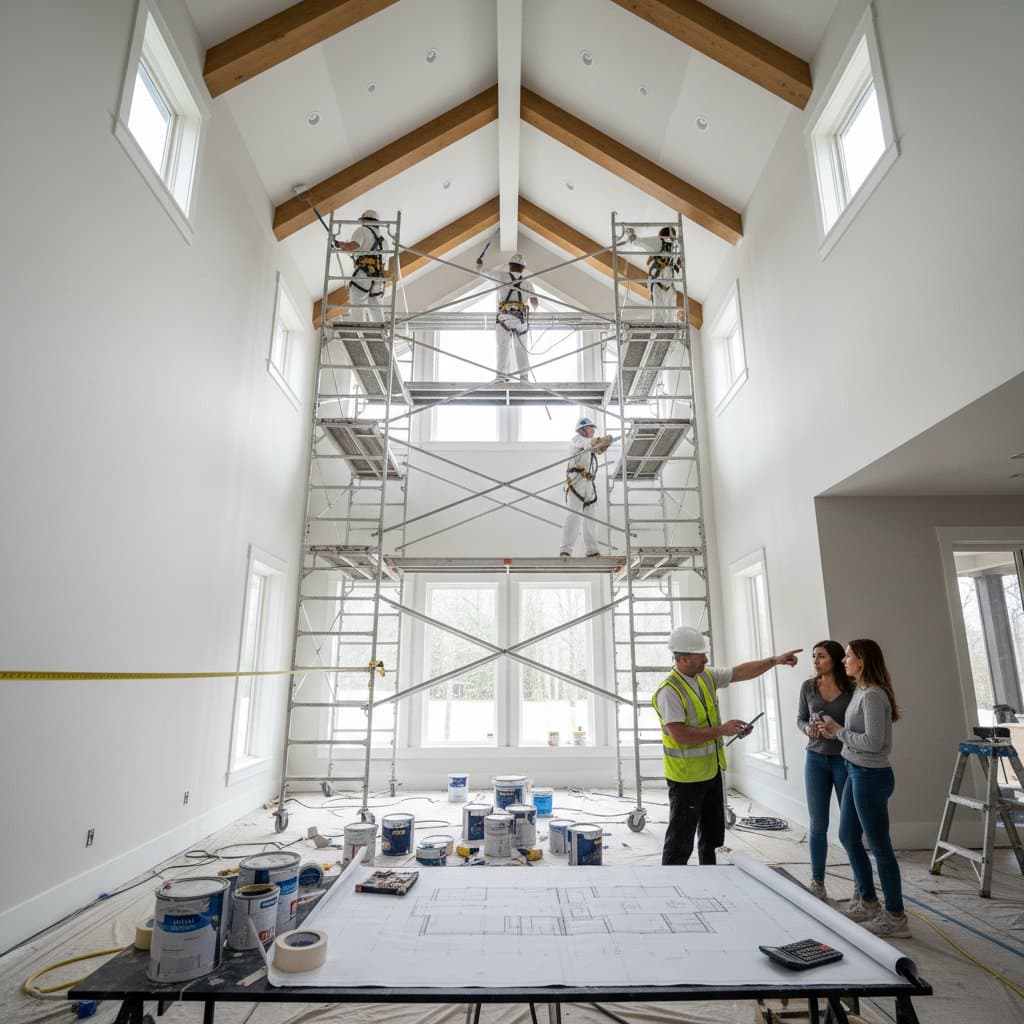
Height stands as the primary driver of increased costs. Ceilings exceeding 10 feet necessitate ladders, extension poles, or full scaffolding systems. Painters reposition these tools repeatedly to ensure safe reach, extending the overall duration significantly. For instance, a ceiling peaking at 20 feet may require twice or thrice the labor hours of an 8-foot standard ceiling.
Ceiling Shape and Angle
Vaulted designs vary widely, including cathedral, barrel, single-slope, and tray configurations. Steeper inclines demand meticulous brush techniques and steady roller application for uniform results. Greater geometric complexity inevitably slows the painting process and heightens the risk of uneven application.
Surface Condition and Preparation
Preparation intensifies with elevation. Accumulated dust, cobwebs, and residues from fixtures require thorough cleaning prior to any paint application. Patching or sanding at heights demands secure positioning on ladders or scaffolds, amplifying both effort and time investment.
Paint Type and Finish
Experts recommend durable paints that withstand fading or moisture for high ceilings, given the difficulty of future touch-ups. Such premium options carry higher per-gallon prices. Finishes like eggshell or satin further require exacting application to eliminate streaks or visible roller patterns.
Lighting and Visibility
Intense artificial or natural light exposes flaws readily. To counter this, professionals apply additional layers and blend edges meticulously for seamless results. This heightened focus elevates both material usage and labor demands.
Detailed Cost Analysis by Finish Quality
| Finish Level | Cost Range per Sq. Ft. | Key Differences |
|---|---|---|
| Basic | $4 - $6 | Single coat of standard flat paint, minimal prep, basic access setup |
| Standard | $6 - $8 | Two coats of mid-grade paint, moderate prep, light repairs |
| Premium | $8 - $10+ | High-end paint, detailed trim work, extensive prep and safety setup |
Premium options frequently incorporate washable formulations, precise color matching, and intricate detailing around moldings or skylights. In open-concept layouts, these enhancements ensure cohesive aesthetics across visible spaces, though they substantially raise project totals.
Why Labor Costs Dominate
Labor constitutes the largest portion of expenses in vaulted ceiling painting. Setting up scaffolding, securing high edges with tape, maneuvering ladders with caution, and applying paint evenly across expansive vertical planes all require specialized expertise and stamina.
Teams of two or more professionals collaborate for optimal safety and productivity. A pair might finish a 250-square-foot vaulted area in two to three days, whereas an equivalent flat ceiling takes just one day. This disparity directly inflates labor billing.
Regional and Seasonal Factors
Variations in local labor markets shape overall pricing. Metropolitan zones with elevated cost of living command premium painter rates. Areas lacking ready access to scaffolding or lifts face added charges for transportation and assembly.
Demand fluctuations by season also impact quotes. Interior tasks surge in winter as outdoor projects pause. Opting for off-peak scheduling, such as late winter or midsummer, often secures reduced rates and prompt service.
Value and Return on Investment
Despite the initial outlay, a professionally painted vaulted ceiling delivers enduring benefits. Fresh coats amplify natural illumination, accentuate structural elegance, and safeguard underlying drywall or plaster. Such improvements bolster home value, especially in designs where ceilings dominate multiple views.
Hiring experts avoids the pitfalls of amateur efforts, including inconsistent coverage and potential hazards. The resulting polished appearance fosters an airy ambiance that enhances daily living and attracts prospective purchasers.
Cost-Saving Strategies
Homeowners can temper expenses through thoughtful preparation and selections.
- Handle preliminary preparation independently. Clear dust, relocate furnishings, and shield floors in advance to shorten professional labor time.
- Select neutral or matching hues. Sticking to similar tones minimizes required coats and paint volume.
- Combine with complementary tasks. Addressing walls and ceilings together under one agreement streamlines labor allocation.
- Invest in superior paint products. Durable varieties curtail the frequency of maintenance repaints.
- Time the project strategically. Aim for periods of lower demand to negotiate favorable pricing.
Planning Your Budget
Effective budgeting for vaulted ceiling painting involves assessing per-square-foot rates alongside comprehensive project totals. Factor in paint, labor, equipment, and safety measures. Obtain itemized quotes from at least two licensed contractors, verifying inclusions like primer applications, debris removal, and surface protection.
Build in a 10 to 15 percent buffer for unforeseen elements, such as hidden repairs or additional layers. Addressing issues like drywall fissures or persistent stains promptly during prep prevents escalation. This proactive approach curbs overruns and maintains timelines.
Frequently Asked Questions
1. What is the average cost to paint a vaulted ceiling?
Homeowners generally pay $4 to $10 per square foot, influenced by height, configuration, and finish selections. For a 250-square-foot living room, expect $1,000 to $2,000 to cover materials and labor comprehensively.
2. Why does painting a vaulted ceiling cost more than a flat ceiling?
Elevated structures and angular profiles necessitate specialized access tools like scaffolding, along with prolonged setup. Professionals dedicate extra hours to safe, even coverage, while the expanded surface area consumes more paint and primer.
3. How can I reduce the cost of painting a vaulted ceiling?
Conduct initial site preparation, opt for color schemes requiring fewer applications, and align timing with slower seasons. Integrating adjacent surfaces into the scope often yields economies on shared labor.
4. Should I paint a vaulted ceiling myself or hire a professional?
While self-application trims labor fees, it introduces substantial safety concerns and quality risks at heights. Experts provide swift, reliable outcomes while adhering to all protective protocols.
5. What types of paint work best for vaulted ceilings?
Acrylic or latex formulations in low-sheen varieties, such as matte or eggshell, suit these surfaces effectively. They minimize glare and offer robust protection. Satin sheens prove advantageous in well-lit areas to subtly boost luminosity.
6. How do I plan a budget for vaulted ceiling painting?
Measure the ceiling area and apply a $4 to $10 per square foot multiplier. Incorporate a 10 to 15 percent reserve for variables like supplementary coats or minor fixes. Scrutinize proposals to confirm coverage of essentials including primer, post-job cleanup, and safeguarding elements.