Why Textured Ceilings Increase Painting Quotes by About $800
Textured ceilings, often called popcorn or stippled finishes, rank among the most expensive surfaces to refinish or repaint. Homeowners frequently see quotes for these ceilings come in around $800 higher than for smooth surfaces of the same size. The increase stems from added labor, preparation, and material demands that texture requires.
Average Cost Ranges for Ceiling Work
Painting or refinishing ceilings typically costs between $1.00 and $3.00 per square foot for smooth surfaces. Textured ceilings often reach $2.00 to $5.00 per square foot, depending on condition and texture type. For a typical 400 square foot room, this difference can easily add $800 or more to the total project cost.
Cost Breakdown per Square Foot
| Cost Component | Smooth Ceiling | Textured Ceiling | Notes |
|---|---|---|---|
| Materials | $0.50 - $1.00 | $0.75 - $1.50 | More paint and primer required for texture |
| Labor | $0.75 - $1.50 | $1.50 - $3.00 | Slower application and added preparation |
| Preparation | $0.25 - $0.50 | $0.50 - $1.00 | Includes masking, covering, and patching |
| Cleanup | $0.10 - $0.25 | $0.25 - $0.50 | Extra dust and debris removal |
Factors Affecting Textured Ceiling Costs
Surface complexity plays a major role. Textured ceilings absorb more paint and require careful application. The peaks and valleys create shadows and uneven coverage, which means multiple coats are often necessary. Each coat adds both labor time and materials.
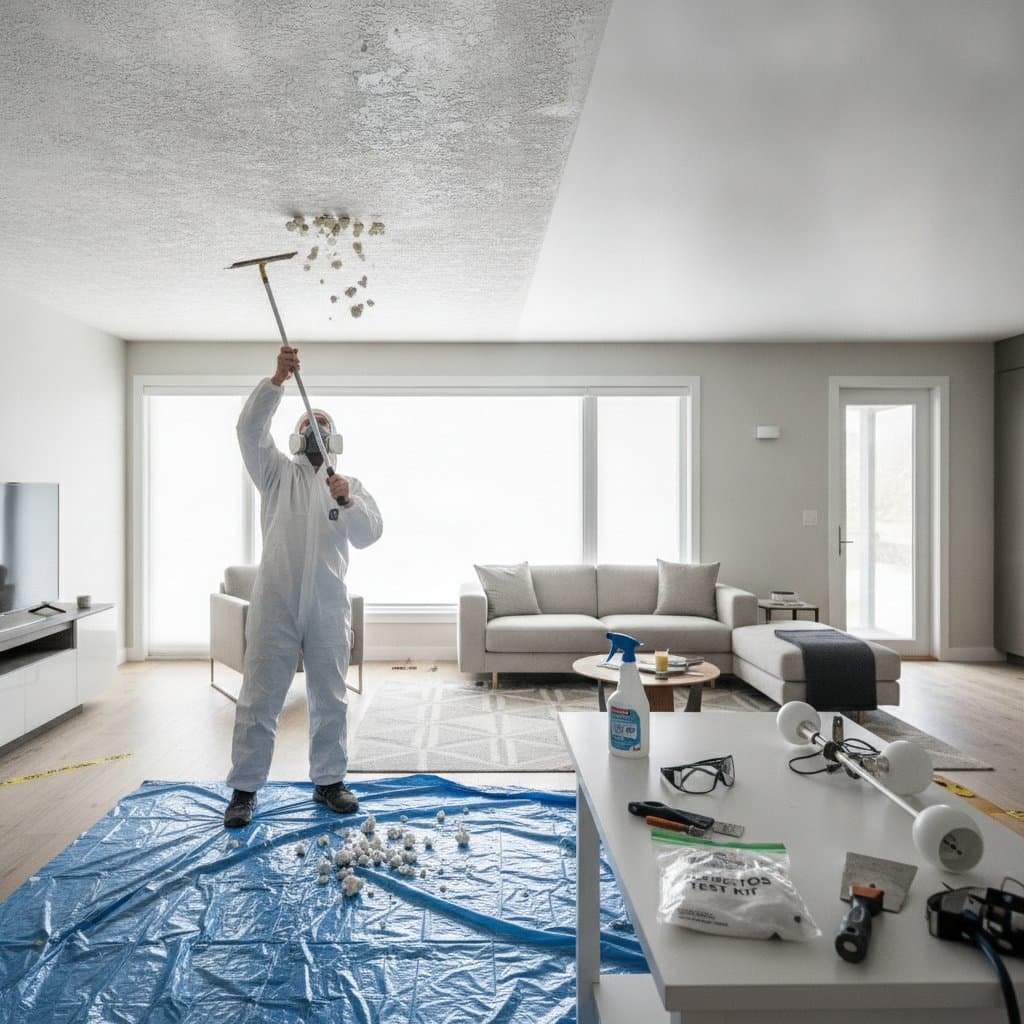
Preparation requirements also drive up costs. Before painting or refinishing, the surface must be inspected for cracks, peeling, or loose material. In older homes, this step may involve asbestos testing or removal, which adds significant cost. Even without hazardous materials, masking and protecting walls, floors, and fixtures takes longer with texture.
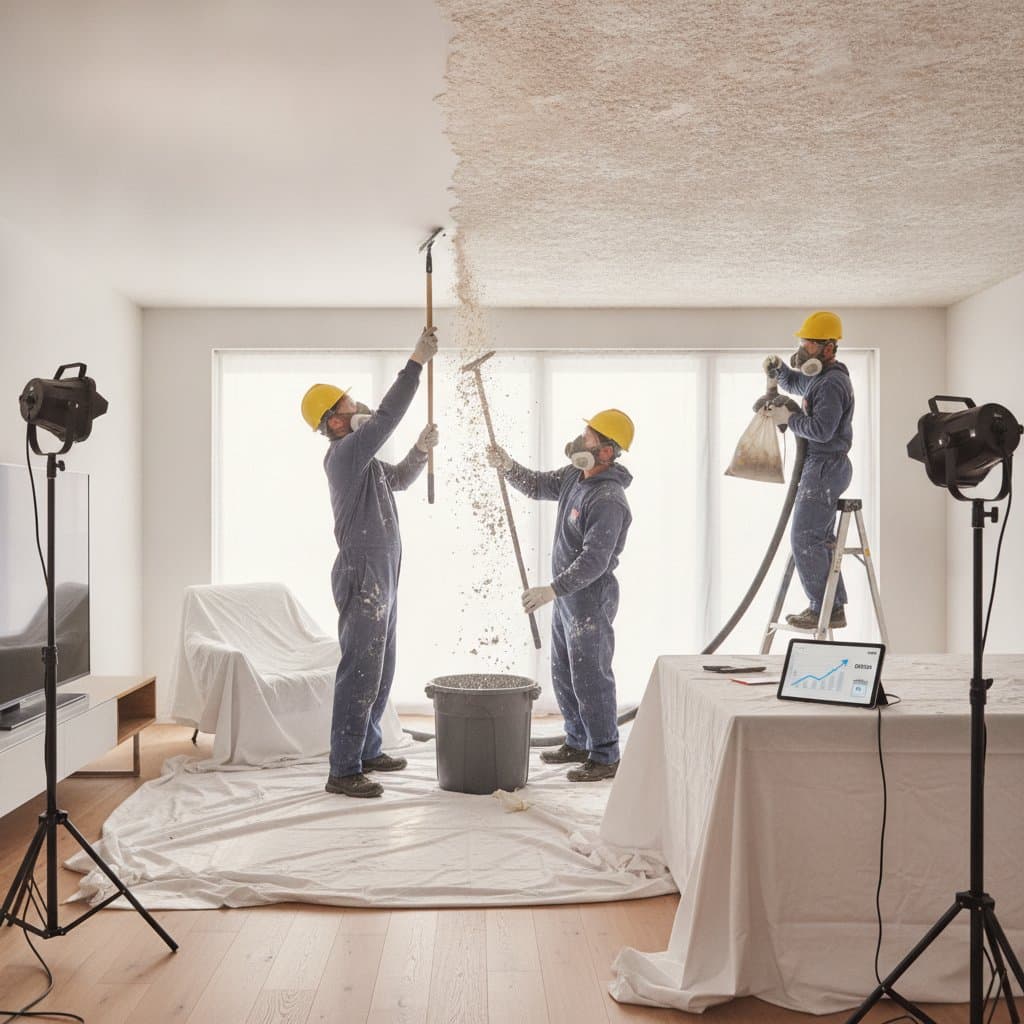
Access and cleanup present further challenges. Working overhead is physically demanding. With textured finishes, painters use specialized rollers or spray equipment to achieve even coverage. These tools require setup and cleanup time, which increases labor hours. Dust and debris from touch-ups or repairs also raise cleanup costs.
Material consumption rises because textured surfaces have more surface area than smooth ones. This means more paint, primer, and sometimes sealant. A single gallon that covers 350 square feet on a smooth ceiling might only cover 250 square feet on a textured one. Over several gallons, the difference becomes noticeable in the final bill.
Detailed Cost Analysis by Texture Type
| Texture Type | Basic Range | Standard Range | Premium Range | Key Differences |
|---|---|---|---|---|
| Light Stipple | $1.50 - $2.25 | $2.25 - $3.00 | $3.00 - $3.75 | Easier to paint, minimal repair work |
| Popcorn Finish | $2.00 - $3.50 | $3.50 - $4.50 | $4.50 - $5.00 | Absorbs more paint, often needs patching |
| Knockdown | $1.75 - $2.75 | $2.75 - $3.75 | $3.75 - $4.50 | Requires spraying and hand finishing |
| Orange Peel | $1.50 - $2.25 | $2.25 - $3.25 | $3.25 - $4.00 | Slightly easier coverage than popcorn |
Value and ROI Considerations
Although textured ceilings cost more to work on, the investment can add value when handled correctly. A freshly refinished ceiling brightens the room and improves resale appeal. Removing outdated popcorn texture or repainting with a clean, modern finish can enhance the perception of cleanliness and space. Homeowners should view the additional cost as part of maintaining or improving property value.
Money-Saving Strategies
Homeowners can manage costs without sacrificing quality by taking a few strategic steps. Handle preparation work themselves, such as covering furniture and taping edges before painters arrive. Schedule during off-peak seasons when contractors have more availability and may offer lower rates. Choose mid-grade materials that balance durability and price without compromising finish quality. Bundle multiple services, such as ceiling and wall painting, to reduce setup fees.
Budget Planning Tips
When budgeting for textured ceiling work, allocate at least 20 percent more than the estimate for a smooth ceiling. Include a small contingency for unexpected repairs, especially in older homes. If removal of old texture is part of the project, request an itemized quote that separates removal, repair, and painting so you can evaluate each step accurately. Clear communication with your contractor about texture condition and desired finish ensures a more reliable estimate.
Scheduling for Cost Savings
Late winter or early spring often provides better contractor availability and more competitive pricing, making it a good window for cost savings.