Why Paint Warranties Exclude Bare Wood, Masonry, and Metal
Homeowners who apply a fresh coat of paint expect warranties to safeguard their investment for years. These warranties provide assurance, yet they include specific exclusions for certain surfaces. Such limitations arise from the practical realities of how materials interact with paint over time.
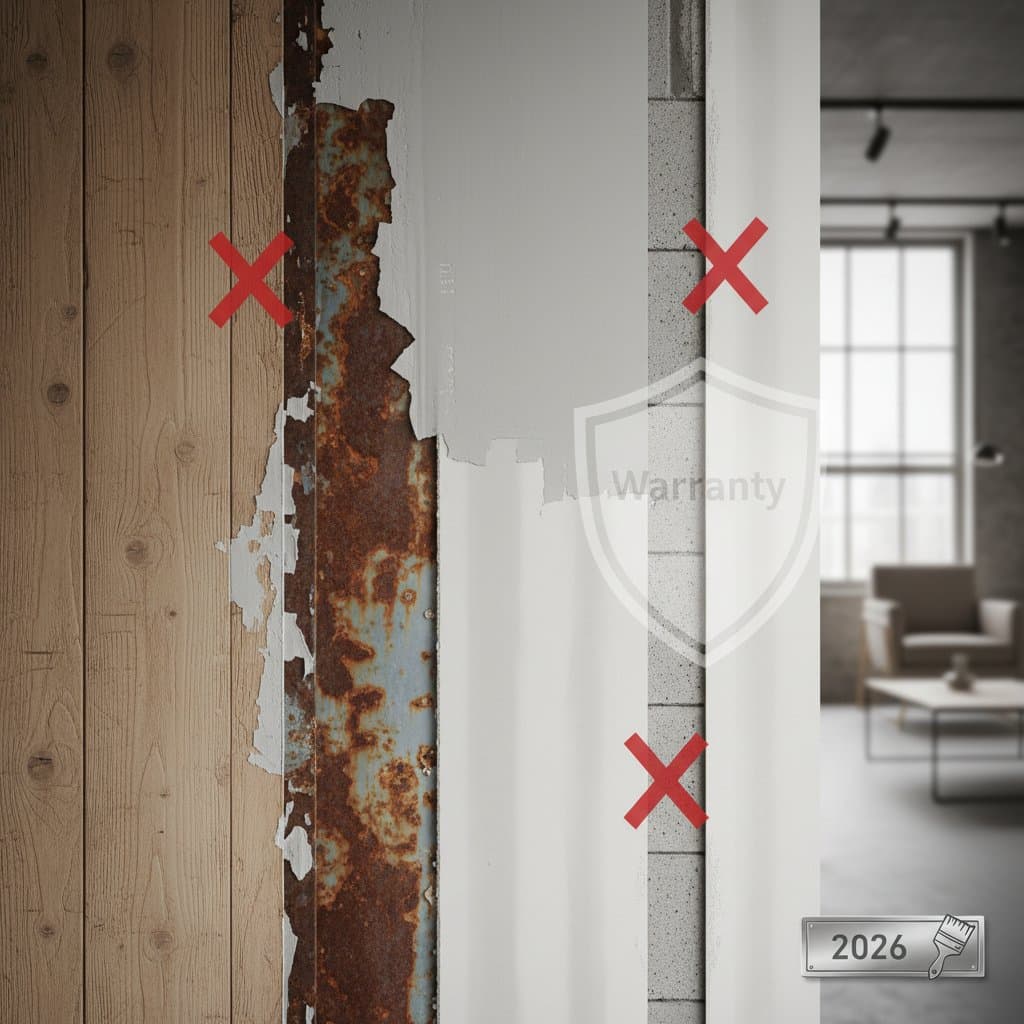
Manufacturers and contractors design warranties based on reliable performance under standard conditions. Surfaces that introduce instability, high porosity, or exposure to harsh elements fall outside this scope. The primary exclusions cover bare wood, masonry, and metal. Each presents distinct challenges that affect paint longevity. Homeowners benefit from recognizing these issues to select appropriate preparations and products.
1. Bare Wood: Moisture Absorption and Expansion
Bare wood, such as unpainted siding or trim, absorbs moisture readily from the environment. This absorption causes the wood to swell and contract with weather changes, stressing any applied paint. Over time, these movements lead to cracking, peeling, and failure of the paint film.
Challenges with Bare Wood
Wood fibers expand when wet and shrink when dry, creating tension that standard paints cannot withstand without proper priming. Without a barrier, moisture penetrates the wood, promoting rot and diminishing adhesion. Environmental factors like humidity and temperature fluctuations exacerbate these effects, making uniform performance impossible to guarantee.
Preparation and Cost Considerations
Effective preparation involves sanding the surface smooth, applying a high-quality wood primer, and possibly a sealer to block moisture. These steps add to the project cost, typically ranging from $1.50 to $3.00 per square foot for labor and materials. Specialty primers formulated for exterior wood enhance durability by creating a stable base for topcoats.
Steps for Successful Application
Start by ensuring the wood remains dry during application; cover it if rain threatens. Use oil-based or acrylic primers suited to the wood type, followed by paints with UV protection. Regular inspections for early signs of moisture damage allow timely interventions. With these measures, bare wood surfaces achieve protection that rivals warranted applications.
2. Masonry: Porosity and Alkaline Reactions
Masonry surfaces, including concrete, brick, and stucco, feature high porosity and alkaline properties. Paint applied without adequate preparation absorbs into the material unevenly, leading to inconsistent coverage. Internal moisture and chemical reactions further compromise the finish.
Why Warranties Exclude Masonry
Moisture trapped within masonry migrates outward, lifting paint and causing blisters or delamination. Efflorescence, the emergence of salt deposits, creates a powdery residue that undermines adhesion. The high pH of cement-based materials degrades paint binders, resulting in chalking and color fading.
Cost and Preparation Factors
Preparation demands thorough cleaning, pH neutralization, and application of block fillers or elastomeric primers. These processes increase expenses to $2.50 to $5.00 per square foot. Elastomeric coatings, which bridge small cracks and allow vapor transmission, offer superior resistance to these challenges.
How to Ensure Better Results
Allow new masonry to cure for at least 28 days before painting. Pressure wash to remove contaminants, then apply a test patch to verify compatibility. Select breathable, alkali-resistant paints to permit moisture escape. Professional assessment ensures the surface receives tailored treatment for extended service life.
3. Metal: Corrosion and Thermal Expansion
Bare metal surfaces, like steel railings or aluminum siding, corrode rapidly when exposed to air and water. Paint on unprepared metal fails as rust forms beneath the coating, causing bubbling and flaking. Thermal expansion differences between metal and paint layers add further stress.
Challenges with Metal
Oxidation on ferrous metals generates expansive rust that disrupts paint integrity. Non-ferrous metals, such as aluminum, develop oxide layers that prevent bonding unless etched properly. Temperature swings cause metal to expand and contract more than paint, leading to cracks and exposure to elements.
Preparation and Cost Considerations
Rust removal through sanding or chemical stripping precedes priming with rust-inhibiting products. Galvanized or stainless steels require specific etch primers for adhesion. Costs for these preparations range from $2.00 to $4.50 per square foot, reflecting the need for durable, weather-resistant topcoats.
Steps for Successful Application
Clean metal thoroughly to eliminate oils and oxides, then apply primer immediately to prevent flash rusting. Choose paints with anti-corrosive additives and flexibility to accommodate movement. Annual cleaning with mild detergents preserves the coating. These practices yield metal finishes that endure harsh conditions without warranty reliance.
Interpreting Warranty Exclusions
Warranties assure product quality under ideal applications but cannot extend to variable substrates. Exclusions define boundaries, protecting manufacturers from claims tied to preparation shortcomings. Homeowners avoid surprises by reviewing terms upfront and consulting professionals for complex surfaces.
Budgeting for Challenging Surfaces
Projects involving excluded surfaces require additional investment in preparation and materials. Allocate 15 to 25 percent more than standard painting budgets to cover priming, testing, and specialty products. Factor in long-term savings from reduced repaints; durable applications on bare wood, masonry, or metal often last 10 to 15 years with minimal upkeep.
Break down costs: preparation accounts for 40 percent, materials 30 percent, and labor 30 percent. Obtain multiple quotes to compare approaches. Investing wisely ensures value, transforming potential pitfalls into reliable, attractive exteriors.
Frequently Asked Questions
Why do paint warranties exclude bare wood, masonry, and metal?
These materials exhibit variable behavior influenced by moisture, expansion, and chemical interactions. Manufacturers cannot predict outcomes without controlled preparation, so exclusions maintain realistic coverage standards.
Can these surfaces still receive effective paint applications?
Yes, targeted preparations and appropriate coatings produce strong results. Select primers and paints engineered for each material to promote adhesion and flexibility.
How much extra budget is needed for these surfaces?
Plan for 15 to 25 percent above routine projects. Additional funds support essential steps like priming and surface treatment that enhance durability.
Does professional involvement lower failure risks?
Professionals apply expertise in surface assessment and product selection. Their methods reduce common issues, delivering outcomes that withstand environmental demands.
Are workmanship warranties available for excluded surfaces?
Many contractors provide labor guarantees separate from product warranties. These cover application quality, offering reassurance for specialized projects.
What maintenance prolongs paint on these surfaces?
Conduct yearly inspections for damage, clean gently to remove debris, and address moisture sources promptly. Touch up minor flaws to prevent widespread deterioration.