The $800 Drywall Sanding Mistake Ruining Your Flips
Flipping houses demands precision in every detail, particularly on surfaces that catch a buyer's eye right away. One common yet costly error hides beneath layers of paint: inadequate drywall sanding. This oversight transforms a promising renovation into a budget-draining headache, with uneven walls that diminish the home's appeal and require extensive fixes.
Mastering drywall sanding techniques safeguards your investment and enhances project outcomes. A flawed sanding process often escalates expenses by $800 or more through repairs, repainting, and delays. Professionals emphasize that early detection and correct methods preserve timelines and elevate resale potential.
Drywall Sanding Cost Overview
Drywall sanding expenses generally span $0.30 to $1.00 per square foot, influenced by finish quality, regional labor rates, and initial surface preparation. For a typical 250-square-foot room, expect to invest $75 to $250 for expert services. Uneven installations or heavy joint compound applications inflate these figures due to increased effort and supplies.
Average Cost Ranges by Project Size
- Small room (up to 150 sq ft): $45 to $120
- Medium room (200 to 350 sq ft): $90 to $250
- Large room (400 to 600 sq ft): $200 to $600
- Full home prep (1,200+ sq ft): $400 to $1,200
These estimates cover sanding, minor patching, debris removal, and pre-prime evaluations.
Cost Breakdown per Square Foot
Typical drywall sanding breaks down as follows:
- Materials: $0.05 to $0.15 per sq ft
- Labor: $0.20 to $0.70 per sq ft
- Preparation and cleanup: $0.05 to $0.15 per sq ft
Errors like aggressive sanding or inconsistent blending add $0.50 to $1.50 per square foot in corrections. In a modest room, such issues compound with repainting to exceed $800 total.
Factors Affecting Drywall Sanding Costs
Multiple elements dictate the smoothness of your walls and the final bill.
Surface condition: Subpar joint compound application or faulty tape work demands extra sanding passes and fillers. Addressing these flaws early prevents escalation in labor demands.
Experience level: Novices may apply undue force or overlook grit progression, resulting in scratches and bulges. Experts feather edges seamlessly while preserving the drywall facing.
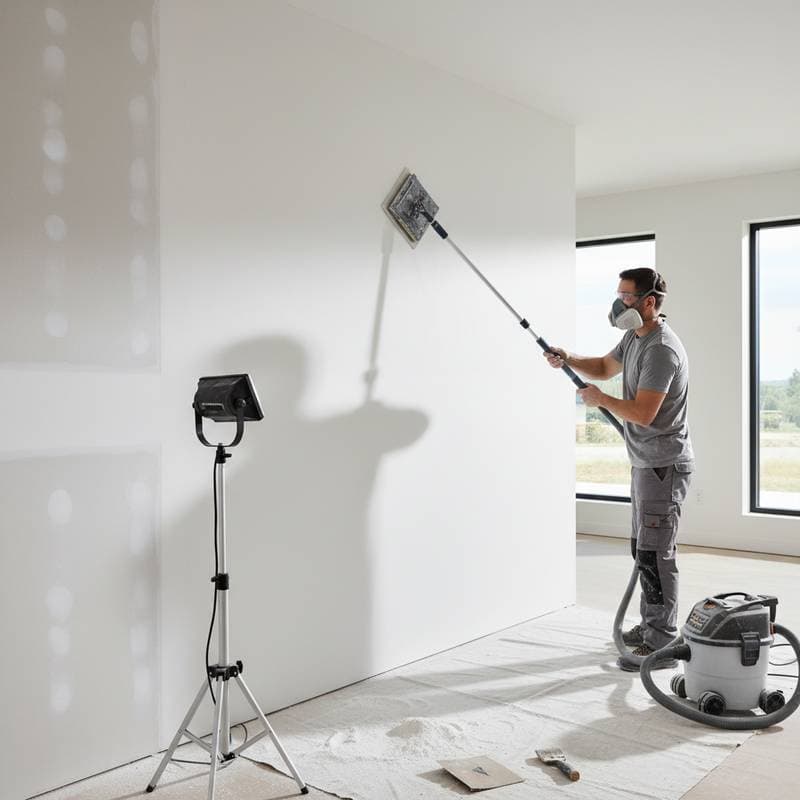
Dust control: Employing tools with built-in vacuums or air filtration systems confines particles to the work area. Neglect here prolongs cleanup and risks contaminating adjacent spaces, adding hours to the schedule.
Primer and lighting inspection: Walls may seem even until primer highlights defects. Routine checks at this stage avert repeated sanding cycles and substantial add-on charges.
Detailed Cost Analysis by Finish Quality
| Finish Level | Basic Range | Standard Range | Premium Range | Key Differences |
|---|---|---|---|---|
| Level 3 (basic drywall prep) | $0.30 to $0.45 | $0.40 to $0.55 | $0.55 to $0.70 | Ideal for low-visibility zones like garages; involves minimal passes, allowing some texture. |
| Level 4 (standard interior walls) | $0.50 to $0.75 | $0.70 to $0.90 | $0.90 to $1.10 | Delivers even surfaces for most paints; requires several grits and close scrutiny for flaws. |
| Level 5 (high-end finish) | $0.90 to $1.20 | $1.00 to $1.40 | $1.50 to $2.00 | Achieves mirror-like results with full skim coats; essential for sheen finishes or bold colors. |
Level 4 suits most flips, balancing aesthetics and efficiency without Level 5's intensity.
The $800 Mistake: What Goes Wrong
Uneven or excessive sanding stands as the priciest pitfall, often tearing the drywall paper and creating absorbent spots. Paint adheres irregularly here, causing shine variations that glare under lights and betray amateur work. Remediation involves fresh compound, refined sanding, new primer, and full recoating.
In a medium room, breakdown includes:
- Patch and reapply compound: $100 to $200
- Re-sanding and cleanup: $100 to $250
- Re-priming and painting: $200 to $400
These steps, plus downtime, surpass $800 readily. Delays further erode profits in time-sensitive flips.
Value and ROI Considerations
Superior drywall work amplifies a home's marketability. Uniform surfaces improve paint vibrancy and light reflection, fostering an upscale feel. Allocating an additional $0.10 per square foot for expert sanding boosts buyer interest and minimizes scrutiny during showings.
Substandard results erode trust from the entryway. Buyers overlook strong foundations if walls appear sloppy, prompting negotiations or walkaways. Proactive quality investment accelerates closings and curtails disputes.
Money-Saving and Quality Strategies
- Position adjustable lights at angles during sanding to expose hidden contours.
- Integrate vacuum-equipped sanders to streamline dust handling and shorten post-work tidying.
- Examine surfaces post-primer under varied illumination to identify and resolve minor discrepancies promptly.
- Maintain light tool pressure, relying on abrasive grit and steady strokes for optimal results.
- Select specialized finish carpenters over all-purpose crews for high-impact rooms.
Planning Your Budget
Account for interconnected phases in flip estimates: compound adjustments, sanding execution, priming application, and thorough cleanup. Incorporate a 10 to 15 percent buffer for unforeseen adjustments. Segment large-scale sanding into manageable stages to enhance oversight and stabilize expenditures. Verify contractor proposals encompass dust mitigation and conclusive quality assessments.
Frequently Asked Questions
1. What is the average cost for drywall sanding?
Homeowners typically encounter rates of $0.30 to $1.00 per square foot, varying by complexity and desired smoothness. A standard room sanding job ranges from $75 to $250.
2. What factors have the biggest impact on drywall sanding costs?
Surface irregularities, worker expertise, dust management needs, and inspection protocols exert the strongest influence. Initial preparation quality often determines labor intensity, while skilled execution curbs error-related surcharges.
3. How can I save money on drywall sanding without sacrificing quality?
Opt for progressive grit tools and targeted lighting to reduce passes and rework. Schedule during off-peak seasons for competitive bids, and prioritize pros with proven portfolios to avoid costly fixes.
4. Should I hire professionals or attempt this as a DIY project?
Professionals deliver consistent results and warranty-backed work, justifying the fee for flips where perfection sells. DIY suits minor touch-ups but risks $800-plus errors from inexperience; assess your skills against project stakes.
5. How do I budget for unexpected costs in drywall sanding?
Reserve 10 to 15 percent of the total for contingencies like hidden flaws or material hikes. Obtain detailed quotes covering all phases, and phase work to isolate and address surprises incrementally.
6. When is the best time to schedule drywall sanding for lower costs?
Aim for winter or early spring, when contractor demand dips and rates soften. Coordinate with overall renovation timelines to bundle services, leveraging volume discounts from established teams.
Securing Flawless Finishes for Maximum Returns
Integrating these sanding insights into your flips fortifies budgets and polishes presentations. Consistent execution not only trims expenses but also positions properties as premium offerings. Commit to detail now for enduring gains in every sale.