How Lighting Reveals Hidden Drywall Flaws
Drywall surfaces often appear smooth during installation, but installed lighting can transform a well-finished wall into a showcase of subtle imperfections. Homeowners invest significantly in professional drywall work, yet discover flaws only after fixtures activate or sunlight shifts. Grasping the dynamics of light exposure helps prevent surprises and ensures lasting quality in painting projects.
The Connection Between Light and Drywall Appearance
Light shapes how walls and ceilings present after painting. Beyond basic illumination, it accentuates texture, alters color tones, and exposes surface inconsistencies. When rays strike at low angles, minor variations become pronounced, especially on sleek finishes that bounce light effectively.
Level 5 represents the pinnacle of drywall smoothness, featuring layered joint compound, thorough sanding, and a skim coat to erase seams. Despite this precision, strategic lighting can still uncover details overlooked in standard viewing conditions.
Why Flaws Emerge After Substantial Investments
For a medium room, drywall finishing might total $800, covering labor and materials for superior results. Recessed lights, hanging fixtures, or expansive windows introduce targeted beams that spotlight irregularities. These expenses fund quality compounds and skilled application, but unaccounted light directions can undermine the outcome.
Workmanship rarely causes the problem alone. The true culprit lies in how finish quality meets paint gloss and light paths. Diffused illumination flatters walls, while sidelight creates shadows that reveal true contours.
Typical Costs by Room Dimensions
Costs vary with space size and finish demands.
- Small room (up to 200 square feet): $400 to $700
- Medium room (200 to 400 square feet): $700 to $1,000
- Large room (over 400 square feet): $1,000 to $1,800
These figures encompass materials, sanding, compounds, and skim layers. Spaces with intricate lighting or broad daylight entry demand higher fees for added refinement steps.
Breakdown of Expenses per Square Foot
Finishing averages $2 to $5 per square foot, influenced by smoothness goals and light factors.
- Materials: $0.50 to $1.00 per square foot
- Labor: $1.00 to $3.00 per square foot
- Preparation and sanding: $0.25 to $0.75 per square foot
- Light checks and corrections: $0.25 to $0.75 per square foot
Extra evaluations or coats elevate totals when light tests demand adjustments.
Key Influences on Costs and Visibility
Light Direction and Strength
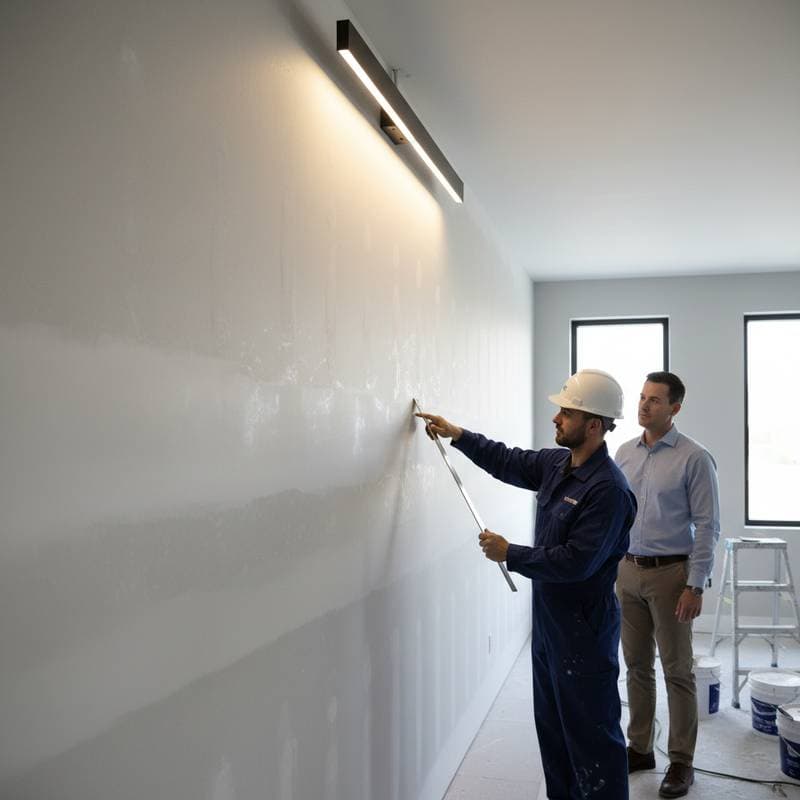
Grazing beams from wall-near fixtures amplify ridges and joints. Proximity to the surface intensifies shadows. Ceiling-mounted options, however, distribute light more gently across planes.
Paint Finish Choices
High-sheen paints like gloss or semi-gloss amplify reflections, drawing attention to bumps. Matte or flat varieties scatter light, concealing slight unevenness. Matching sheen to room light saves on rework.
Natural Light and Room Layout
Expansive glass or southern exposures bring variable daylight that traces textures hourly. Morning calm might mask issues, while afternoon glare exposes them.
Preparation Standards
Level 5 demands precise joint feathering and sanding. Hasty steps produce detectable lines. Extended prep time yields walls resilient to scrutiny.
Cost Details Across Finish Tiers
| Finish Level | Basic Range | Standard Range | Premium Range | Key Differences |
|---|---|---|---|---|
| Level 3 | $1.50 - $2.50 | $2.50 - $3.50 | $3.50 - $4.50 | Fits textured surfaces with ambient light |
| Level 4 | $2.50 - $3.50 | $3.50 - $4.50 | $4.50 - $5.50 | Common for typical residential lighting |
| Level 5 | $3.50 - $5.00 | $5.00 - $6.50 | $6.50 - $8.00 | Best for intense light or reflective paints |
Premium Level 5 pays off in luminous settings, reducing seam visibility despite light challenges.
Steps to Reduce Light-Exposed Imperfections
- Map lighting ahead of finishing. Position recessed units away from walls to curb sidelight effects.
- Opt for broad-coverage fixtures over focused ones.
- Test with angled flashlights pre-paint to spot and smooth issues early.
- Choose low-sheen paints like eggshell for flaw camouflage.
- Engage finishers versed in light dynamics for uniform outcomes.
Strategies for Cost Control and Durability
Target Level 5 on prominent walls alone to allocate budget wisely. Perform basic cleaning tasks yourself to trim labor. Book services in quieter months for reduced rates. Pair finishing with painting for bundled savings.
These approaches maintain quality while fitting financial plans. Long-term, they prevent costly fixes from emerging flaws.
Budgeting Essentials for Drywall Projects
Estimate totals with room measurements and light details in mind. Factor in 10 to 15 percent extra for surprises like added coats. Consult contractors on seasonal timing to optimize expenses without delays.
Frequently Asked Questions
What is the typical price for Level 5 drywall finishing?
Expect $3.50 to $8.00 per square foot. A medium room usually ranges from $800 to $1,000, adjusted for light setup, dimensions, and prep needs.
Which elements most drive up drywall finishing expenses?
Light paths, paint types, surface area, and prep thoroughness lead the list. Intricate fixtures or window walls necessitate more coats and checks, boosting costs.
How can I cut drywall costs while keeping high standards?
Restrict premium finishing to key areas, select flat paints, and time projects for off-seasons. Tackle simple prep to shorten professional hours.
Is professional help essential, or can I handle it myself?
Professionals excel at Level 5 uniformity, especially under demanding light. DIY efforts save upfront but often fall short on evenness; reserve for basic levels.
How should I prepare for unforeseen drywall expenses?
Build in 10 to 15 percent buffer for refinements post-light review or extra sanding.
When does scheduling a drywall project yield the best rates?
Aim for low-demand periods to secure discounts. Steer clear of humid seasons, as they prolong drying and inflate timelines.