The Rise of Matte Black Trim in Home Design
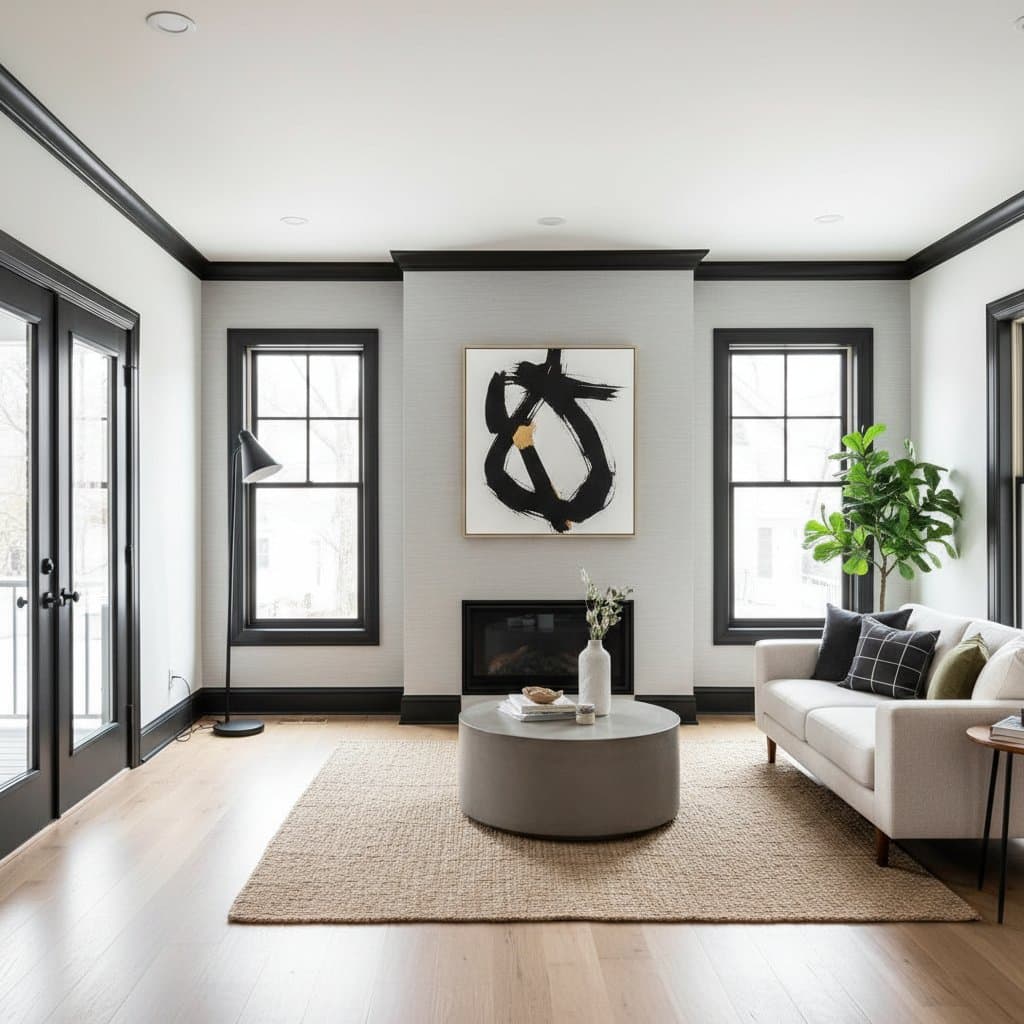
Matte black trim stands out as a compelling enhancement for contemporary interiors. Property owners increasingly adopt this striking yet understated aesthetic that balances elegance with restraint. The expense for applying a matte black finish to interior trim generally commences at $800 for a typical residence, varying by project scale and current state. This approach introduces vivid contrast against walls, harmonizes with pale and deep hues alike, and refreshes dated areas without necessitating comprehensive overhauls.
Grasping the components of that $800 figure empowers property owners to strategize wisely, manage outlays, and select appropriate quality tiers for their endeavors.
Overview of Matte Black Trim Expenses
Applying a matte black finish to trim usually spans $5 to $9 per linear foot, resulting in overall project figures from $800 to $2,000 for standard homes. These totals hinge on the extent of trim involved, surface intricacies, and the decision between self-directed efforts or expert services.
Cost Ranges by Project Size
- Small-scale effort (one room or focal zone): $300 - $800
- Moderate effort (primary living zones or corridors): $800 - $1,400
- Extensive effort (complete residence trim refresh): $1,400 - $2,500
Breakdown of Costs per Linear Foot
| Component | Cost Range per Linear Foot | Description |
|---|---|---|
| Materials | $1 - $3 | Encompasses matte paint, primer, masking tape, and applicators |
| Labor | $3 - $5 | Expert application, preparatory tasks, and post-work cleanup |
| Preparation | $0.50 - $1 | Involves sanding, surface cleaning, and sealing existing trim |
| Additional Factors | $0.50 - $1 | Covers fixes, extra layers, and fine detailing |
Elements Influencing Matte Black Trim Expenses
Multiple critical aspects dictate a project's position within the pricing spectrum. Recognizing these components assists property owners in establishing practical projections.
1. Existing Trim State: Surfaces showing chips, discoloration, or prior glossy coatings demand extensive readying. Such sanding and priming efforts may elevate totals by $100 to $300.
2. Paint Grade: Options in matte black formulations differ significantly in expense and resilience. Superior varieties boasting elevated pigment levels better withstand abrasions and marks, raising supply costs by $20 to $60 per gallon.
3. Surface Detail Level: Elements like crown moldings, frame surrounds, and ornate baseboards call for heightened accuracy and duration. Elaborate designs can inflate labor charges by 10% to 25%.
4. Regional Labor Variations: Community wage structures affect pricing. Metropolitan zones with elevated cost of living typically feature rates nearing $5 per linear foot, whereas rural locales might average $3.
5. Accessibility Challenges: Relocating furnishings, addressing lofty ceilings, or navigating confined angles can extend timelines. Initiatives needing supplementary setup or safeguards frequently incur $100 to $200 in added labor.
Expense Examination by Finish Category
| Finish Type | Basic Range | Standard Range | Premium Range | Key Differences |
|---|---|---|---|---|
| Matte Black Latex | $4 - $6 per foot | $6 - $8 per foot | $8 - $10 per foot | Latex applies effortlessly, cures rapidly, and yields a uniform surface |
| Matte Black Alkyd | $5 - $7 per foot | $7 - $9 per foot | $9 - $11 per foot | Alkyd delivers enhanced durability suited to frequently touched trim |
| Specialty Matte Enamel | $6 - $8 per foot | $8 - $10 per foot | $10 - $12 per foot | Enamel formulations endure humidity and exhibit profound black depth |
The Value Proposition of Matte Black Trim
While trim refinishing appears minor, its effect proves profound. Matte black trim imparts structural clarity to rooms and integrates seamlessly across modern and classic schemes. The shade amplifies neutral or bright wall tones, anchors vibrant highlights, and fosters spatial dimension.
In terms of return, this modification often elevates a property's apparent caliber. It signals meticulous care and stylistic insight, appealing to prospective purchasers upon resale. Moreover, matte surfaces demand less upkeep, as they mask slight flaws more effectively than sheens.
Approaches to Control Expenses
Those attracted to matte black aesthetics can maintain affordability while upholding standards through targeted methods:
-
Pre-Ready Surfaces: Thoroughly cleanse and gently abrade trim prior to specialist arrival to shorten labor duration.
-
Opt for Intermediate Paints: Numerous standard matte products provide robust opacity and longevity at reduced rates.
-
Combine Initiatives: Pairing trim work with wall or entry refreshes may secure bulk reductions.
-
Time Projects Off-Season: Rates frequently decline amid lulls in painter demand, such as winter periods.
-
Handle Minor DIY Tasks: Confident individuals might manage straightforward sections like baseboards or casings, reserving intricate areas for experts.
Developing a Project Budget
Formulating a viable budget for matte black trim involves gauging the aggregate linear extent across the residence. Multiply this measurement by the anticipated per-foot rate to project overall outlays. Property owners ought to incorporate a 10% to 15% reserve for unforeseen fixes or supplementary applications.
Example Allocation for a Moderate Project
| Cost Category | Estimated Range | Description |
|---|---|---|
| Materials | $100 - $250 | Paint, primer, tools, tape, and protective sheets |
| Labor | $600 - $1,000 | Specialist crew for 200 linear feet |
| Preparation | $100 - $200 | Surface cleansing, abrasion, and sealing |
| Reserve | $100 - $150 | Fixes or refinements |
Maintaining structured finances aids expenditure monitoring and timeline adherence. When soliciting estimates from specialists, insist on segmented breakdowns to facilitate clear comparisons of supplies, workforce, and prep charges.
Expert Services Versus Self-Directed Efforts
Self-managed trim application holds appeal, yet matte black demands exactitude. Irregular borders or apparent tool marks emerge prominently beside lighter backgrounds. Specialists employ premium equipment, optimal illumination, and refined methods for sharp, uniform results.
Self-efforts typically total $200 to $400 in supplies, though they require substantial time for readying, masking, and layering. Expert engagements begin at $800 yet guarantee superior uniformity and endurance. Novices frequently discover that professional involvement averts expensive corrections.
Launching Your Matte Black Trim Initiative
Commence by selecting a desired matte black variant. Certain shades veer toward gray undertones, others toward intense ebony depth. Apply trial patches to a trim segment under diverse lighting conditions. With hue finalized, determine scope: full interior coverage or targeted zones like entries, apertures, or balustrades.
Engaging a specialist painter verifies surface suitability and adequate readying. Optimal outcomes depend on priming to avert seepage and secure consistent absorption. Through diligent forethought, an $800 trim enhancement can wholly redefine your home's essence.
Common Queries on Matte Black Trim
1. What constitutes the typical expense for matte black trim application?
Most property owners allocate between $800 and $2,000 for expert matte black trim services. Compact undertakings may incur lower fees, whereas comprehensive residence efforts surpass this based on detail and supplies.
2. Which elements most significantly affect matte black trim pricing?
Primary influencers encompass trim state, paint caliber, surface elaboration, and community wage scales. Ornate or compromised trim elevates both readying and workforce costs.
3. In what ways can one reduce matte black trim expenses while preserving standards?
Self-preparing surfaces, timing for low-demand seasons, and choosing standard matte formulations effectively trim outlays. Integrating trim with complementary services likewise diminishes aggregate pricing.
4. Is professional assistance preferable to self-directed matte black trim work?
Self-options suit confined areas, but experts produce pristine contours and fluid finishes. The profound matte tone necessitates expertise to avoid striations or inconsistencies, rendering professional input valuable.
5. How does one account for unforeseen trim application costs?
Build a 10% to 15% margin into budgets to address extra layers, small repairs, or supply shifts. Detailed specialist estimates aid in foreseeing concealed expenses.
6. When proves optimal for initiating a matte black trim project to minimize costs?
Specialists commonly extend favorable terms in temperate seasons with reduced bookings. Such scheduling affords greater flexibility and prospective savings.