The Hidden $800 Cost of DIY Level 5 Drywall Finishes: Why Hiring Pros Pays Off
A Level 5 drywall finish represents the pinnacle of smoothness before applying paint. Professionals refer to it as the showroom standard, where seams, joints, and textures vanish completely under intense light. Homeowners frequently try this advanced technique themselves, thinking an extra layer of compound suffices. In truth, the process demands exacting skill, and small missteps trigger extensive corrections that tally up to about $800 on average.
Understanding Level 5 Finish Expenses
Professional installation of a Level 5 finish runs $3 to $4.50 per square foot, varying by room dimensions, access ease, and starting surface quality. For a typical 12-by-12-foot room, expect $1,500 to $2,400 from skilled contractors who employ specialized tools, optimal lighting, and precise mixing. These experts ensure durability and visual perfection from the outset.
DIY efforts seem economical initially, with joint compound, rollers, sandpaper, and primer costing $250 to $400. However, this overlooks hours of labor, inevitable errors, and subsequent repairs. Inadequate preparation or inconsistent skim coats force full wall sanding, extra material purchases, and often professional intervention to smooth textures. These factors accumulate into that $800 surprise.
Project Size and Cost Comparisons
- Small Room (up to 150 sq. ft.): Professionals charge $450 to $700; DIY materials run $200 to $450.
- Medium Room (150-300 sq. ft.): Professional fees span $900 to $1,400; DIY supplies cost $300 to $600.
- Large Room (over 300 sq. ft.): Expect $1,500 to $2,400 professionally; DIY materials total $400 to $800.
Failed DIY attempts necessitate sanding, refilling, and repainting, with pros adding $600 to $1,000 for fixes due to heightened labor demands.
Per-Square-Foot Expense Details
| Category | DIY Materials | Professional Finish | Hidden Rework Costs |
|---|---|---|---|
| Joint Compound | $0.30 - $0.50 | Included | $0.20 - $0.40 |
| Sandpaper, Tools, Lighting | $0.20 - $0.40 | Included | $0.10 - $0.25 |
| Labor | N/A | $2.50 - $3.50 | $2.00 - $2.50 if rework needed |
| Primer and Paint Prep | $0.50 - $0.70 | $0.70 - $1.00 | $0.40 - $0.60 |
A botched initial effort pushes total outlays beyond professional quotes, erasing any perceived savings.
Key Influences on Level 5 Finish Pricing
Surface Preparation Essentials
Begin by eliminating imperfections like tape ridges or joint unevenness before the skim coat. Neglect here creates shadows visible through paint. Later remedies involve section-wide sanding, compound reapplication, and possible panel replacement, inflating costs by hundreds in supplies and effort.
Mastering Application Methods
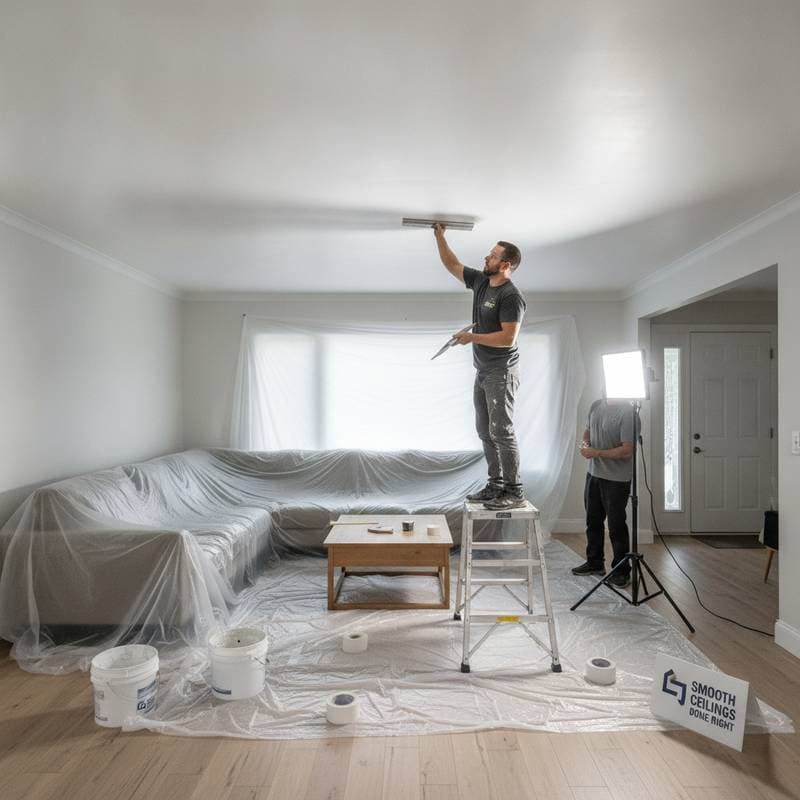
Experts wield wide trowels, spray equipment, and premium rollers for uniform skim coats. Novice DIYers produce ridges or varying depths that glaringly appear post-painting. Correcting demands a complete redo of the compound layer.
Role of Lighting in Detection
Intense illumination exposes minute flaws during work. Contractors deploy targeted lights to catch issues promptly. DIYers typically spot problems only after painting, requiring comprehensive overhauls.
Managing Drying Conditions
Humidity, temperature, and ventilation dictate compound curing. Uneven drying prompts cracks or bubbles. Controlling these elements proves vital, yet DIY setups frequently ignore them, leading to waste.
Building Necessary Expertise
Delivering Level 5 smoothness calls for honed techniques across expansive areas. The skill gap widens errors rapidly for beginners.
Comparing Finish Levels and Their Prices
| Finish Type | Basic Range | Standard Range | Premium Range | Key Differences |
|---|---|---|---|---|
| Level 3 | $1.50 - $2.50 | $2.50 - $3.00 | $3.00 - $3.50 | Best for textured or dimly lit walls |
| Level 4 | $2.50 - $3.50 | $3.50 - $4.00 | $4.00 - $4.50 | Fits standard interior applications |
| Level 5 | $3.00 - $4.50 | $4.50 - $6.00 | $6.00 - $7.50 | Perfect for glossy finishes and bright lights |
DIY Level 5 pursuits without expertise yield subpar Level 4 outcomes, compounded by redo expenses and aggravation.
Assessing Long-Term Benefits
A superior Level 5 surface elevates room aesthetics, particularly in light-flooded zones like hallways or living areas. It minimizes future repaints and boosts home appeal, potentially increasing resale value. The initial professional investment yields enduring quality.
Conversely, DIY mishaps squander resources without matching results. Outlays of $400 in materials plus $800 in repairs surpass pro fees, leaving frustration in their wake.
Practical Ways to Cut Costs
- Delegate the final skim coat to professionals after you complete initial sanding and cleaning.
- Incorporate portable LED lights to pinpoint flaws during application.
- Source compound and primer in bulk for lower unit prices.
- Schedule during moderate seasons to avoid drying complications.
- Acquire durable tools like stainless trowels for efficient, even spreading.
Building a Solid Budget Plan
Calculate total square footage first, then apply professional rates for a baseline figure. Allocate 10 to 15 percent extra for unforeseen repairs or refinements. Discuss finish goals and lighting impacts with contractors upfront. Restrict DIY to preparatory tasks if proceeding partially, minimizing error risks.
Common Questions on Level 5 Projects
When Should You Launch a Level 5 Drywall Project for Optimal Savings?
Target mild weather periods with low humidity and ample contractor schedules. Such conditions prevent drying flaws and waste, ensuring consistent quality at controlled costs.
How Does Level 5 Differ from Lower Finishes in Everyday Use?
Level 5 excels in high-visibility settings with glossy paints, hiding no imperfections. Lower levels suffice for matte or textured walls but falter under scrutiny.
Can Partial DIY Reduce Overall Expenses Without Sacrificing Quality?
Yes, focus on basic joint taping and sanding, then hire for the skim coat. This hybrid approach trims labor while leveraging pro precision for the critical final layer.