Why Charcoal and Lavender Lead 2026 Interior Design Trends
Color preferences in interiors evolve alongside societal shifts, technological advances, and the psychological demands of daily life. Charcoal and lavender stand out as pivotal hues for 2026, spanning diverse aesthetics and room types. These shades achieve a harmony of robust elegance and gentle peace, resulting in environments that endure while remaining fresh. Grasping their prominence equips homeowners to select palettes that deliver style, flexibility, and permanence.
The Psychological Impact of Color in Contemporary Spaces
Colors shape perceptions and emotions within a room. Today's residents seek schemes that foster rest alongside concentration, mirroring a broader pursuit of nurturing yet individualized havens. Charcoal establishes a solid foundation of resilience and richness, whereas lavender infuses subtlety and peace. Paired together, they yield adaptable combinations suitable for sparse minimalism or opulent grandeur.
Charcoal: A Refined Neutral Foundation
Charcoal supersedes pale grays as the go-to neutral for walls, cabinets, and trim details. Its strength rests in stabilizing spaces without evoking sterility or harshness. Applied thoughtfully, it highlights structural elements through sharp contrasts and clear outlines.
Typical Cost Estimates by Room Scale
- Small area (100 square feet): $300 to $500
- Medium area (250 square feet): $600 to $1,000
- Large area (400 square feet or greater): $1,200 to $1,800
These figures encompass preparation, premium paint supplies, and labor for two applications. Opting for charcoal on feature walls halves expenses, as it demands reduced materials and effort.
Per-Square-Foot Cost Analysis for Charcoal
- Materials: $1.50 to $3.00 per square foot
- Labor: $2.00 to $3.50 per square foot
- Preparation and cleanup: $0.50 to $1.00 per square foot
Charcoal formulations featuring matte or eggshell sheens with durable, cleanable surfaces raise costs by $0.50 to $1.00 per square foot. Such options ensure superior resilience and simplified upkeep.
Influences on Charcoal Application Expenses
Surface state plays a key role; damaged or uneven walls require enhanced priming. Remediation and leveling might add $150 to $400 in a standard room.
Premium charcoal variants with intense pigmentation withstand color loss and command 25 to 40 percent higher prices than basic lines.
Ambient illumination affects technique; deeper tones necessitate uniform spreading and potentially a third layer for seamless results, modestly elevating labor.
Lavender: Achieving Equilibrium and Refreshment
Lavender imparts tranquility and positivity to living quarters. It suits lounges, sleeping areas, and cooking zones, where a hint of coziness and character proves desirable. Distinct from vivid purples, lavender maintains a poised midpoint between vibrancy and understatement.
Typical Cost Estimates by Room Scale
- Small area (100 square feet): $250 to $450
- Medium area (250 square feet): $500 to $900
- Large area (400 square feet or greater): $1,000 to $1,600
Lighter lavenders often achieve coverage in fewer passes than charcoal, trimming labor outlays.
Per-Square-Foot Cost Analysis for Lavender
- Materials: $1.00 to $2.50 per square foot
- Labor: $1.50 to $3.00 per square foot
- Preparation and finishing: $0.50 to $1.00 per square foot
Advanced lavender options with strong wash resistance or minimal volatile compounds increase material fees by 10 to 20 percent. They enhance air purity and surface endurance.
Influences on Lavender Application Expenses
Shade intensity matters; faint lavenders apply smoothly with minimal layers, but richer versions benefit from base coats to avoid patchiness.
Illumination quality influences selection; cooler LEDs may tint lavender toward blue, prompting warmer variants with tailored pigments that slightly hike prices.
Sheen choices like satin or semi-gloss amplify lavender's luminescence but add $0.25 to $0.75 per square foot over flat alternatives.
Integrating Charcoal and Lavender for Cohesive Designs
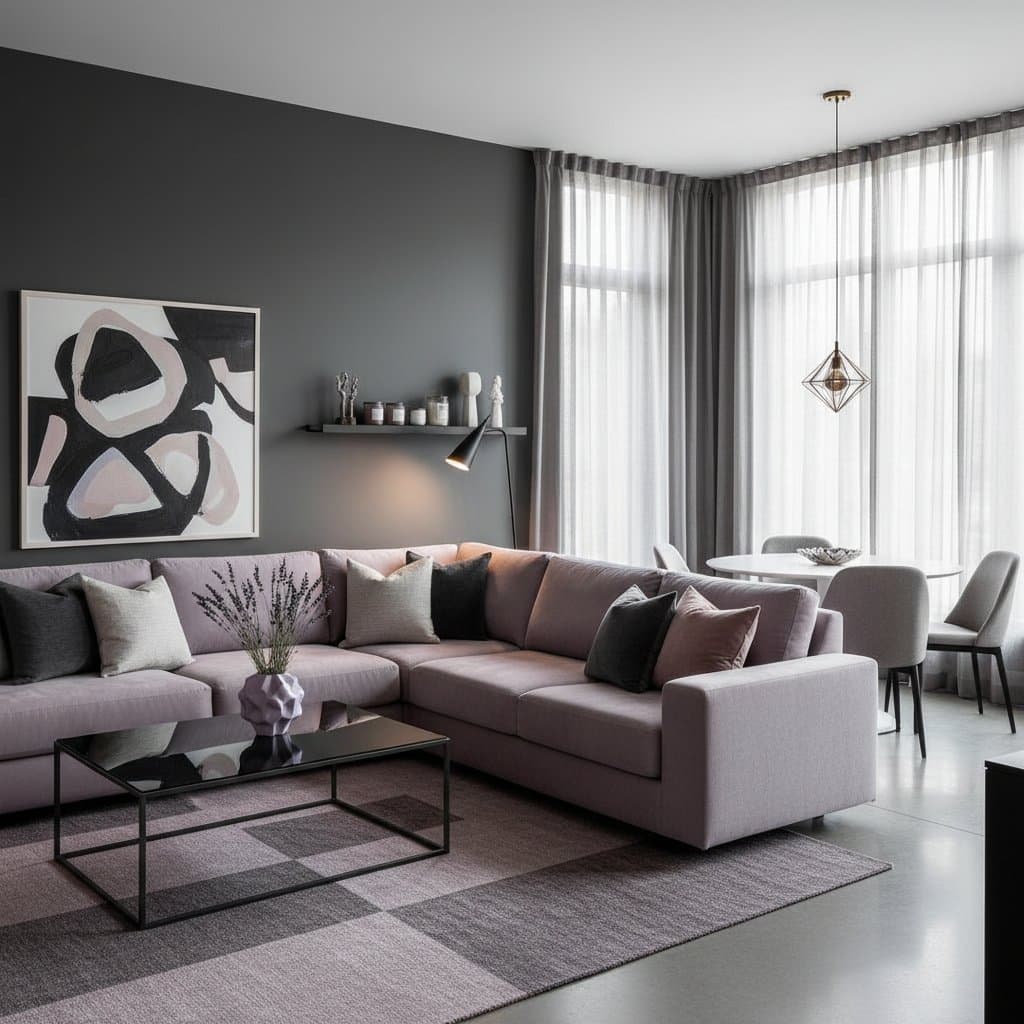
These hues unite to produce compelling equilibrium. Charcoal secures the foundation, and lavender contributes subtle vitality. Professionals frequently apply charcoal to storage units, borders, or focal surfaces, offsetting with lavender on nearby planes or accessories.
| Application Type | Entry-Level Range | Mid-Tier Range | High-End Range | Primary Variations |
|---|---|---|---|---|
| Focal wall combinations | $150 to $300 | $300 to $600 | $600 to $900 | Differences stem from sheen and manufacturer standards |
| Complete space in charcoal with lavender accents | $700 to $1,200 | $1,200 to $1,800 | $1,800 to $2,400 | Luxury tiers feature superior sheens and intricate edging |
| Lavender overhead with charcoal surrounds | $800 to $1,300 | $1,300 to $2,000 | $2,000 to $2,800 | Elevated prep and layered sheens drive up totals |
Reasons These Hues Prevail in Current Designs
-
Psychological Harmony
Residents prioritize layouts that cultivate focus and solace. Charcoal delivers firm assurance, lavender offers mild elevation. Their union supports a steady interplay of vigor and repose. -
Adaptability to Varied Aesthetics
Charcoal aligns with timber, alloys, and organic stones, while lavender harmonizes with neutrals, ivories, and metallics. This range accommodates traditional and forward-thinking schemes alike. -
Interaction with Illumination
Each shade engages light sources effectively. Charcoal draws in rays for coziness, lavender bounces them for spaciousness. -
Sustained Relevance
Beyond fleeting fashions, these tones extend to fabrics, finishes, and furnishings, guaranteeing extended viability in schemes.
Assessing Worth and Investment Returns
Refreshing paint ranks as an economical method to revitalize properties. A expertly coated room typically boosts market appeal by 1 to 3 percent. Charcoal imparts polished allure for contemporary tastes, lavender infuses inviting tones that shine in visuals. Choosing superior formulas yields enduring results, minimizing future maintenance expenditures.
Practical Ways to Control Expenses
Handle simple preparations independently, such as fixture removal, surface washing, and masking. This approach cuts $100 to $200 per space.
Choose reliable intermediate-grade paints, which rival elite brands in performance at reduced rates.
Time projects for quieter periods to secure labor discounts up to 15 percent.
Focus on feature walls to gain impact with diminished supplies and work.
Negotiate package deals for multiple areas, which streamline setup and lower unit pricing.
Structuring Your Financial Plan
Calculate surface extent first, then apply average rates for selected products and treatments. Include 10 to 15 percent buffer for unforeseen fixes or layers.
Consider a 300-square-foot lounge in charcoal at $900 to $1,200, or lavender at $750 to $1,000. Blending them might total $1,500, varying by treatment and configuration.
Allocate budgets as follows: 30 to 40 percent for supplies, 50 to 60 percent for workforce, 10 to 15 percent for readying and tidying.
Clear dialogue with specialists on goals, treatments, and schedules yields precise estimates and avoids issues.
Securing Enduring Benefits Through Informed Choices
Selecting charcoal and lavender extends beyond immediate appeal to foster spaces that support well-being over years. These colors resist obsolescence, pairing with evolving decor while upholding structural integrity. Homeowners gain from heightened comfort, elevated worth, and simplified upkeep when aligning updates with professional guidance and precise planning.
Frequently Asked Questions
What Does It Cost on Average to Apply Charcoal or Lavender to a Room?
Expect $2.50 to $4.50 per square foot for materials and labor combined. Compact rooms run $300 to $500, expanding to $1,200 or higher for broader areas based on readiness and treatment.
Which Elements Most Sway Painting Expenditures?
Readiness needs, product standards, layer count, and texture complexity drive costs. Deeper shades like charcoal demand additional coverage, and irregular surfaces extend labor.
In What Ways Can Homeowners Trim Costs for Charcoal or Lavender Updates?
Tackle basic readiness tasks, opt for solid mid-level products, align with low-demand seasons, and limit to feature walls for pronounced effects at lower outlay.
Is Professional Help Preferable to Self-Application?
Self-work trims 30 to 50 percent of labor but demands commitment, expertise, and equipment. Experts provide even results, quicker timelines, and enhanced durability, particularly for precise dark applications like charcoal.
How Should One Prepare for Unforeseen Painting Expenses?
Reserve 10 to 15 percent of the budget for variables. This addresses repairs, surplus layers, or enhancements uncovered mid-process.
When Do Lower Rates Apply for Scheduling Painting?
Late winter through early spring yields reduced workforce fees and greater availability. Supplies hold steady, and temperate conditions aid swift curing for better workflow.