Why Ceiling Paint Costs More Than Wall Paint
Painting a ceiling appears straightforward, much like painting a wall. However, homeowners soon learn that ceiling projects command higher prices. This disparity stems from specialized products, increased preparation demands, and the inherent challenges of overhead work. Grasping these elements equips homeowners to select wisely for upcoming renovations.
Ceiling Paint Cost Overview
Professional ceiling painting generally ranges from $1.25 to $3.50 per square foot. In comparison, wall painting typically costs $0.80 to $2.50 per square foot. For a standard room ceiling, expect to invest $450 to $1,200, influenced by ceiling height, surface texture, and selected paint variety. These rates account for the distinct demands of applying paint above eye level.
Average Cost Ranges by Project Size
- Small room (up to 120 sq. ft.): $150 to $300
- Medium room (200 to 350 sq. ft.): $300 to $700
- Large room (400 to 600 sq. ft.): $700 to $1,200
Cost Breakdown per Square Foot
Ceiling painting expenses divide into these components:
- Materials: $0.25 to $0.75 per sq. ft.
- Labor: $0.75 to $2.00 per sq. ft.
- Preparation and protection: $0.25 to $0.75 per sq. ft.
- Additional factors: $0.10 to $0.50 per sq. ft.
Durable paints with elevated viscosity minimize drips during application. Professionals often employ specialized rollers or sprayers to ensure uniform results, further elevating expenses.
Factors Affecting Ceiling Paint Costs
Multiple elements drive the price gap between ceiling and wall painting. Homeowners who identify these can refine budgets and sidestep surprises.
1. Paint formulation
Ceiling paints feature thicker consistencies to combat drips and spatter. They incorporate flat or matte finishes that conceal flaws and diffuse light effectively. Such formulations demand greater amounts of pigments and superior binders, which inflate material expenses relative to wall paints.
2. Labor difficulty
Overhead painting strains the body, requiring painters to balance on ladders or scaffolds for extended durations. This setup reduces efficiency and prompts higher hourly rates. Extra vigilance against drips protects furnishings below, extending project timelines.
3. Ceiling texture and repairs
Popcorn or knockdown textures absorb more paint and necessitate additional effort for complete coverage. Pre-painting fixes for cracks or stains add to the bill. Smooth surfaces allow quicker, more even applications than their textured counterparts.
4. Room height and access
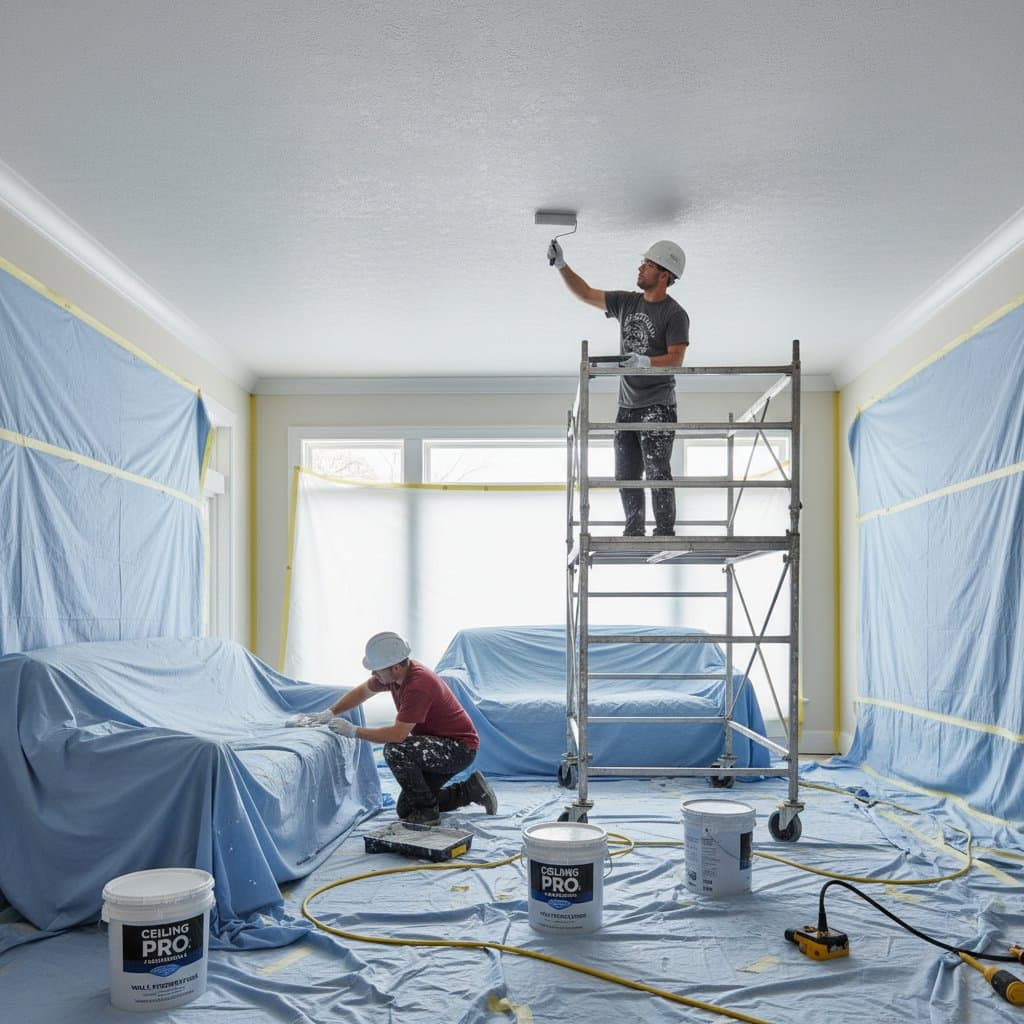
Elevated ceilings call for extended ladders or scaffolding setups. These increase preparation time and heighten safety concerns, which contractors price accordingly. Vaulted designs may require twice the labor of standard eight-foot ceilings.
5. Preparation and protection
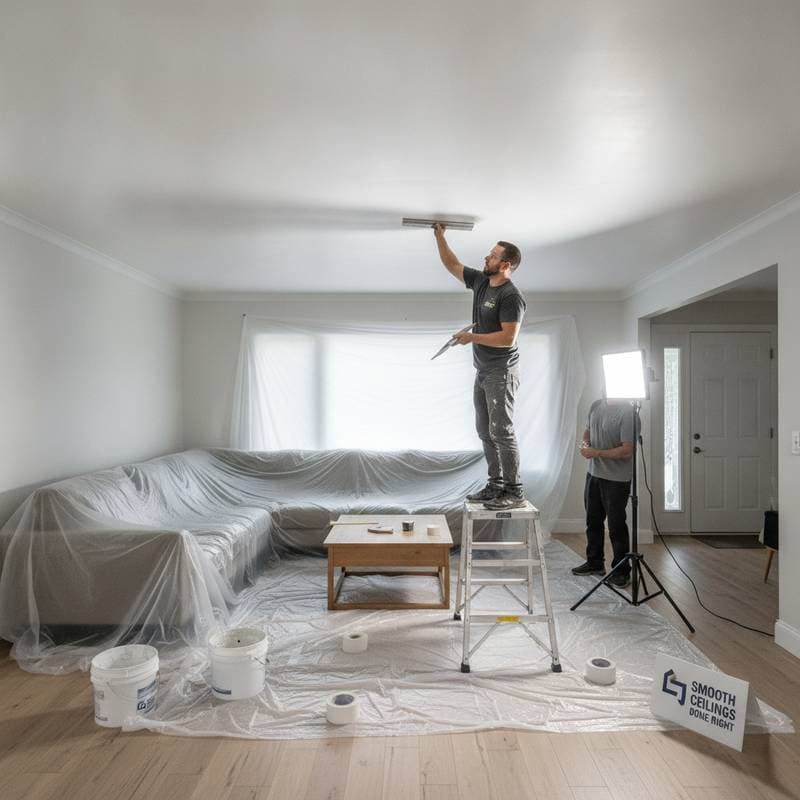
Ceiling jobs involve thorough masking of adjacent surfaces, shielding of fixtures, and floor coverings against potential splatter. This phase exceeds wall preparation in duration, contributing substantially to overall costs.
Detailed Cost Analysis by Paint Quality
| Paint Type | Basic Range | Standard Range | Premium Range | Key Differences |
|---|---|---|---|---|
| Flat Latex Ceiling Paint | $20 to $35 per gallon | $35 to $50 per gallon | $50 to $70 per gallon | Basic options provide essential coverage; premium selections add stain resistance and enhanced opacity |
| Specialty Ceiling Paint with Primer | $30 to $45 per gallon | $45 to $60 per gallon | $60 to $80 per gallon | Integrates primer for single-coat efficiency, cutting labor demands |
| Mold-Resistant Ceiling Paint | $40 to $55 per gallon | $55 to $70 per gallon | $70 to $90 per gallon | Suited for humid areas like bathrooms or kitchens, preventing mold growth |
| Acoustic or Textured Ceiling Paint | $35 to $50 per gallon | $50 to $70 per gallon | $70 to $95 per gallon | Tailored for irregular surfaces, offering thicker buildup and noise reduction |
Opting for superior paints often means fewer coats and enduring performance. Although initial outlays rise, these choices yield savings through reduced upkeep.
Why Ceiling Paint Costs More Than Wall Paint
Ceiling applications demand precise handling due to their overhead nature. Thicker paints resist gravity but prove harder to distribute smoothly. Wall paints prioritize vibrant hues, varied sheens, and aesthetic versatility, simplifying their use.
Protective protocols intensify for ceilings, as downward drips pose greater risks. Full-room safeguards become essential, unlike the targeted coverage sufficient for walls. Together, these specialized materials, intensified labor, and deliberate pacing account for the elevated pricing.
Value and ROI Considerations
Ceiling refreshes enhance room aesthetics subtly yet significantly. They illuminate spaces, mask imperfections, and convey modernity. Uniform tones elevate property appeal, particularly for sellers seeking cost-effective upgrades.
Over years, quality paints withstand fading from sunlight or moisture. Stain-blocking varieties minimize repaints, preserving budgets. Such investments prioritize longevity alongside immediate visual gains.
Money-Saving Strategies
Control expenses while upholding standards through targeted approaches:
- Combine projects: Tackle ceilings and walls in one session to streamline setup and cleanup.
- Handle prep work: Clear furniture, shield floors, and dust surfaces ahead to trim professional hours.
- Use paint with built-in primer: These formulations enable single coats, conserving materials and time.
- Schedule during low-demand periods: Off-peak bookings often secure discounted rates.
- Repair damage early: Prompt fixes for minor issues avert escalated corrections during painting.
Planning Your Budget
Calculate ceiling costs by measuring square footage and applying the per-foot average. Incorporate a 10 to 15 percent buffer for unforeseen needs like repairs or extra layers. Solicit itemized bids from contractors, delineating labor, supplies, and prep to facilitate comparisons and pinpoint efficiencies.
For DIY enthusiasts, factor in rentals for tools, ladders, and drop cloths. Though labor savings appeal, the exertion of overhead work frequently justifies hiring experts for superior outcomes.
Frequently Asked Questions
What is the average cost to paint a ceiling compared to walls?
Ceiling painting ranges from $1.25 to $3.50 per square foot, exceeding wall painting's $0.80 to $2.50 per square foot. Thicker compositions and strenuous overhead efforts explain the premium.
How should I plan for unexpected ceiling painting costs?
Build in a 10 to 15 percent contingency fund. Anticipate variables such as ceiling mends, additional coverage layers, or accommodations for rough textures.