The Myth of 15-Year Exterior Paint Warranties
A fresh coat of exterior paint transforms a home's curb appeal and protects its structure from the elements. Homeowners often seek out warranties promising up to 15 years of coverage, viewing them as a safeguard against future repairs. However, these extended guarantees frequently fall short of expectations, serving more as sales pitches than reliable protections.
To navigate this landscape effectively, homeowners must grasp the fine details of warranty coverage and exclusions. This knowledge empowers better choices in paint products and hiring decisions, ultimately leading to more durable results.
Typical Cost Ranges for Exterior Painting
Exterior painting expenses depend on factors such as home size, surface condition, and selected paint quality. For small homes around 1,000 square feet, budgets typically range from $2,500 to $4,000. Medium-sized homes between 1,500 and 2,000 square feet cost $4,500 to $7,500, while larger properties over 2,500 square feet may require $8,000 to $12,000.
Per-square-foot rates generally fall between $2.50 and $6.00, influenced by the type of siding and extent of preparation needed. Labor comprises roughly 60 percent of the total, with materials and prep work covering the remainder.
Cost Breakdown per Square Foot
| Category | Basic Range | Standard Range | Premium Range | Inclusions |
|---|---|---|---|---|
| Materials | $0.80 - $1.50 | $1.60 - $2.50 | $2.60 - $3.50 | Paint, primer, caulk |
| Labor | $1.20 - $3.00 | $2.50 - $4.00 | $3.50 - $5.00 | Prep, application, cleanup |
| Preparation | $0.50 - $1.00 | $1.00 - $1.50 | $1.50 - $2.00 | Scraping, sanding, patching |
| Additional factors | $0.30 - $0.75 | $0.50 - $1.00 | $0.75 - $1.50 | Trim, shutters, extras |
This breakdown highlights how investing in premium options upfront can yield savings over time by extending the paint's lifespan.
Why Long Paint Warranties Can Be Misleading
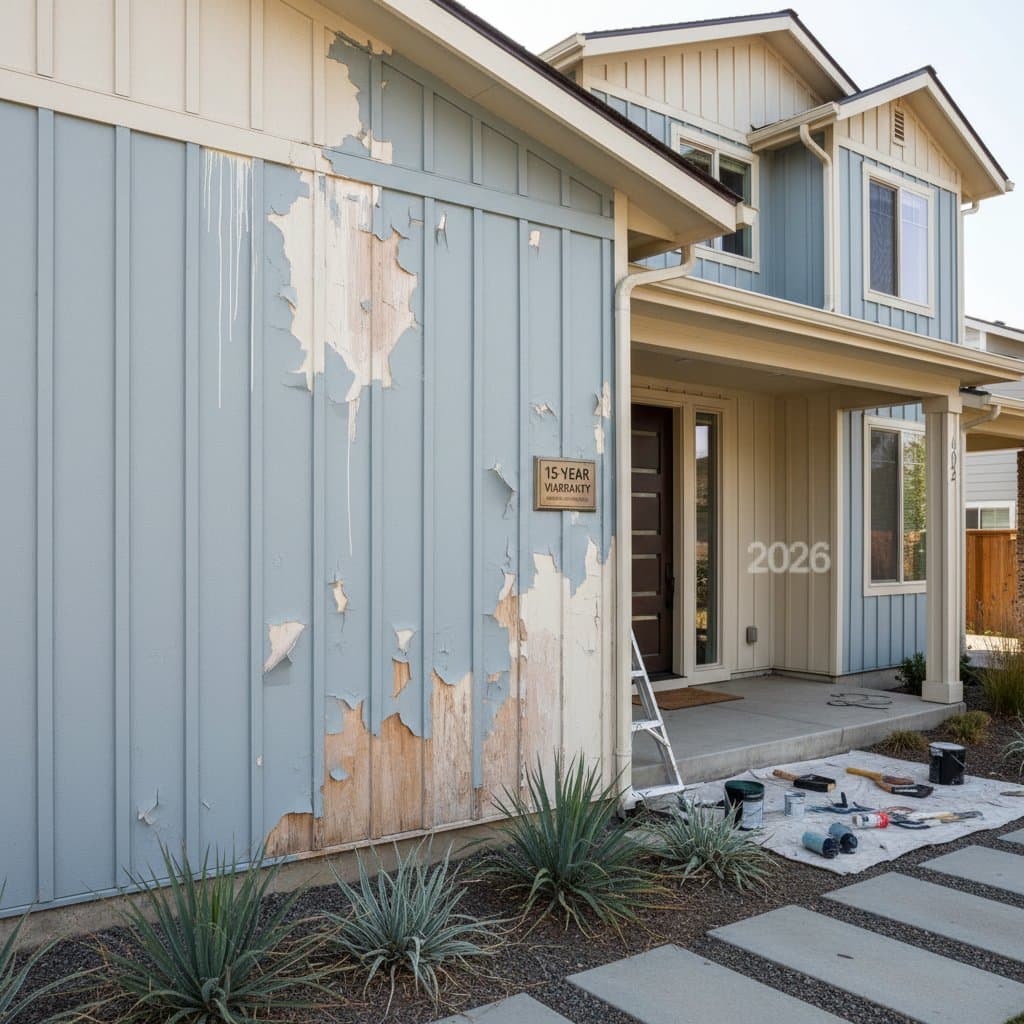
A 15-year warranty suggests exceptional endurance, yet real-world variables like weather and maintenance often undermine such claims. Paint degrades due to ultraviolet rays, moisture, and temperature fluctuations, factors beyond simple product quality.
Manufacturer warranties focus narrowly on defects in the paint formula, such as unusual blistering or cracking when applied correctly. They typically exclude failures from inadequate surface prep, water damage, or improper techniques, leaving homeowners to cover reapplication costs.
Contractor warranties address workmanship issues for shorter terms, usually 2 to 5 years. These protect against errors in execution but offer no defense against natural aging or environmental wear.
Factors That Affect Exterior Paint Longevity
Surface preparation stands as the most critical determinant of paint success. Thoroughly remove loose paint, sand rough areas, and apply primer to create a stable base; skipping these steps invites early failure.
Local climate plays a significant role, with intense sun, high humidity, or heavy rain accelerating breakdown. South-facing walls, for instance, face greater UV exposure and fade quicker than north-facing ones.
Opt for premium paints with robust resins and pigments that withstand fading and moisture. Though initial costs rise, these formulations provide superior resistance and fewer touch-ups.
Professional applicators achieve even coats and optimal thickness, enhancing adhesion and protection. In contrast, thin DIY layers compromise durability.
Select lighter colors to minimize heat absorption, which can cause expansion cracks in darker shades. This choice alone can add years to the finish.
Comparing Warranty Types
| Warranty Type | Typical Duration | Coverage Scope | Common Exclusions | Realistic Expectation |
|---|---|---|---|---|
| Manufacturer | 10-15 years | Product defects | Improper prep, moisture, wear | Covers paint replacement only |
| Contractor | 2-5 years | Workmanship | Natural fading, weather damage | Touch-ups or rework only |
| Combined | 5-10 years | Product and labor (limited) | Environmental factors | Partial coverage |
These distinctions reveal that 15-year promises often apply only to isolated defects. Expect to handle labor and prep expenses for any broader issues.
Value and Return on Investment
Prioritizing quality preparation and application over extended warranties delivers stronger returns. A meticulously executed paint job endures 7 to 10 years in moderate climates, reducing the frequency of full repaints.
Calculate long-term savings by comparing repaint cycles: premium jobs every decade versus basic ones every five years. This approach minimizes disruption and preserves home value.
Money-Saving and Longevity Strategies
- Wash exterior surfaces yearly with mild detergent to eliminate dirt, pollen, and mildew that erode the paint film.
- Check and renew caulk around windows, doors, and trim seasonally to block water entry and prevent underlying rot.
- Select 100 percent acrylic latex paints, which flex with seasonal temperature shifts without cracking.
- Initiate repainting at the first signs of chalking or minor peeling to sidestep extensive repairs.
- Partner with contractors who detail warranty terms in writing and demonstrate proven track records through references.
Planning Your Exterior Painting Budget
Build a comprehensive budget starting with preparation: allocate funds for power washing, scraping old paint, and priming all surfaces.
Factor in paint suited to your area's weather, such as mildew-resistant formulas for humid regions or UV blockers for sunny locales.
Account for labor based on your home's architecture, including multi-story access or intricate details like gingerbread trim.
Reserve 10 to 15 percent as a contingency for surprises, such as wood rot discovered during prep or additional priming needs.
Making Smart Decisions About Paint Warranties
Approach warranties as one element of a broader strategy, not the sole measure of quality. Scrutinize terms for exclusions and push for clear explanations from contractors.
Focus on verifiable elements like material specifications and prep protocols, which predict performance more accurately than warranty length.
By emphasizing craftsmanship and maintenance, homeowners secure exteriors that withstand time and elements, yielding lasting satisfaction and equity.
Frequently Asked Questions
What does a 15-year exterior paint warranty actually cover?
These warranties primarily address product defects, such as unexpected peeling or blistering from manufacturing flaws. They seldom include labor for fixes or issues stemming from preparation errors, moisture problems, or normal environmental exposure.
How long does a quality exterior paint job truly last?
Under typical conditions with proper care, a professional exterior paint application holds up for 7 to 10 years. Harsh climates or neglect can shorten this to 5 years, while diligent maintenance extends it further.
Why do some contractors offer extremely long paint warranties?
Long warranties attract clients by implying superior service, but fine print often restricts coverage to minimal scenarios. They function as marketing incentives rather than comprehensive assurances.
How can I maximize the lifespan of my exterior paint?
Maintain cleanliness through regular washing, seal gaps promptly to repel water, and choose resilient paints matched to your environment. Address wear early to prevent escalation.
Should I trust a 15-year paint warranty when hiring a contractor?
Review all details carefully; opt for 2- to 5-year workmanship guarantees that align with realistic outcomes. Prioritize contractors who emphasize preparation over exaggerated promises.
What is the best way to budget for a new exterior paint project?
Include thorough prep, climate-appropriate materials, skilled labor, and a buffer for unforeseen issues. Emphasize quality execution to optimize costs over the project's life.