Venetian Plaster Cost Guide: DIY $8,000 vs. Professional $15,000
Venetian plaster emerges as a premier option for homeowners desiring walls with luxurious texture and refined depth. This finish, composed of lime, marble dust, and natural pigments, creates a timeless appearance akin to imported stone without added weight. Homeowners often encounter unexpected expenses when evaluating do-it-yourself approaches against professional services.
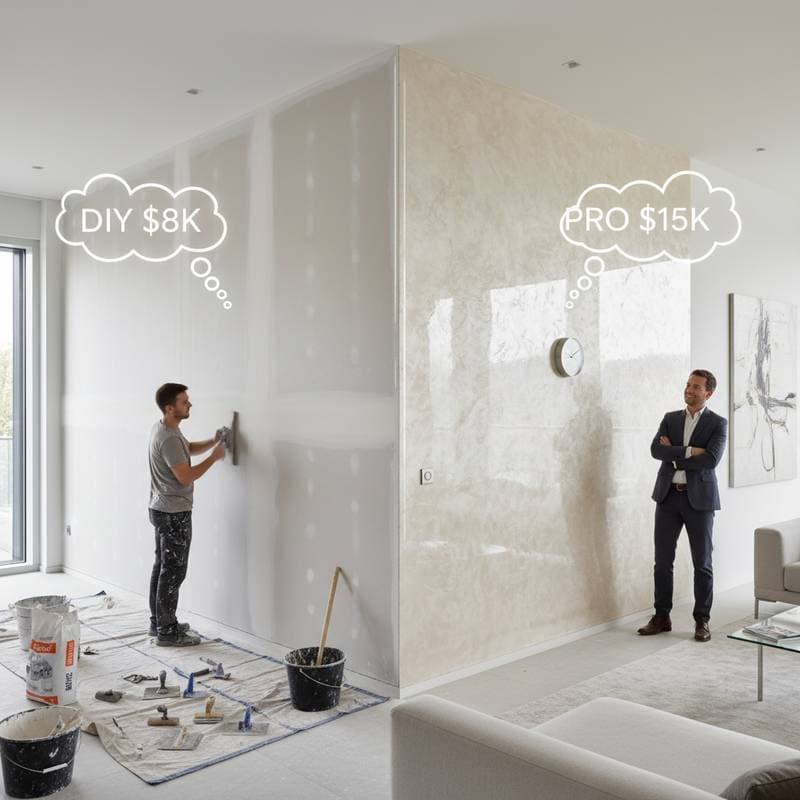
A typical DIY project totals approximately $8,000, whereas professional installation frequently approaches $15,000 for comparable areas. These variances stem from expertise levels, preparatory work, and final polish. Grasping the elements behind these figures enables better decisions on finances, durability, and aesthetic results.
Average Cost Ranges by Project Size
- Small room (100-150 sq. ft.): $1,800 - $3,000
- Medium room (200-300 sq. ft.): $3,500 - $6,000
- Large room (400+ sq. ft.): $7,000 - $12,000
These estimates encompass materials, labor, and initial surface work. Projects spanning entire homes or featuring upscale finishes surpass $15,000 under skilled craftsmanship.
Cost Breakdown per Square Foot
Professional applications average $10 to $20 per square foot. DIY efforts reduce this to $6 to $10 per square foot, assuming access to necessary tools and full personal labor.
- Materials: $3 - $7 per sq. ft.
- Labor: $6 - $12 per sq. ft.
- Preparation: $1 - $3 per sq. ft.
- Sealing and polishing: $1 - $2 per sq. ft.
Factors Affecting Venetian Plaster Costs
1. Surface Preparation
Walls require a flawless base prior to plastering. Addressing cracks, irregular drywall, or residual paint involves targeted patching and thorough sanding. Such repairs elevate overall expenses significantly, particularly in established residences.
2. Material Quality
Authentic lime-based Venetian plaster commands higher prices than synthetic substitutes. High-end brands and sourced imports enhance depth and endurance at a premium. Acrylic variants mimic texture yet fall short of genuine stone replication.
3. Application Technique
The process entails layering thin coats, each troweled by hand and burnished for sheen. Precision and time investment justify elevated professional rates. Inadequate DIY execution risks irregular gloss or tool marks that compromise elegance.
4. Room Size and Access
Expansive or elevated areas demand more materials and effort. Features like vaulted ceilings or staircases necessitate scaffolding, extending setup duration and charges.
5. Finish Complexity
Basic matte finishes need fewer applications and minimal buffing, whereas glossy variants require extensive layering and refinement. Incorporating metallic tones or bespoke hues amplifies both appeal and expenditure.
Detailed Cost Analysis by Finish Level
| Finish Type | Basic Range | Standard Range | Premium Range | Key Differences |
|---|---|---|---|---|
| Matte plaster | $6 - $10 | $10 - $14 | $14 - $18 | Minimal polish, soft texture |
| Satin sheen | $8 - $12 | $12 - $16 | $16 - $20 | Balanced shine, subtle depth |
| High-gloss | $10 - $14 | $14 - $18 | $18 - $25 | Mirror polish, marble-like appearance |
| Metallic finish | $12 - $16 | $16 - $20 | $20 - $28 | Pigmented layers, reflective tone |
DIY vs. Professional Venetian Plaster
DIY projects attract those who value personal involvement and cost reduction. Success hinges on meticulous execution to avoid setbacks.
DIY Advantages
- Eliminate labor expenses, potentially saving $5,000 to $8,000
- Set personal timelines without external constraints
- Customize hues and patterns to individual taste
DIY Challenges
- Master trowel methods through practice and trial
- Encounter risks of inconsistent surfaces or lackluster results
- Account for delays during interlayer drying periods
Professional Advantages
- Achieve uniform preparation and seamless execution
- Utilize advanced materials and equipment
- Provide durable outcomes with guarantees
Professional Costs
- Labor comprises at least 60 percent of expenses
- Elaborate patterns or specialty effects raise fees
Value and Return on Investment
Venetian plaster elevates property aesthetics and marketability. Prospective buyers link it to upscale design through evident artistry and resilience. Distinct from paint, it avoids flaking and strengthens over time via lime solidification.
Initial investment exceeds conventional coverings, yet longevity minimizes upkeep. Moisture-resistant and simple to maintain with gentle cleansers, it suits high-traffic zones like kitchens and bathrooms.
Money-Saving Strategies
- Focus on a feature wall to introduce impact affordably, limiting scope to one surface.
- Perform preparation tasks independently. Cleaning, sanding, and mending can cut costs by up to $2 per square foot.
- Select balanced material options. Blends of lime and synthetic elements provide strength without the expense of pure imports.
- Negotiate package deals for multi-room work. Providers frequently discount rates for broader coverage.
- Align timing strategically. Off-season scheduling improves availability and negotiates lower labor fees.
Planning Your Budget
Begin budgeting by calculating wall square footage and selecting desired finish tier. Apply the corresponding per-square-foot rate to project totals.
Seek itemized estimates delineating materials, labor, and prep. Such clarity facilitates bid comparisons and identifies efficiency opportunities.
Frequently Asked Questions
1. What is the average cost of Venetian plaster?
Professional services range from $10 to $20 per square foot, with DIY at $6 to $10 per square foot. Projects typically span $8,000 for self-application and $15,000 for expert work, varying by scale and sophistication.
2. What factors have the biggest impact on cost?
Preparation demands, material grades, finish styles, and artisan proficiency drive primary expenses. Scale and detailing further influence totals.
3. How can I save money without losing quality?
Tackle prep solo, opt for hybrid materials, and prioritize focal areas. Multiple estimates ensure competitive terms.
4. Should I hire professionals or attempt this as a DIY project?
DIY suits modest spaces or exploratory efforts, but experts deliver superior uniformity. Trowel proficiency requires substantial practice, and fixes prove expensive.
5. How do I budget for unexpected costs?
Allocate 10 to 15 percent of funds for surprises like structural flaws, shade tweaks, or additional layers. This reserve maintains project momentum.
6. When is the best time to start a Venetian plaster project?
Off-peak periods enhance contractor access and rates. Temperate conditions promote optimal curing for enhanced texture and strength.