Venetian Plaster's Resurgence in 2026: Weighing DIY Against Professional Expertise
Venetian plaster emerges as a favored option in 2026, appealing to homeowners who seek to infuse walls with artistic depth and subtle glow. This technique, rooted in ancient Venetian craftsmanship, layers fine lime-based materials to produce surfaces that mimic aged marble or polished stone. As demand rises for such distinctive finishes, individuals must decide between tackling the project personally or engaging skilled artisans. Grasping the financial implications, procedural demands, and outcome variations empowers informed decisions that align with aesthetic visions and practical constraints.
Detailed Project Cost Analysis
Core Cost Categories
- Entry-level installations: $8 to $12 per square foot, suitable for straightforward applications on prepared surfaces.
- Mid-range endeavors: $13 to $20 per square foot, incorporating moderate customization and standard polishing.
- Luxury executions: $21 to $30 per square foot, featuring intricate designs and high-end materials.
Standard Inclusions
Professionals handle initial surface smoothing and patching to ensure adhesion. They apply successive thin coats of plaster, followed by meticulous burnishing to reveal the material's natural sheen. Final steps include site tidying and application of a protective topcoat to safeguard against wear.
Additional Expenses
Opting for vibrant pigments or metallic infusions elevates the visual appeal but increases outlays. Tailored patterns, such as veined simulations or gradient shades, demand extended labor. Structural fixes, like mending fractured drywall, add to the tally. In environments prone to humidity, such as bathrooms, specialized sealants become necessary to prevent degradation.
Key Influences on Pricing
| Factor | Influence Level | Specific Illustrations |
|---|---|---|
| Surface Integrity | Moderate | Uneven or porous walls necessitate extensive priming and repairs. |
| Material Selection | Significant | Authentic lime plasters exceed synthetic alternatives in expense due to sourcing and quality. |
| Design Intricacy | Substantial | Elaborate motifs or layered color effects prolong application phases. |
| Project Scale | Variable | Compact areas may incur higher unit costs from setup inefficiencies, whereas expansive ones benefit from economies. |
Location plays a role as well; urban settings often command premiums for labor availability. Material sourcing in remote areas can introduce transport fees. Seasonal factors, such as heightened demand in peak renovation periods, may adjust rates upward.
Step-by-Step Application Process and Duration
Preparation forms the foundation of success. Workers assess and cleanse the wall, repairing imperfections and applying a bonding primer to promote adherence. Plaster application commences with the base layer, spread evenly with a flexible trowel. Subsequent coats build dimension, each permitted to cure partially before the next addition.
Burnishing follows, where artisans rub the surface with specialized tools to compress layers and unveil luster. This phase requires precision to avoid inconsistencies. For a modest 100-square-foot area, completion spans two to three days, accounting for drying intervals of 24 hours per coat. Larger or detailed projects extend to five to seven days, ensuring each element integrates seamlessly. The outcome yields a resilient, vapor-permeable coating that withstands time, demanding little beyond periodic dusting.
Evaluating DIY Versus Professional Execution
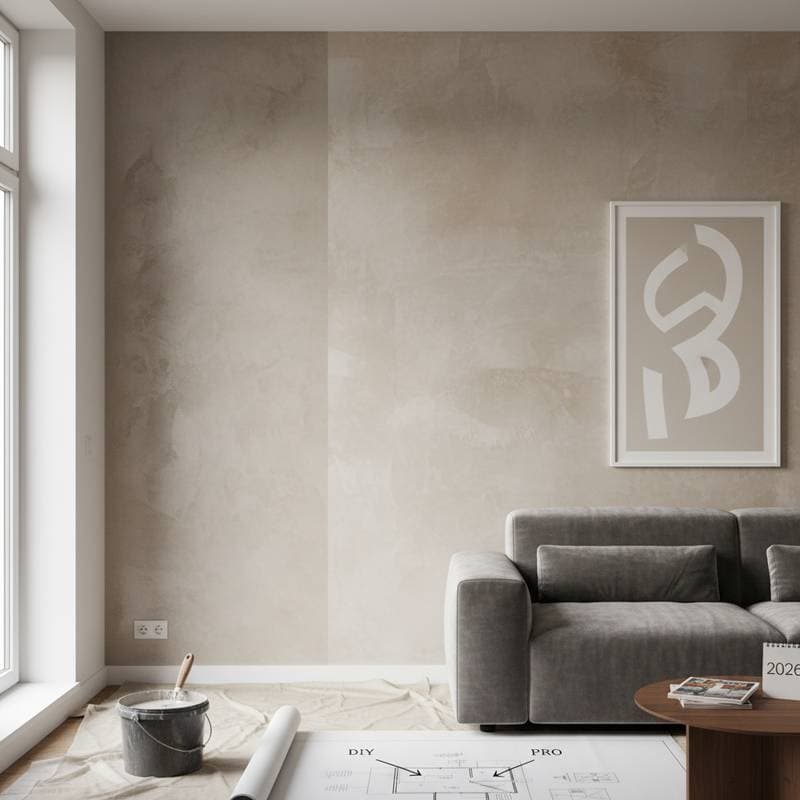
DIY appeals to those with artistic inclinations and available time. Starter kits, priced at $150 to $300, supply essential plaster mixes, steel trowels, and finishing waxes. Enthusiasts can practice on test panels to refine strokes that create subtle waves and highlights. However, achieving uniform depth proves challenging without honed skills; uneven layers may crack or dull prematurely.
Professionals bring years of refined practice, wielding custom blades and understanding environmental variables like humidity's effect on curing. Their work guarantees symmetry across broad expanses, vital for cohesive room aesthetics. While DIY suits experimental features like a single wall panel, comprehensive transformations benefit from expert intervention to deliver enduring sophistication. Consider skill assessment and project scope when choosing; errors in full-scale attempts often lead to costly corrections.
Selecting a Competent Specialist
Identify artisans through portfolios showcasing diverse Venetian plaster implementations, from minimalist sheens to ornate simulations. Seek certifications in decorative finishing or affiliations with trade bodies that uphold standards. Request references from recent clients to gauge reliability and satisfaction levels.
Conduct interviews to evaluate communication and project comprehension. Verify licensing, bonding, and insurance to mitigate risks. Obtain multiple estimates, ensuring they detail inclusions and timelines. Favor those offering warranties, typically spanning one to five years, against defects. This diligence secures a partnership that translates visions into reality without surprises.
Strategizing for Successful Implementation
Commence with inspiration gathering: peruse design resources to pinpoint desired textures and hues. Measure spaces accurately, factoring in ceilings or architectural details for precise material calculations. Establish a budget buffer of 15 to 20 percent to accommodate unforeseen adjustments.
Coordinate with specialists early to align schedules and source samples for approval. Prepare the site by relocating furnishings and protecting floors, easing workflow. Post-completion, allow full curing before introducing decor. Document the process for future reference, aiding maintenance or expansions. Thoughtful planning minimizes disruptions and maximizes the transformative impact on living spaces.
Common Inquiries Addressed
What Primarily Determines Venetian Plaster Expenses?
Material quality, existing wall state, and desired intricacy shape costs most. Premium lime formulations and elaborate layering elevate prices, whereas pristine surfaces and basic applications reduce them.
How Much Time Does Installation Typically Require?
Compact rooms finish in two to three days; expansive or complex ones extend to a week, influenced by coat drying and refinement stages.
Is DIY Feasible for Venetian Plaster?
It works well for limited accents where experimentation fits. Extensive or polished outcomes demand professional proficiency in application and finishing.
How to Vet a Reliable Contractor?
Examine portfolios, solicit client testimonials, and review past Venetian projects. Confirm credentials, coverage, and contractual clarity prior to commitment.
What Upkeep Does Venetian Plaster Need?
Routine soft wiping suffices; periodic buffing restores vibrancy. In demanding zones, reapplications of wax maintain protection.
Can Damage to Venetian Plaster Be Fixed?
Surface marks yield to gentle polishing; substantial flaws necessitate targeted re-layering by experts for invisible restoration.
Realizing Lasting Interior Sophistication
Investing in Venetian plaster crafts environments that exude refined artistry and durability. This finish not only captivates visually but also enhances acoustic softness and air quality through its natural composition. By navigating costs and methods astutely, homeowners unlock walls that endure, evolving gracefully with personal styles over years.