TSP vs. Substitutes: Calculating Prep Costs for Maximum Savings
Effective surface preparation forms the foundation of a durable and visually appealing paint job. Selecting appropriate cleaning products prior to painting represents a strategic investment that influences both immediate expenses and future maintenance. Homeowners frequently deliberate between traditional trisodium phosphate (TSP) and contemporary substitutes, each offering distinct advantages in cost efficiency and performance.
Overview of Typical Preparation Expenses
Basic surface cleaning before painting generally ranges from $0.25 to $0.75 per square foot when using standard supplies for DIY efforts. Professional services elevate this to $1 to $2 per square foot, encompassing labor, cleaning solutions, and waste management. The choice between TSP and substitutes directly influences these figures, particularly when scaled to larger areas such as walls in multiple rooms.
Detailed Cost Analysis: Materials and Labor
- TSP cleaner: Priced at $5 to $10 per pound, this powder yields multiple gallons of solution when diluted properly, making it economical for extensive projects.
- TSP substitute: Ready-to-use formulations cost $8 to $15 per gallon, providing convenience without the need for mixing.
- Labor for cleaning: Rates vary from $30 to $65 per hour based on local markets and project complexity.
- Safety equipment and supplies: Budget $10 to $25 for essentials like nitrile gloves, protective goggles, and absorbent sponges.
For a standard 250-square-foot room, overall cleaning expenses might span $60 to $250, contingent on whether you perform the work independently or engage experts. Although TSP offers lower material costs, substitutes often offset this through reduced preparation time and simplified disposal processes, thanks to their lower environmental impact.
Key Influences on Preparation Expenses
-
Surface characteristics: High-gloss or oil-laden surfaces demand intensive degreasing, extending both material consumption and effort. Areas like kitchen backsplashes or bathroom tiles typically require robust solutions to eliminate embedded grime.
-
Existing paint state: Surfaces exhibiting peeling, chalking, or discoloration necessitate repeated cleaning passes. Mildew-infested exteriors or interiors with nicotine buildup call for targeted antifungal or solvent-based cleaners.
-
Regulatory and safety considerations: TSP excels in efficacy yet poses challenges due to its phosphate composition, which may incur additional fees for compliant disposal in phosphate-restricted areas. Substitutes align better with modern environmental standards, potentially lowering handling costs.
-
Application method: Manual scrubbing minimizes supply expenses but demands substantial time investment. Employing a pressure washer accelerates coverage yet introduces rental fees of $50 to $100 per day.
Direct Comparison: TSP and Substitutes
| Product Type | Material Cost per Gallon | Labor Time | Cleanup Requirements | Environmental and Safety Notes |
|---|---|---|---|---|
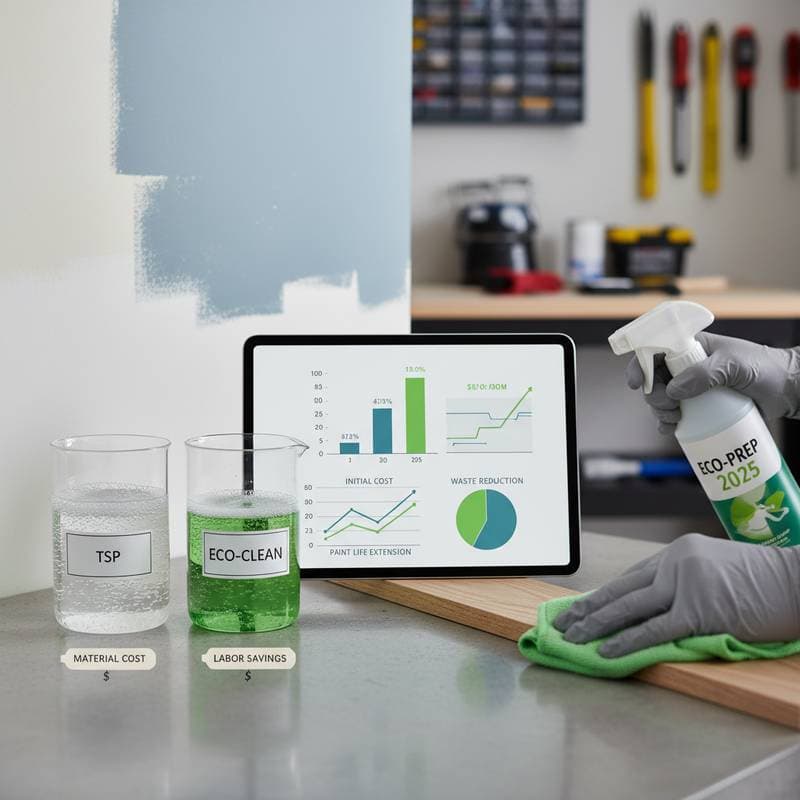
| TSP | $1 to $3 (when mixed) | Moderate | Extensive rinsing required | Contains phosphates; mandates full protective gear and neutralizes residue to prevent paint adhesion issues |
| TSP Substitute | $8 to $15 | Reduced | Simple rinsing, minimal residue | Biodegradable with low toxicity; facilitates safer handling and disposal without special permits |
TSP provides superior removal of stubborn grease and enhances paint adhesion on challenging surfaces, though it requires meticulous rinsing to eliminate any lingering crystals that could compromise bonding. In contrast, substitutes deliver comparable cleaning power with less upfront preparation, allowing quicker progression to painting and fewer interruptions from drying periods.
Evaluating Long-Term Value and Return on Investment
Thorough surface preparation extends the lifespan of paint by up to five years, averting expenses associated with early repaints that can exceed $500 for a single room. Inadequate cleaning frequently results in blistering, flaking, or patchy finishes, prompting immediate repairs. Allocating an additional $20 to $50 toward premium cleaning agents yields substantial returns by ensuring fewer paint layers and enhanced durability.
Practical Strategies to Minimize Costs
- Initial mild wash: Apply a solution of dish soap and warm water to dislodge loose dirt and dust, reserving stronger cleaners for persistent stains.
- Targeted cleaning: Concentrate efforts on high-traffic zones prone to grease buildup, such as cabinet surrounds, while lightly treating unobtrusive areas to conserve resources.
- Precise mixing: Prepare TSP solutions in small batches to maintain potency, as diluted mixtures degrade within hours if not used promptly.
- Opt for eco-conscious alternatives: These options often qualify for rebates in green building programs and safeguard nearby plants from chemical runoff.
- Integrate with full-service packages: Painters frequently discount preparation by 10 to 20 percent when bundled into comprehensive estimates, streamlining overall project pricing.
Building an Effective Preparation Budget
Allocate 10 to 15 percent of your total painting budget to cleaning and priming activities. This investment promotes optimal paint adhesion, facilitates even application, and reduces the quantity of coats required. Solicit detailed quotes outlining specific cleaning protocols to gauge inclusions accurately. For self-directed projects, incorporate provisions for protective apparel and waste disposal to circumvent unforeseen charges.
Frequently Asked Questions
1. What accounts for the cost variance between TSP and substitutes?
TSP powder incurs lower initial material expenses, often half that of substitutes, yet the latter compensates through expedited labor and streamlined cleanup. Overall, substitutes may trim total preparation outlays by 15 to 25 percent on time-sensitive jobs.
2. How do I select the appropriate cleaner for my surface?
Reserve TSP for heavily greased or industrial-strength cleaning needs, such as in garages or commercial kitchens. Choose substitutes for general residential use or regions enforcing phosphate bans, ensuring compatibility with sensitive substrates like wood paneling.
3. Is it advisable to combine TSP with additional cleaning agents?
Combining TSP with other substances risks hazardous chemical reactions, such as gas release or reduced efficacy. Dilute TSP solely with water, adhering strictly to label ratios for safe and effective use.
4. Does TSP suit every surface type?
TSP proves unsuitable for fragile materials including glass fixtures, aluminum trim, or unsealed wood, where it may etch or discolor. Conduct a patch test in inconspicuous spots or default to milder substitutes for preservation.
5. What steps reduce preparation expenses while upholding standards?
Limit cleaning to paint-contact areas, employ diluted concentrations for initial passes, and ensure complete rinsing to preclude rework. For expansive undertakings, professional involvement optimizes material usage and efficiency.
6. When should surface preparation occur relative to painting?
Schedule prep during stable, temperate weather to facilitate rapid drying, typically 24 to 48 hours before applying primer. Avoid humid or rainy conditions that prolong moisture retention and invite mold growth.