Professional Drywall Sanding Solution: The $800 Dustless System
Drywall sanding often evokes images of pervasive dust clouds, repetitive motions, and physical strain. Professional painters and contractors frequently face these challenges on job sites ranging from residential renovations to commercial projects. However, a targeted investment in specialized equipment can streamline the process, enhance safety, and produce superior results. This guide examines a proven $800 system that integrates dust extraction technology, drawing from real-world applications in high-stakes environments such as television production and client homes.
The approach focuses on precision tools and systematic setup to achieve smooth surfaces without excessive cleanup or health risks. Contractors seeking workflow improvements and homeowners embarking on DIY projects alike can benefit from these methods. The following sections outline the essential components, implementation strategies, and variations to suit different budgets and project scales.
Unveiling the $800 Dustless System
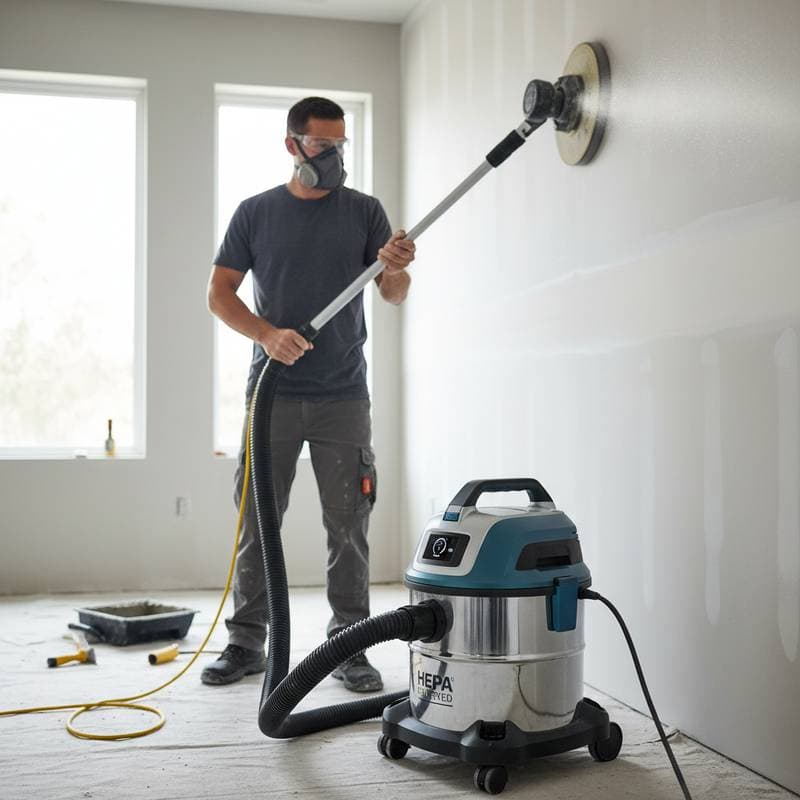
The foundation of this solution lies in combining a dustless drywall sander with a high-efficiency particulate air (HEPA) vacuum. This pairing forms a closed-loop system that captures fine particles at the source, preventing them from dispersing into the surrounding environment. As a result, sanding sessions become more productive, with reduced interruptions for dust management.
Essential Components
-
Electric Drywall Sander Equipped with Vacuum Attachment
Select a model featuring variable speed controls and an extendable handle, typically priced between $400 and $500. The flexible head design conforms to irregular surfaces on walls and ceilings, ensuring even abrasion. Variable speeds accommodate varying material thicknesses, from thin skim coats to thicker joint compounds, minimizing the risk of over-sanding. -
HEPA Vacuum Extractor
Invest in a dedicated HEPA unit costing $300 to $400, engineered for capturing micron-sized drywall dust. Unlike standard shop vacuums, these maintain consistent suction over extended periods and often include automatic activation synchronized with the sander. The filtration system traps 99.97% of particles as small as 0.3 microns, safeguarding respiratory health.
This configuration totals approximately $800 and halves typical sanding durations while virtually eliminating airborne contaminants. Professionals report noticeable improvements in job site conditions and overall efficiency.
Budget Options for Dustless Sanding
Initial costs may deter some users, yet scalable alternatives exist to approximate the full system's performance. Tailor the selection to project frequency and scope, ensuring each option aligns with practical needs. The strategies below provide pathways from basic to advanced setups.
Entry-Level Approach ($100 to $200)
- Manual Sanding Kit with Vacuum Adapter: Attach a mesh-covered sanding head and hose to an existing shop vacuum. While suction power is moderate, it significantly curbs dust escape compared to traditional methods.
- Implementation Advice: Employ mesh discs with 220-grit or finer for optimal particle capture. Maintain deliberate, overlapping strokes to allow sufficient vacuum draw time, and pause periodically to clear any buildup.
Intermediate Setup ($300 to $600)
- Corded Sander Paired with Enhanced Vacuum: Prioritize a reliable electric sander, then upgrade a shop vacuum with HEPA filters or disposable bags for better containment.
- Implementation Advice: Secure hose connections with durable tape to avoid leaks, and incorporate a cyclone separator to divert coarse debris, thereby preserving filter integrity and suction strength.
Advanced Professional System ($800 and Beyond)
- Integrated HEPA Extraction Unit: This comprehensive arrangement excels in demanding scenarios, offering unmatched cleanliness and speed for frequent users.
- Implementation Advice: Organize storage in sealed containers to protect components from contaminants, and schedule filter replacements every 50 to 100 hours of use to sustain peak performance.
Each tier balances cost with effectiveness, enabling users to progress as requirements evolve. Evaluate based on usage intensity to maximize return on investment.
Advantages Valued by Professionals
Efficiency gains extend beyond immediate task completion. Reduced dust accumulation lowers post-sanding cleanup expenses and mitigates potential issues such as compromised paint adhesion on contaminated surfaces. Clients appreciate the controlled environment, which demonstrates meticulous care and professionalism.
In time-sensitive settings like television set preparations, where walls must ready within hours, this system preserves schedules by minimizing disruptions. Crew members benefit from improved air quality, reducing exposure to irritants and enhancing focus. These factors contribute to higher client satisfaction and repeat business opportunities.
Enhancements and Complementary Tools
After establishing the base system, consider add-ons to refine operations further. These accessories address common pain points, promoting sustained productivity and safety.
- Cyclone Pre-Separator: Position this device inline to centrifuge larger particles away from the primary filter, prolonging its lifespan and preventing performance dips.
- Adjustable Extension Poles: These facilitate access to elevated areas without excessive reaching, decreasing reliance on ladders and associated risks.
- Hose Management Reels: Mount these to walls or stands for organized hose routing, eliminating clutter and potential entanglement.
- Vibration-Absorbing Pads: Place under the vacuum unit to dampen operational noise, ideal for noise-sensitive indoor applications.
Integrating such elements customizes the setup for specific workflows, ensuring adaptability across diverse projects.
Maximizing Returns on the Investment
The $800 outlay may appear substantial, yet the benefits in time savings, health protection, and finish quality justify it. Professionals complete more assignments weekly, boosting revenue potential, while individuals enjoy expedited home improvements with minimal disruption.
Comparative analysis reveals strong value: traditional methods incur hidden costs in labor and remediation, whereas this system delivers consistent, high-caliber outcomes. Maintenance practices, such as routine inspections and cleaning, ensure longevity, often spanning years of reliable service.
Integrating the System into Routine Practice
Adopting dustless sanding establishes a benchmark for preparation standards. Subsequent painting phases commence promptly, with negligible residue to address. Workers experience less physical exhaustion, fostering a more positive approach to projects.
For business owners, highlight this methodology in service descriptions to attract discerning clients who prioritize cleanliness. Homeowners can collaborate on shared tools within communities, amplifying accessibility. The transformation prompts frequent inquiries about the absence of dust, underscoring the system's tangible impact.
Implement this professional solution to redefine drywall sanding. Achieve smoother walls, cleaner spaces, and greater satisfaction through informed tool selection and technique.