The $800 TSP Swap That Cuts Painting Prep Time in Half
Surface preparation accounts for the majority of time in most painting projects. Proper cleaning, degreasing, and dulling of surfaces ensure that new paint adheres effectively and resists peeling. Professionals and homeowners have long used trisodium phosphate, known as TSP, for heavy-duty pre-paint cleaning. Recent advancements in surface preparation alternatives, however, offer a more efficient approach. The $800 TSP swap involves acquiring a modern cleaning system or concentrated TSP alternative that halves preparation time and reduces labor expenses. This guide details how such an investment enhances efficiency and delivers superior outcomes.
Understanding the Cost of Surface Prep
Surface preparation comprises 30 to 50 percent of total painting labor costs. For a typical interior repaint, labor rates range from $1.50 to $3.50 per square foot. Preparation alone may therefore cost $0.50 to $1.75 per square foot. In larger residential or commercial settings, these expenses easily exceed $800 in labor hours.
Traditional TSP application demands mixing the solution, scrubbing surfaces, rinsing thoroughly, and allowing time to dry before priming or painting. Although effective, this method proves time-intensive. Each rinse cycle extends the process by hours, and incomplete residue removal risks adhesion failures. A TSP alternative cleaner or integrated system addresses these challenges by streamlining the workflow.
The $800 TSP Swap Explained
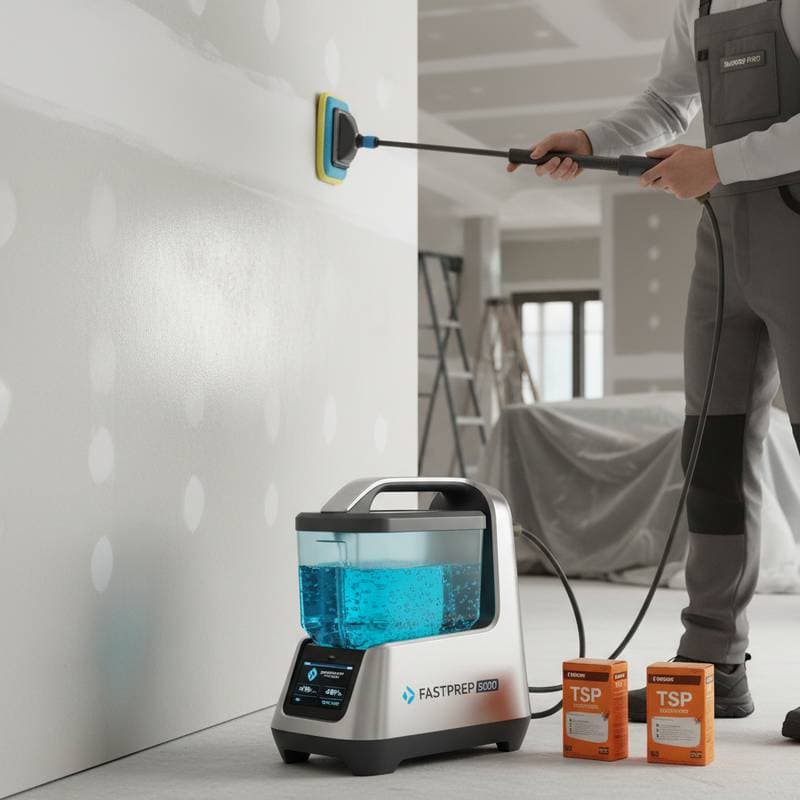
The $800 investment covers the shift to a high-performance TSP-alternative system, which includes the following components:
- A concentrated professional-grade cleaner or degreaser formulated to substitute for TSP.
- Application tools such as pump sprayers or microfiber scrubbing systems.
- Protective equipment and rinse-free supplies that accelerate the process.
This initial expense pays for itself through labor savings on individual projects, often amounting to hundreds of dollars. Professional teams achieve quicker job completion, enabling more projects and higher profits. Homeowners experience reduced physical effort, minimal mess, and expedited timelines.
Average Cost Ranges by Project Size
| Project Type | Traditional Prep Cost | TSP-Alternative Prep Cost | Time Savings |
|---|---|---|---|
| Small Room (200 sq. ft.) | $150 - $250 | $90 - $130 | 40-50% |
| Medium Room (400 sq. ft.) | $300 - $500 | $180 - $260 | 45-55% |
| Large Room (600 sq. ft.) | $450 - $750 | $270 - $390 | 50%+ |
Factors Affecting Surface Prep Costs
Surface Condition: Surfaces with heavy grease or soil demand robust cleaning and extended effort. Rinse-free TSP alternatives minimize repeated washing, proving ideal for kitchens and bathrooms.
Material Type: Drywall, wood trim, metal, and cabinets react variably to cleaning agents. Versatile TSP alternatives suit multiple surfaces, eliminating the purchase of specialized products and reducing overall expenses.
Labor Efficiency: Traditional TSP necessitates precise mixing and multiple rinses to eliminate residue. Modern cleaners integrate degreasing and deglossing into a single application, permitting immediate progression to priming.
Environmental and Safety Factors: TSP handling requires gloves, goggles, and careful disposal. Biodegradable, non-corrosive alternatives lower health risks and simplify cleanup.
Detailed Cost Analysis by Cleaner Category
| Cleaner Type | Basic Range | Standard Range | Premium Range | Key Differences |
|---|---|---|---|---|
| Traditional TSP | $15 - $30 per gallon | $30 - $45 | N/A | Requires rinsing; strong alkaline base |
| TSP Substitute (rinse-required) | $25 - $40 | $40 - $55 | $55 - $70 | Simpler handling; rinse still needed |
| TSP-Alternative Concentrate (rinse-free) | $60 - $90 | $90 - $130 | $130 - $200 | One-step degreasing and deglossing; 50% time savings |
Value and ROI Considerations
The return on an $800 TSP swap stems from substantial time reductions. Professional crews recoup the cost after one or two jobs. Homeowners on extensive repaints save three to five hours of scrubbing and rinsing. Additional advantages include reduced tool wear, fewer supplies, and less chemical waste, bolstering both financial and ecological outcomes.
Accelerated preparation compresses overall project schedules, curbing labor costs and limiting disruptions. Cleaner surfaces promote stronger paint adhesion, potentially extending finish durability by years and amplifying long-term value.
Money-Saving Strategies
- Purchase concentrates that yield multiple gallons upon dilution, decreasing cost per application.
- Employ microfiber tools to optimize cleaner usage and enhance surface coverage.
- Apply solutions sparingly to prevent excess saturation; a uniform light coat suffices.
- Select multifunctional cleaners that handle both degreasing and deglossing, avoiding redundant steps.
- Sequence preparation across rooms, utilizing drying time in one area to advance work in another.
Planning Your Budget
Incorporate the $800 TSP-alternative investment by first calculating the square footage of surfaces requiring cleaning. Multiply this by prep costs per square foot for traditional and alternative methods. The variance indicates potential labor reductions.
Consider a 1,500-square-foot interior with $1.25 per square foot in prep labor, totaling $1,875. A rinse-free cleaner halving the time lowers this to approximately $940, offsetting most of the investment in a single endeavor.
Allocate 10 to 15 percent of the painting budget as a contingency for unforeseen repairs, additional cleaning, or material needs. When engaging professionals, inquire about their use of TSP alternatives, as this impacts quotes and timelines.
Frequently Asked Questions
What benefits does a TSP alternative provide over traditional methods?
TSP alternatives offer rinse-free application, reducing water usage and drying time. They enhance safety with non-toxic formulas and improve paint adhesion through residue-free cleaning.
How quickly can the $800 investment pay for itself?
For professionals, recovery occurs within one to two projects via labor savings. Homeowners see returns on larger jobs through reduced effort and faster completion.
Are TSP alternatives suitable for all surface types?
Most formulations work on drywall, wood, metal, and cabinets. Verify product specifications for specific materials to ensure compatibility.
When is the best time to complete surface prep for painting?
Opt for dry, moderate conditions to facilitate even drying and optimal adhesion. Steer clear of high humidity or temperature extremes, which hinder cleaner performance.