Dust-Free Sanding: The $800 System That Transforms Preparation Work
Sanding drywall, trim, or furniture often generates pervasive fine particles that settle on surfaces and infiltrate hard-to-reach areas. These particles adhere to clothing, hair, and tools, complicating the preparation process. A professional-grade dustless sanding system, priced at approximately eight hundred dollars, addresses this issue effectively by minimizing airborne dust during use.
This investment enhances efficiency in preparation, painting, and project management. Professionals and dedicated hobbyists benefit from reduced cleanup time and improved workspace conditions. The system redefines preparation standards through integrated dust control features.
The Importance of Dust Control in Sanding
Dust extends beyond inconvenience by impeding workflow, prolonging cleanup, and compromising paint adhesion. Particles that resettle on primed surfaces create imperfections in the final finish. Drywall dust poses risks to respiratory health and can obstruct heating, ventilation, and air conditioning systems.
Conventional sanding methods produce lingering clouds that persist for extended periods. Basic vacuum attachments provide partial relief, yet a comprehensive system designed for dust capture at the source offers superior results. Such systems prioritize health, quality, and productivity.
Key Components of a Dustless Sanding System
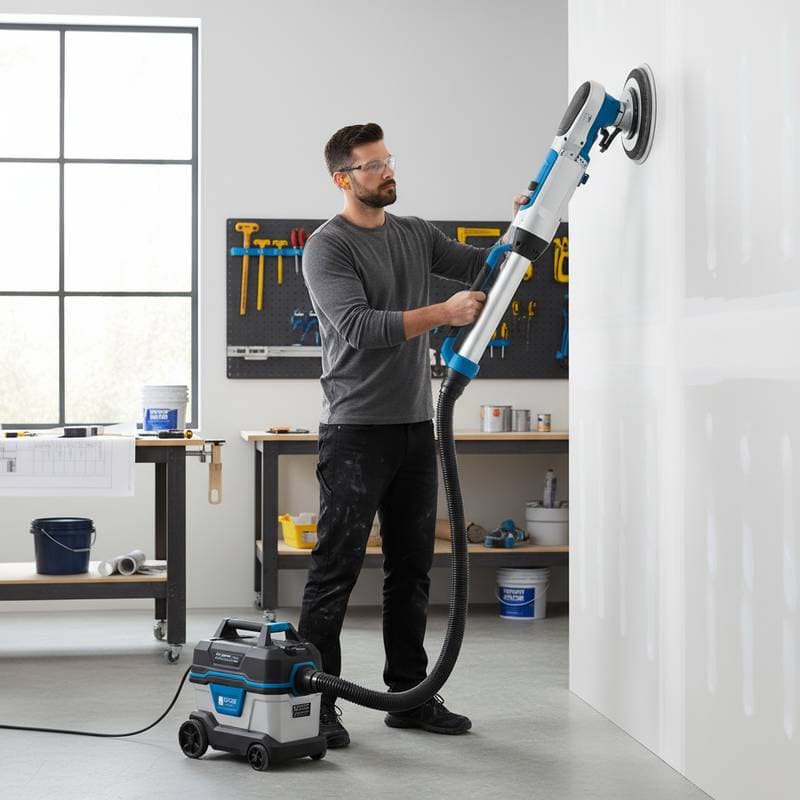
An effective dustless sanding system integrates a high-efficiency particulate air filtered vacuum, a sander optimized for airflow, and a secure hose connection. The design resembles professional studio equipment, ensuring seamless operation. As the sander glides over the material, integrated suction channels in the sanding pad extract particles directly into the vacuum.
This technology originated in television production environments, where crews maintained pristine conditions under tight schedules and bright lights. The same standards now support contractors and homeowners seeking efficient, clean results. Accessibility has expanded through refined engineering.
Components Included in the $800 Investment
The eight hundred dollar price point covers essential elements that justify the cost through long-term savings in time and maintenance.
- A HEPA-filtered vacuum unit that captures over 99.97 percent of particles as small as 0.3 microns.
- A variable-speed random orbital sander equipped with perforated pads for optimal dust extraction.
- An anti-static hose assembly that minimizes clogs and maintains consistent airflow.
- Accessory kits including storage cases for easy transport and organization.
Inferior alternatives often lack robust filtration or airtight seals, allowing dust to escape. A complete system ensures professional outcomes with minimal post-sanding residue.
Scalable Options Across Budgets
Individuals hesitant about the full investment can adopt incremental improvements to reduce dust significantly.
- Entry-level approach: Attach a standard shop vacuum fitted with a specialized drywall dust bag to a compatible sanding head. This configuration reduces airborne particles by at least 50 percent.
- Intermediate solution: Combine a reliable vacuum with an orbital sander featuring dedicated extraction ports. Select models with brushless motors for reduced noise and extended durability.
- Premium configuration: Invest in the integrated dustless system for unparalleled surface smoothness, rapid cleanup, and superior air purity.
These tiers allow progression based on project demands. Begin with basic enhancements and incorporate advanced components as needs evolve.
Performance in Practical Applications
During a television renovation project with stringent time constraints and high-visibility lighting, implementing a dustless system eliminated visible particles instantly. The team completed sanding and painting within the same day, avoiding extensive surface wiping. This efficiency applies equally to residential tasks, such as refinishing furniture or preparing room interiors.
Enhanced visibility during sanding reveals surface details, preventing oversights and ensuring uniform texture. Consequently, projects proceed faster with higher-quality outcomes.
Guidelines for Optimal System Use
Proper technique maximizes the system's effectiveness. Follow these steps for consistent results:
-
Isolate the workspace by sealing doors and covering ventilation openings.
-
Secure all connections, ensuring the hose fits snugly to the vacuum and sander.
-
Initiate operation at moderate vacuum suction and low sander speed, adjusting upward as required.
-
Maintain the sanding pad perpendicular to the surface to preserve suction integrity and avoid damage.
-
Monitor and empty the vacuum canister frequently to sustain airflow.
-
Clear any blockages in the pad perforations using light tapping or compressed air.
Adhering to these practices yields efficient, residue-free sanding sessions.
Ideal Materials for Dustless Sanding
Dustless systems excel with drywall, wood, plaster, and existing painted surfaces requiring scuffing. The controlled environment facilitates precise edge feathering and visible progress. On drywall, joints achieve seamless integration without irregularities.
For softwoods like pine trim, employ fine-grit pads with light pressure; the suction removes debris promptly, preparing surfaces for priming. Hardwoods and cabinetry benefit from progressive grit sequences, where steady extraction promotes even refinement and grain preservation.
Maintenance for Extended Durability
Quality systems withstand prolonged use with routine care. Clean filters regularly, replace worn sanding pads, and store hoses coiled to avoid damage. Track filter installation dates to schedule timely replacements.
Declining suction or visible dust leakage signals the need for seal and filter inspections. Upgrades such as enhanced anti-static hoses or advanced HEPA elements can restore or exceed original performance. Proactive upkeep ensures reliability and environmental responsibility.
Benefits for Professionals and Homeowners
Contractors gain a competitive edge by minimizing downtime; each saved hour reallocates to additional services or refinements. Homeowners enjoy reduced disruption, sanding living spaces without extensive protective measures or system contamination risks.
The setup conveys expertise, fostering client confidence through a tidy, respectful approach to their property. This professionalism enhances satisfaction and repeat business.
Field-Tested Strategies for Efficiency
Incorporate these practices to elevate results:
-
Position adjustable lighting at an angle to highlight surface flaws during sanding.
-
Stock multiple sanding pads; new ones generate less friction and heat.
-
Mark hoses by length for swift assembly in varied spaces.
-
Secure cords and hoses with reusable fasteners for streamlined mobility.
-
Verify suction on test material prior to full engagement.
These methods streamline operations and uphold high standards.
Achieving Professional Results at Home
Integrating a dustless sanding system elevates preparation from a chore to a precise process. Cleaner air and surfaces support superior finishes, while time savings allow focus on creative aspects of projects. This tool empowers users to maintain workshop-like efficiency in any setting, delivering lasting value through enhanced health and productivity.