The $800 Sanding Mistake That Compromises Your Home's Air Quality
After completing a drywall project, you may admire the results until a subtle white haze becomes apparent throughout the space. This haze consists of drywall dust, which extends beyond mere messiness to undermine your home's air quality and incur significant remediation costs. Professionals encounter this issue in various settings, from client residences to personal renovations. Fortunately, strategic preparation and containment practices can safeguard respiratory health, surface quality, and financial resources.
The Financial Implications of Inadequate Sanding Preparation
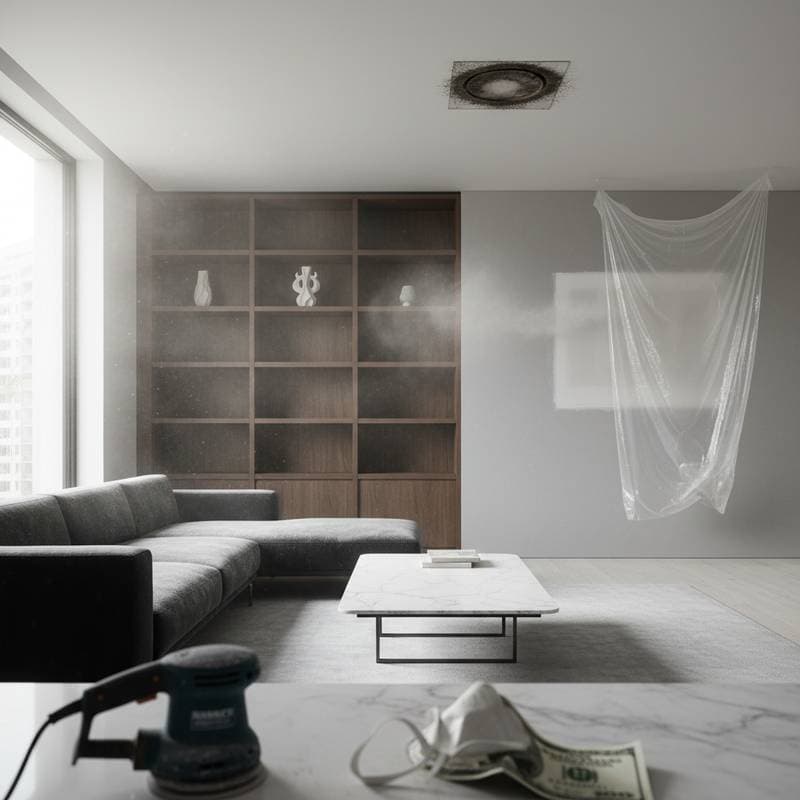
Inadequate preparation during drywall sanding escalates expenses rapidly. The $800 estimate typically encompasses cleanup efforts, air filter substitutions, repainting requirements, and HVAC maintenance. Drywall dust particles prove exceptionally fine, infiltrating ventilation systems, textiles, and electronic devices. Once embedded, these particles circulate persistently, diminishing air quality and generating prolonged challenges.
A primary error involves sanding without isolating the workspace. Numerous individuals open windows under the assumption that ventilation disperses dust effectively. In reality, such air circulation distributes particles across the entire residence. Neglecting to deactivate the HVAC system allows immediate intake of dust into ducts, where extraction expenses may exceed the painting project costs.
The Insidious Nature of Drywall Dust
Drywall dust comprises gypsum, silica, and paper fibers. These components enable particles to adhere to surfaces due to their microscopic size, remaining airborne for extended periods. A room may appear dust-free initially, only to reveal a white residue on all flat surfaces upon closer inspection. This dust also diminishes paint sheen and abrades finished flooring.
In professional environments such as film production sets, dust containment techniques ensure pristine conditions. Basic foresight yields substantial benefits. Plastic sheeting, painter's tape, and negative air pressure configurations maintain cleanliness during operations. These principles apply equally effectively in residential settings.
Effective Containment Strategies
Effective containment serves as the cornerstone of dust management. Consider these adaptable approaches based on budget constraints:
Budget-Conscious Option:
Employ plastic drop cloths and blue painter's tape to form a complete barrier. Secure all seams meticulously and install overlapping flaps over doorways. Deactivate the HVAC system during the process. Cover vents with tape to block dust ingress.
Intermediate Enhancement:
Lease a zip wall system from a local hardware supplier. Tension poles in this system support plastic sheeting firmly, incorporating zipper access points for convenience. Position a box fan in a window to exhaust air outward, thereby extracting dust from the area. Seal the fan perimeter with tape or cardboard to eliminate gaps.
Professional Configuration:
For extensive projects spanning multiple rooms or major renovations, acquire a HEPA-filter dust extractor. Attach it directly to the sanding tool. Such devices capture more than 99 percent of fine particulates at the source. Although initial investment is higher, long-term savings in cleanup and health expenses prove considerable.
Optimized Sanding Techniques
Containment alone does not suffice; sanding methods require attention as well. Begin with fine-grit sandpaper and advance to ultrafine for the final application. Apply light pressure to permit the abrasive to function efficiently. Excessive force creates furrows and generates additional dust.
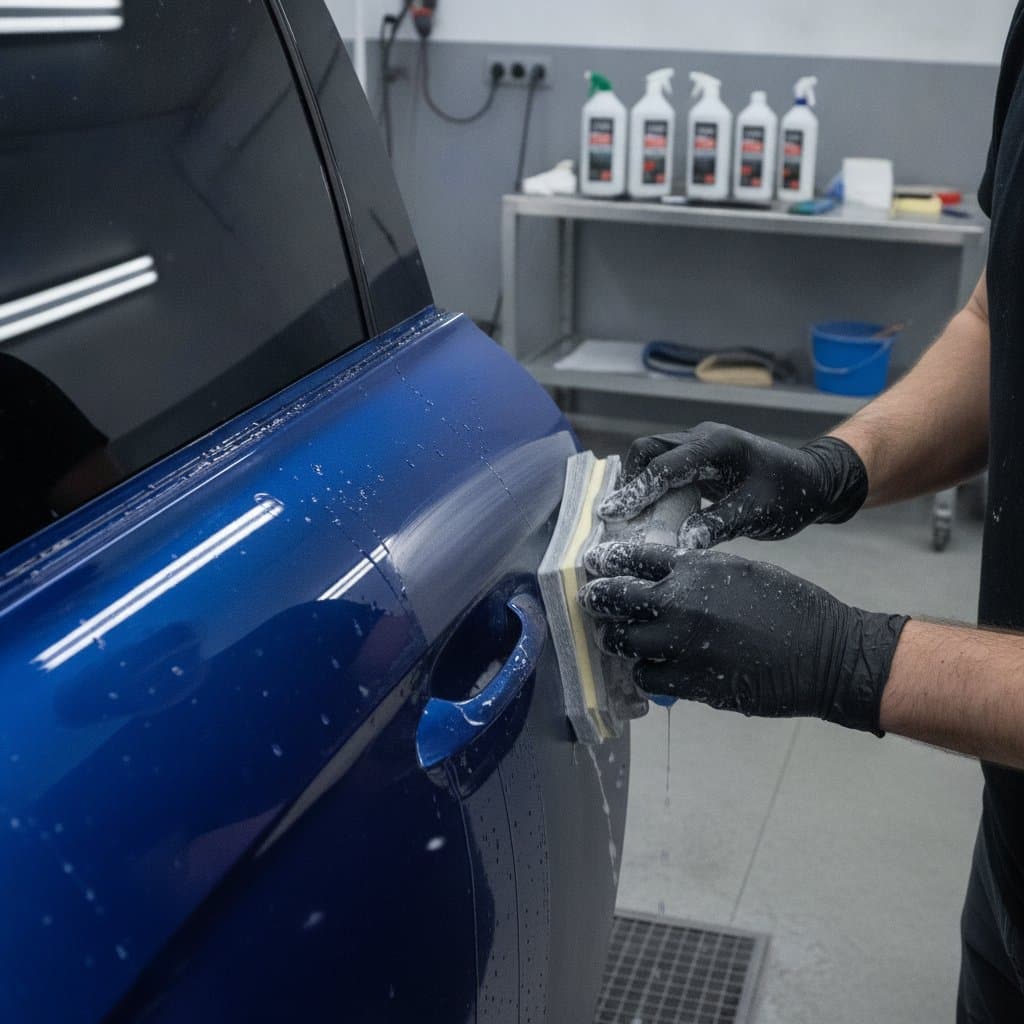
For minor repairs, utilize a wet sanding sponge. Moisten the sponge and gently abrade the surface. This method minimizes airborne dust substantially, albeit requiring additional time. In occupied filming locations, this approach eliminates post-activity cleanup entirely.
Verification Methods for Containment Efficacy
To assess containment performance, implement these straightforward evaluations:
- Surface Wipe Test: Clean a surface adjacent to the workspace exterior. Visible dust indicates the need for reinforced sealing.
- Air Illumination Test: Direct a flashlight beam through the ambient air. Detectable particles beyond the enclosure suggest airflow leakage.
- HVAC Filter Inspection: Examine the filter immediately following sanding. Dust accumulation signifies system contamination. Replace the filter without delay.
Adaptations for Rentals and Compact Spaces
In rental properties or confined areas, dust control remains achievable. Select painter's tape formulated for residue-free removal to avoid surface damage. Opt for wet sponging over mechanical sanding. If dry sanding proves necessary, proceed in brief intervals and employ a shop vacuum equipped with a HEPA filter bag between sessions. A compact, portable vacuum suffices when emptied frequently and maintained airtight.
Achieving Lasting Cleanliness and Quality
With sanding completed and dust managed, experience enhanced air purity and flawless wall surfaces. Finishes exhibit greater vibrancy, paint bonds more securely, and the living environment feels invigorated. Most importantly, evade the $800 remediation ordeal. Proper drywall handling consistently preserves health, property value, and tranquility.
Integrate containment into every design phase, whether constructing partitions, mending ceilings, or updating leased spaces. Thoughtful preparation reduces subsequent complications. This approach delivers genuine satisfaction in home improvement endeavors.