Understanding Sanding and Stripping for Paint Preparation
Many professionals and homeowners face the choice between sanding and stripping when preparing surfaces for repainting. This decision affects the final durability and appearance of the finish. Both methods offer benefits when applied appropriately, but selecting the correct one depends on the condition of the existing paint and the desired outcome.
Professionals evaluate factors such as paint integrity, surface type, and project goals to determine the best technique. Sanding typically preserves more of the original layers, while stripping provides a complete reset. The following sections outline when to use each method, along with tools and practices that promote efficiency and surface protection.
Scenarios for Sanding
Sanding suits situations where the current paint remains largely stable. Consider this method when the surface shows only light chipping or when dulling the gloss for better adhesion. It works well on robust materials such as wooden doors, trim, or cabinets. Sanding also safeguards underlying coats and reveals natural wood grain without excessive removal.
This approach maintains adhesion from previous layers, which supports long-term paint performance. Additionally, it preserves the subtle textures that contribute to a surface's aesthetic appeal.
Recommended Sanding Techniques
Begin with medium-grit sandpaper, such as 120-grit, to remove imperfections. Progress to finer options like 180-grit or 220-grit for a polished finish. On wood surfaces, always sand parallel to the grain to prevent scratches. Apply consistent, light pressure to avoid penetrating protected layers.
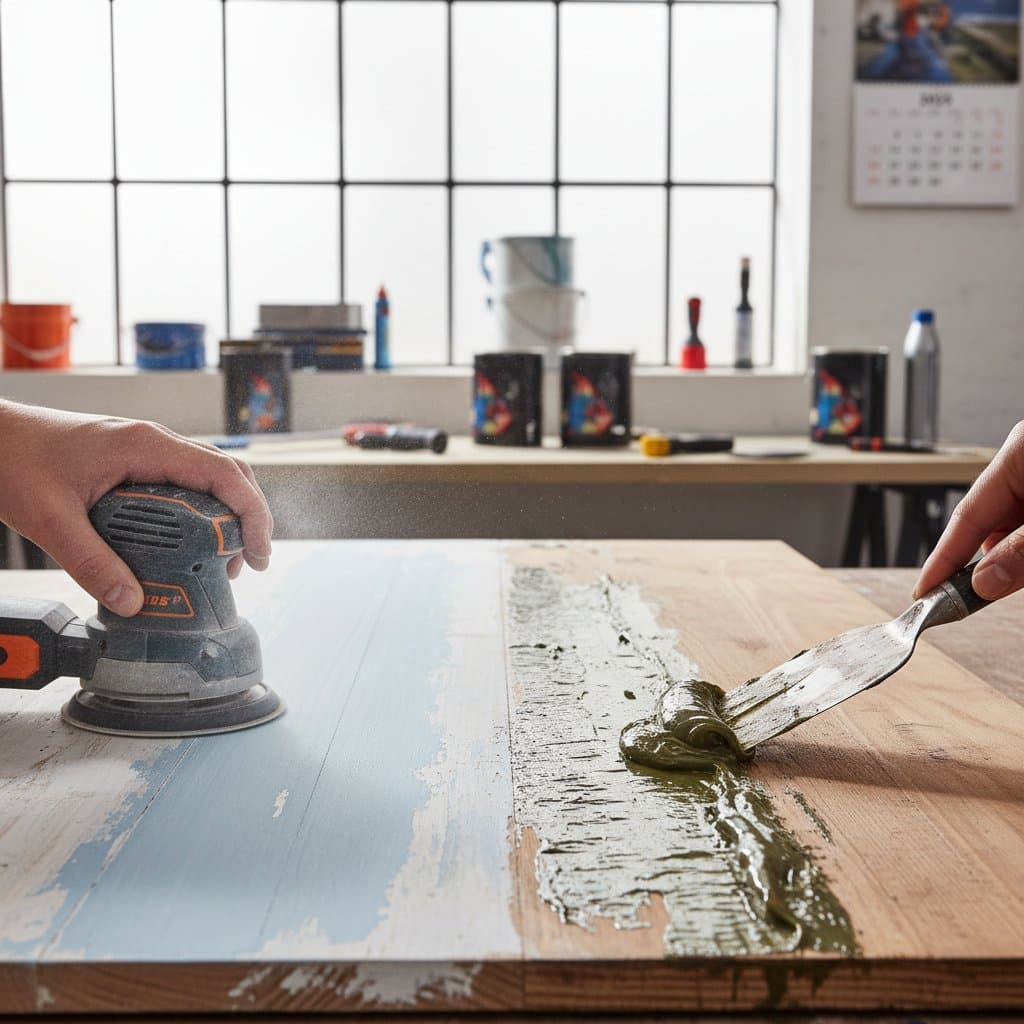
For larger areas, use an orbital sander with dust collection to minimize airborne particles. On detailed trim, opt for sanding sponges or blocks for precision control. These steps ensure an even surface ready for new paint.
Strategies for Paint Preservation
To retain existing paint layers, prioritize light sanding over aggressive removal. This technique leaves primer and base coats undisturbed, which reduces preparation time and costs. It also prevents the deep scratches that can occur with harsher methods, creating a uniform base for fresh applications.
View sanding as a refining process that smooths without compromising stability. The result is a prepared surface that enhances paint adhesion and extends the lifespan of the finish.
Testing Surface Layers
Prior to full preparation, evaluate a small, inconspicuous area. Apply a fine sanding sponge and observe the response. If the paint dusts uniformly without lifting, proceed with sanding. Should layers flake or appear unstable, consider stripping to address underlying issues. This preliminary step prevents wasted effort and ensures compatibility.
Essential Safety and Maintenance Practices
Protection remains paramount in all preparation tasks. Equip yourself with safety glasses, durable gloves, and a respirator designed for dust or chemical exposure. These measures shield against hazards common to both sanding and stripping.
After sanding, remove residue with a vacuum followed by a tack cloth to eliminate fine particles. Such dust can compromise new paint bonds if overlooked. For stripping processes, neutralize chemical residues with water or a designated cleaner, then allow complete drying before priming.
Selecting Eco-Friendly Options
Opt for products with low volatile organic compounds to reduce emissions. Contemporary strippers and sandpapers often incorporate safer formulations that maintain effectiveness while improving air quality in the work area.
Integrating Sanding and Stripping
In complex projects, combine both techniques for superior results. Initiate with stripping to eliminate heavy paint buildup, followed by targeted sanding to refine the exposed surface. This hybrid method balances thorough removal with precise finishing.
It proves particularly effective on items like antique furniture or multi-layered trim, where varied finishes demand versatile handling. Stripping tackles stubborn areas, while sanding ensures a seamless transition to the new coat.
Final Preparation for Painting
Immediately after preparation, apply a suitable primer to seal the surface. Exposed wood or metal can oxidize rapidly, hindering adhesion. Select a bonding primer for sanded existing paint to promote strong attachment of subsequent layers.
Verification Steps
- Pass your hand across the surface to confirm smoothness and uniformity.
- Wipe with a lint-free cloth; it should remain clean without residue.
- Inspect for even dullness, indicating proper scuffing; persistent gloss requires additional sanding.
These evaluations streamline the workflow and minimize the risk of defects.
Achieving Enduring Finishes
A well-prepped surface supports a finish that withstands daily use with basic care. Clean painted areas using mild soap and a soft cloth, avoiding abrasive materials. Whether through sanding, stripping, or a combination, thoughtful preparation elevates the quality of any painting endeavor.
Investing in these methods yields surfaces that retain their vibrancy and integrity over time. Homeowners and professionals alike benefit from the reliability and satisfaction of expertly restored spaces.