Sanding Between Coats: Avoid the $800 Mistake
A flawless paint finish requires careful attention to each layer applied. Homeowners frequently overlook the sanding step between coats, which leads to uneven surfaces, adhesion failures, and expensive corrections. This oversight can inflate project costs by hundreds of dollars in materials and labor. By grasping the importance of sanding, mastering the technique, and recognizing when professional help is necessary, individuals can secure a professional-quality result without financial setbacks.
The Role of Sanding in Paint Adhesion
Every coat of paint or primer creates a textured surface as it dries. Brush marks, dust particles, and minor ridges accumulate, disrupting the smoothness needed for subsequent layers. Sanding eliminates these imperfections, allowing the next coat to adhere uniformly and create a seamless bond.
Beyond aesthetics, sanding promotes durability. The process introduces a subtle roughness that enhances mechanical adhesion, preventing delamination over time. Neglecting this step embeds contaminants beneath new layers, which compromises the paint's integrity and invites premature cracking or peeling.
Analyzing Project Expenses
Typical Cost Estimates
- Basic Repainting: $500 to $1,200
- Repainting with Proper Sanding: $700 to $1,800
- Complete Surface Refinishing: $1,800 to $3,500
Standard Inclusions
- Initial surface cleaning and assessment
- Moderate sanding between coats
- Primer application followed by several finish coats
- Thorough cleanup and quality check
Additional Expenses
- Intensive sanding or old finish removal: $200 to $600
- Corrections for damaged or flaking paint: $100 to $400
- High-end paints or custom finishes: $100 to $300
Influences on Total Costs
| Factor | Impact Level | Specific Examples |
|---|---|---|
| Surface Condition | Moderate | Damaged areas demand extended sanding efforts |
| Paint Type | Variable | High-quality options reduce coats but need precise prep |
| Project Scale | Significant | Expanded areas increase both time and supplies |
| Professional Rates | Moderate | Experts command higher fees for superior outcomes |
Failing to sand adequately often necessitates repainting large portions, adding $500 to $800 to the bill. This underscores the value of integrating sanding into the preparation routine from the outset.
Detailed Sanding Procedure
- Prepare the Surface: Remove all dust, oils, and loose material with a mild cleaner and dry cloth.
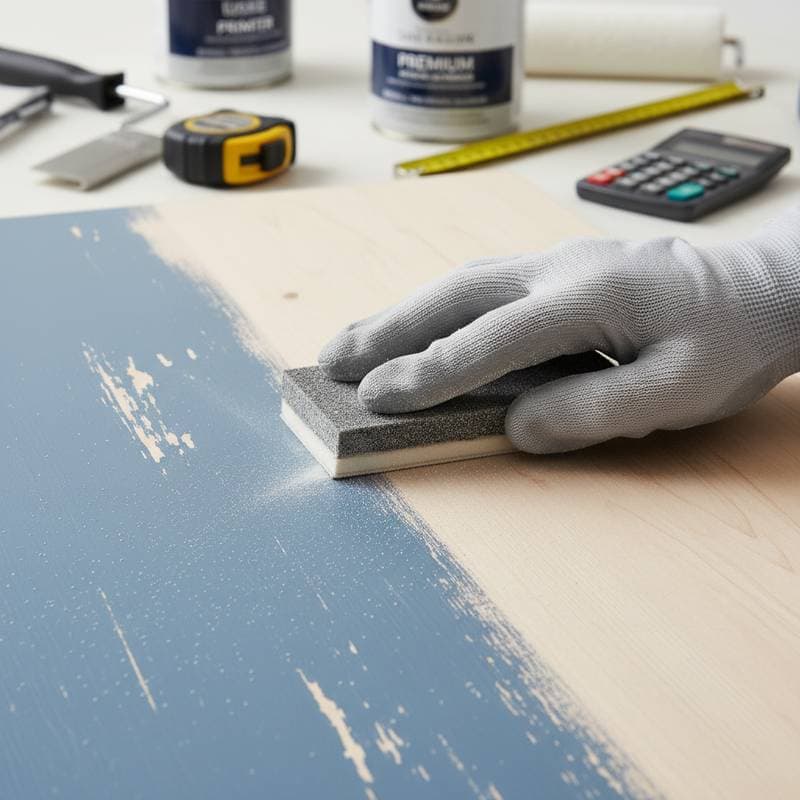
- Select Appropriate Sandpaper: Opt for 120- to 150-grit for primer layers and 180- to 220-grit for finish coats to achieve fine smoothing without gouging.
- Apply Even Pressure: Sand in circular or linear motions, using light strokes to level the surface uniformly.
- Clear Residue: Employ a tack cloth or soft brush to eliminate fine particles, followed by a vacuum for thorough removal.
- Verify Results: Examine the area under strong lighting to confirm even texture and absence of gloss or scratches.
Following these steps minimizes risks of visible seams, air pockets, or inconsistent gloss, resulting in a resilient and attractive surface.
Deciding Between DIY and Professional Services
For minor tasks such as refreshing trim, doors, or a single wall, homeowners can manage sanding with basic tools and steady effort. Success hinges on methodical application and frequent checks for uniformity. Larger undertakings or those involving compromised existing paint demand expert intervention.
Professionals bring specialized equipment, including dust extraction units and ergonomic sanders, to handle extensive areas efficiently. Indicators like widespread flaking or bubbling signal the need for pros, as improper remediation can trigger comprehensive failures requiring full-scale repaints at elevated costs.
Essential Preparation Strategies
Effective planning sets the foundation for success in any painting endeavor. Begin by securing the workspace, protecting adjacent items with drop cloths and plastic sheeting. Assemble essential supplies: assorted grits of sandpaper, protective masks, and lint-free cloths.
Allocate time for drying intervals between coats, typically 2 to 4 hours for water-based paints. Anticipate applying at least two finish coats for optimal coverage. Such foresight averts common pitfalls like rushed applications that lead to defects and subsequent professional interventions.
Securing a Durable Paint Outcome
Engaging a skilled painting service represents a strategic investment rather than an unnecessary outlay. Contractors apply precise sanding protocols to foster strong interlayer bonds and detect vulnerabilities early. This proactive approach averts repairs that could escalate expenses significantly.
Individuals opting for self-managed efforts on modest scopes benefit from the same principles: consistent sanding yields enduring results. Prioritizing this technique, regardless of approach, transforms ordinary projects into showcases of quality craftsmanship.
Common Queries Addressed
How Does Sanding Between Coats Influence Project Budgets?
Light sanding typically contributes $100 to $200 to overall expenses, scaled by area size, coat count, and material choices. This modest addition safeguards against far costlier revisions down the line.
What Drying Time Precedes Sanding?
Allow the prior coat to cure completely to the touch, avoiding any tackiness that could mar the surface. Latex paints often ready in 2 to 4 hours; oil-based variants may require 8 to 24 hours.
Under What Circumstances Should Professionals Handle Sanding?
Seek experts for expansive surfaces, intricate textures, or deteriorated prior layers exhibiting peeling or blisters. Their proficiency ensures damage-free preparation and uniform execution.
Indicators of Adequate Sanding?
The surface should present a uniform, slightly matte feel without shine or roughness. This texture primes it ideally for the following application.
Tools for Efficient Sanding?
Sanding sponges suit contoured areas, while pole sanders tackle broad walls. Integrating vacuum attachments controls dust and streamlines post-sanding cleanup.
Consequences of Omitting Sanding?
Oversights yield weak bonds, irregular textures, and prominent flaws, often mandating section repaints at $800 or more to rectify.