The Hidden Cost of Improper Sanding in Cabinet Refinishing
Cabinet refinishing transforms kitchens and bathrooms, yet preparation errors often undermine the effort. Improper sanding stands out as a frequent cause of failure, leading to adhesion issues, visible imperfections, and substantial repair expenses. Homeowners who recognize these risks can either refine their DIY approach or select contractors who prioritize meticulous preparation, ultimately preserving both aesthetics and budget.
The Essential Role of Sanding in Surface Preparation
Sanding forms the critical base for any refinishing project by creating a uniform surface that accepts primer and paint effectively. Proper execution removes old coatings, smooths imperfections, and eliminates contaminants without compromising the underlying material. In contrast, inadequate sanding results in raised grains, swirl marks, or burned areas that compromise the finish's longevity.
Professionals view sanding as the pivotal step that influences the entire outcome, often dedicating significant time to achieve precision. Homeowners frequently treat it as a preliminary task, which overlooks its technical demands. This phase requires patience and the right tools to ensure the surface bonds seamlessly with subsequent layers.
Breaking Down Project Expenses
Typical Cost Ranges for Refinishing
- Basic refinishing for standard cabinets: $2,000 to $3,500
- Standard projects with moderate customization: $3,500 to $7,500
- Premium options including high-end finishes: $7,500 to $12,000
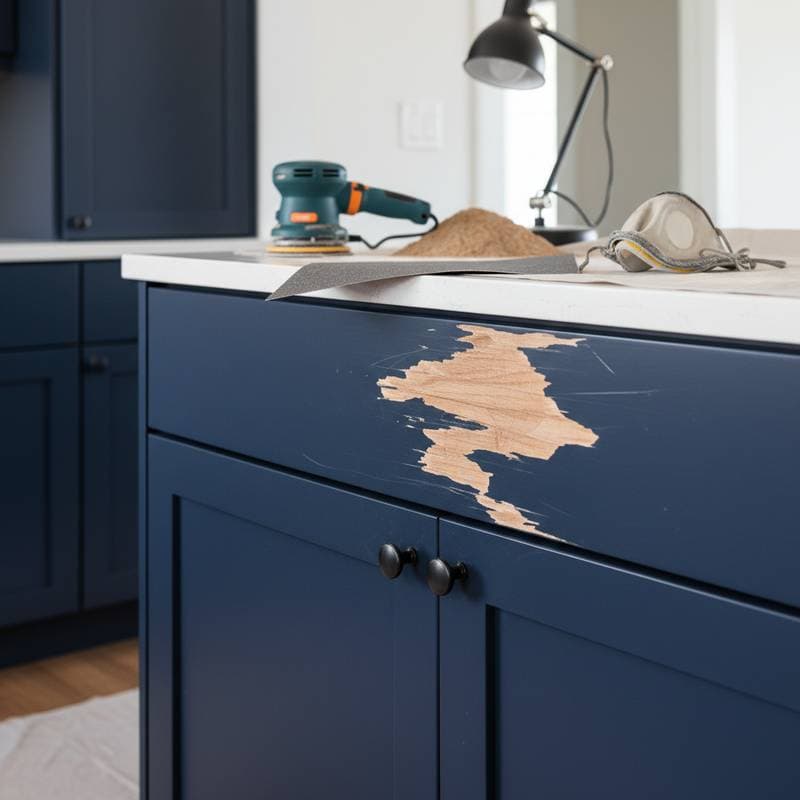
Sanding-related damage, such as gouged veneer or uneven surfaces, typically incurs $500 to $1,000 in fixes. This figure, often cited as the $800 average, covers labor for corrections and material replacements before refinishing proceeds.
Standard Project Components
Every refinishing job includes thorough surface cleaning to remove grease, followed by sanding all visible and hidden areas. Dust extraction and inspection precede priming, with final coats applied for protection. These steps ensure a cohesive result that withstands daily use.
Additional Expenses from Errors
- Damaged doors or trim replacements: $200 to $400 per item
- Rework for sanding flaws: $400 to $800
- Custom effects like glazing: $500 or more
- Hardware updates: $100 to $300
Influences on Total Expenses
| Factor | Impact Level | Specific Examples |
|---|---|---|
| Cabinet material | High | Veneer demands light pressure to prevent tears; solid wood tolerates coarser grits |
| Desired finish | Moderate | High-gloss requires 320-grit final pass for smoothness |
| Existing condition | Variable | Layered old paint extends sanding time by 50 percent |
| Labor expertise | High | Certified technicians charge 20-30 percent more for precision |
| Tools and setup | Moderate | Orbital sanders with vacuums reduce dust-related delays |
Unpacking the $800 Sanding Error
Rushed sanding often triggers the $800 repair scenario through avoidable missteps. Coarse grits above 80 create deep scratches that paint cannot conceal, while omitting progressive grits from 120 to 220 leaves abrasive patterns. Uneven pressure with orbital sanders risks burning thin veneers, causing uneven absorption and blistering under new coats.
Cabinets feature diverse materials, including solid wood, laminate, and composites, each needing tailored techniques. For instance, laminate requires scuff-sanding with 220-grit to promote adhesion without abrasion damage. Uniform treatment across surfaces guarantees consistent results and minimizes rework.
Realistic Project Timelines
Full cabinet refinishing spans one to two weeks, with sanding occupying two to three days for disassembly and detailed work. Professionals build in buffers for drying and quality checks, preventing downstream issues. Accelerating this phase invites complications like dust contamination during priming.
The standard workflow proceeds as follows:
- Initial cleaning and degreasing: One full day to strip residues
- Comprehensive sanding: Two to three days, progressing through grit levels
- Priming and coating applications: Three to five days for multiple layers
- Curing and reassembly: Two to three days, including final inspections
Adhering to this sequence avoids the pitfalls of haste, which extend timelines through mandatory corrections.
Comparing DIY and Professional Approaches to Sanding
Required Expertise
Effective sanding demands familiarity with material properties and grit sequences. Professionals start with 120-grit for initial removal, advancing to 220-grit for feathering edges, ensuring optimal adhesion. DIY attempts often rely on single-grit applications, resulting in rough textures that hinder paint flow.
Time Demands
Part-time DIY efforts may consume multiple weekends for what pros complete in days, factoring in tool setup and cleanup. Professionals streamline the process with efficient workflows, reducing overall disruption to the home.
Essential Tools
Invest in random orbital sanders and shop vacuums for dust control; basic pads from stores often produce inconsistent results on contoured edges. Pros employ variable-speed models to match material sensitivity, enhancing finish quality.
Health and Safety Measures
Sanding releases fine particles from old varnishes, potentially containing lead or VOCs. Use N95 respirators and seal work areas; professionals deploy HEPA filters to maintain air purity. Neglecting these steps exposes occupants to respiratory hazards.
Outcome Differences
Professional sanding yields even surfaces that reflect light uniformly, free of defects. DIY finishes may exhibit orange peel or holidays under illumination, underscoring the value of expertise.
Financial Analysis
Professional prep services range from $800 to $1,200, encompassing specialized equipment and thorough cleanup. DIY savings evaporate if errors necessitate professional intervention, mirroring the $800 repair threshold.
Selecting a Reliable Contractor
Prioritize firms experienced in cabinet work over general painters; inquire about their sanding protocols, such as grit progressions and material-specific adjustments. Review portfolios for evidence of flawless prep and request itemized proposals outlining inspection phases.
Evaluate bids by methodology, not solely cost; superior preparation justifies modest premiums through reduced risks. Confirm insurance coverage and dust mitigation practices to safeguard your space during execution.
Homeowner Preparation Steps
Facilitate efficiency by decluttering workspaces and labeling components for reassembly. Coordinate schedules with the team, restricting access to active zones and shielding adjacent areas from dust. Refrain from handling prepped surfaces to avoid oil transfers that disrupt bonding.
Maintain dialogue throughout: Seek updates after sanding and review surfaces pre-priming. Professionals appreciate proactive input, allowing timely refinements for optimal results.
Common Questions on Sanding Challenges
Why Do Sanding Mistakes Prove Costly?
Surface damage from errors, like veneer delamination, demands full replacements rather than patches. Repairs encompass disassembly, new materials, and reapplications, escalating expenses rapidly.
How Does One Prevent Sanding Issues?
Engage specialists in cabinet refinishing and demand a outlined prep strategy, including grit details and quality gates. Foster ongoing communication to address concerns promptly, ensuring efficiency and durability.
What Tools Yield the Best DIY Sanding?
Opt for a variable-speed orbital sander paired with a dust collector; stock grits from 120 to 320. Practice on scraps to master pressure control before tackling cabinets.
Securing Lasting Cabinet Finishes
Mastering sanding elevates refinishing from routine to rewarding, delivering kitchens that endure. By embracing detailed preparation, homeowners sidestep financial setbacks and enjoy professional-grade transformations. Invest in quality from the start to reap benefits for years ahead.