Avoid This Costly Mistake by Testing Moisture First
Paint that bubbles, peels, or discolors weeks after application often results from hidden moisture. Skipping a moisture test before painting creates expensive problems. Clients have spent hundreds correcting issues that a simple test would have prevented.
Why Moisture Testing Matters
Moisture travels through concrete, drywall, and wood. It carries salts and minerals that destroy paint adhesion. Premium primers and topcoats cannot bond properly on damp surfaces.
Trapped moisture produces several defects. Bubbling and blistering occur as vapor escapes. Peeling exposes the raw material. Mold or mildew grows beneath the film. Discoloration ruins the finish. Each problem requires scraping, sanding, and repainting.
How Different Materials Hold Moisture
Materials release water at different rates. Concrete absorbs water deeply and releases it slowly after pouring. Drywall takes in surface moisture quickly yet dries at a moderate pace. Wood expands and contracts with humidity changes, which creates movement under paint.
Painting before stabilization traps vapor. The paint film then acts as a barrier. Eventually the vapor forces its way out and damages the coating.
Tools for Reliable Testing
Several affordable tools provide accurate readings.
- Plastic sheet test: Tape a clear sheet over the surface and wait twenty four hours. Condensation inside indicates excess moisture.
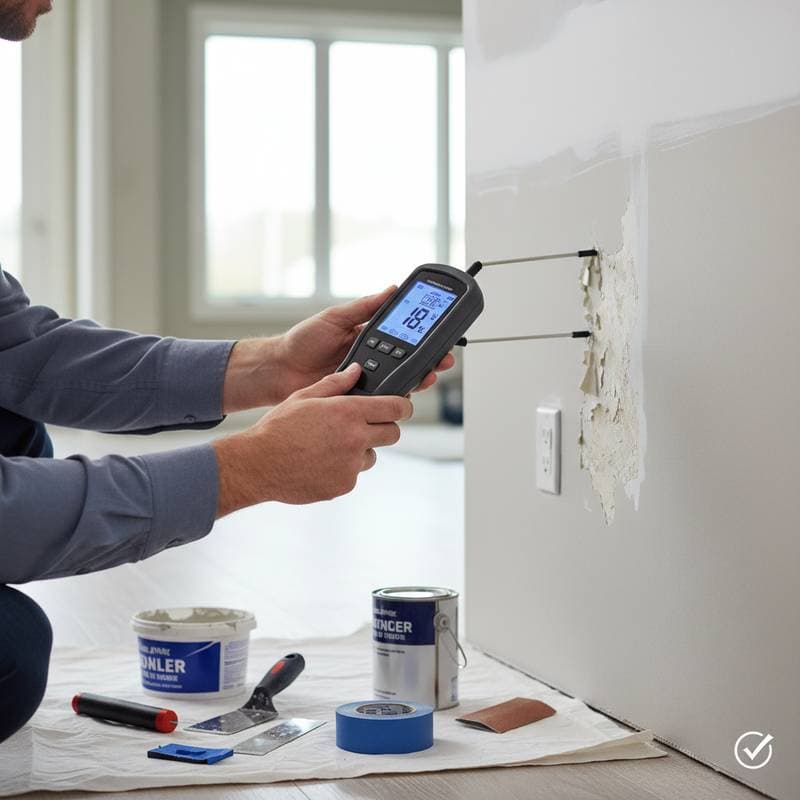
- Pin type meter: Insert pins into wood or drywall for instant digital results. Target six to nine percent for wood and below five percent for drywall.
- Pinless meter: Scan finished surfaces or large concrete areas without damage.
Acceptable Moisture Ranges
Each surface has a safe threshold.
- Wood: below twelve percent for interior work.
- Drywall and plaster: below five percent.
- Concrete: below four percent relative humidity at the surface.
Readings above these levels require additional drying time. Fans and dehumidifiers accelerate the process without causing cracks.
Field Examples
A commercial entryway appeared dry yet tested high for moisture. Two extra days with fans produced stable readings and a durable finish. In contrast, a homeowner project that skipped testing showed peeling within two weeks and required over eight hundred dollars in repairs.
Integrate Testing Into Preparation
Follow a repeatable sequence.
- Inspect visually for dark patches, white salts, or musty odors.
- Test several locations, especially corners.
- Record readings to track progress.
- Retest immediately before priming.
This routine takes minutes yet prevents hours of rework.
Manage Elevated Moisture Levels
When readings remain high, apply these steps in order of cost.
- Low cost: open windows and run fans to promote airflow.
- Moderate cost: use a dehumidifier with a built in hygrometer.
- Higher cost: apply a moisture blocking primer once readings stabilize near the limit.
Persistent high levels after drying often indicate leaks or drainage issues. Professional tools such as infrared scanners locate the source before coatings are applied.
Select Materials That Resist Moisture
Breathable paints allow vapor to pass. Elastomeric coatings accommodate movement on masonry. High quality primers create a stable base layer. These choices maintain performance when humidity fluctuates slightly.
Read Surface Signals
Observe visual and tactile cues. Uneven darkening after rain, swollen wood joints, or cool drywall surfaces suggest trapped moisture. Confirm suspicions with a meter rather than relying on appearance alone.
Practical Habits for Consistent Results
Test under the same temperature and humidity conditions planned for painting. Newly patched drywall retains moisture longer than surrounding areas. Recheck surfaces after cleaning or repairs. Keep meters calibrated for dependable performance.
Maintain Conditions After Painting
Monitor indoor humidity with a digital hygrometer in moisture prone rooms. Ensure airflow and seal gaps around windows and vents. Consistent testing and maintenance produce finishes that remain attractive and intact for years.