Is Investing $800 in Dustless Sanding Worth It for Cleaner Walls?
Sanding drywall often results in widespread fine dust that settles on surfaces and persists for days. Dustless sanding introduces an advanced solution with vacuum integration to capture particles during the process. This article examines whether the $800 investment aligns with practical benefits, drawing on professional insights and cost analyses.
Understanding Dustless Sanding Mechanics
Dustless sanding employs a sander equipped with a vacuum system that connects to a filtration unit. As the sanding pad abrades the surface, the vacuum extracts dust particles into a sealed container, leaving minimal residue. This approach surpasses traditional methods, such as manual pole sanding, by maintaining a controlled environment.
Professional systems feature robust motors and multi-stage filters capable of handling extended use. These units suit applications from minor drywall repairs to comprehensive room preparations, including plaster restoration. The $800 cost generally reflects either a full-service hire or a durable tool kit for repeated contractor applications.
Key Advantages in Health, Cleanliness, and Performance
Dustless sanding provides measurable improvements across several dimensions.
- Improved Respiratory Safety: Conventional sanding releases fine particles into the air, which may cause irritation to the respiratory system or exacerbate conditions like allergies. Dustless systems capture more than 90 percent of airborne dust, significantly reducing exposure risks.
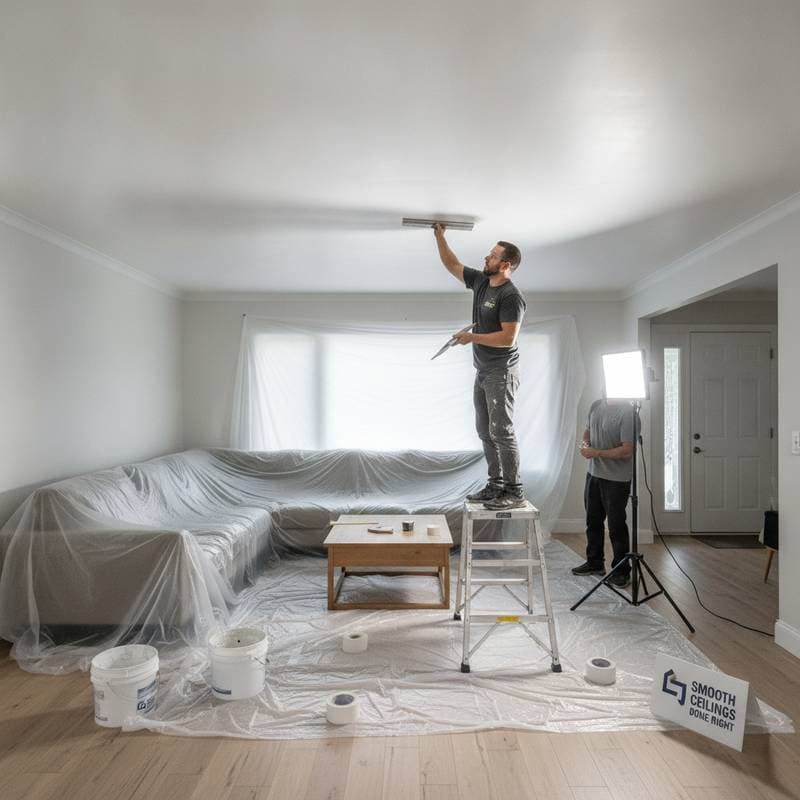
- Reduced Cleanup Demands: Eliminating the need for extensive plastic barriers allows work to proceed with visible floors and surfaces intact. This efficiency cuts post-sanding vacuuming time by hours, accelerating overall project timelines.
- Enhanced Surface Preparation: Contained dust ensures the wall remains free of contaminants before priming. Consequently, paint adheres uniformly, minimizing defects such as peeling or visible inconsistencies.
In renovation environments, these benefits contribute to professional-grade outcomes. Smooth walls distribute light evenly, enhancing visual appeal in finished spaces.
Cost-Effective Strategies Across Budget Levels
Access to dustless sanding exists at various price points, tailored to project scope and user expertise.
- Entry-Level Approach (Under $100): Opt for a basic vacuum-compatible random orbital sander paired with a standard shop vacuum and mesh sanding discs. This setup effectively manages dust in targeted areas, such as small repairs or single-wall tasks.
- Intermediate Investment ($200 to $400): Select a mid-range sander with integrated dust ports and optional HEPA filters. Such tools support frequent use by homeowners or small-scale operators, balancing performance with affordability.
- Premium Option ($800 and Above): Engage certified professionals for complete services or acquire industrial-grade equipment with advanced filtration. This level proves essential for extensive renovations or high-stakes commercial work, where time savings offset initial expenses.
Comparing these paths reveals that even modest investments yield substantial returns in convenience and quality.
Professional Perspectives on Efficiency Gains
In demanding settings like commercial builds, dustless sanding facilitates seamless workflows. Crews transition rapidly from surface preparation to painting, avoiding interruptions from dust-related delays. The resulting pristine conditions prevent issues in subsequent phases, such as photography or inspections.
This method also safeguards coordinated efforts among trades. For instance, plumbers or electricians operate without interference from airborne particles, reducing project downtime. Professionals report fewer revisions and callbacks, directly impacting profitability.
Practical Guidance for DIY Implementation
For independent projects, begin with a trial area to assess equipment performance. Maintain filter integrity by emptying collections regularly and securing all connections to maximize suction. Even with these systems, a fitted respirator provides additional protection against any residual particles.
To verify smoothness, direct a light source at an angle across the wall. This illumination highlights uneven spots or tool marks that might otherwise go unnoticed. Adopting such verification steps ensures a primed surface free of flaws, setting the foundation for durable paint application.
Realizing Lasting Value in Wall Preparation
A well-prepared wall simplifies subsequent steps, from painting to trim installation. The absence of dust fosters a more enjoyable process, culminating in spaces that feel refined and enduring. Whether through personal tools or expert assistance, dustless sanding invests in outcomes that elevate everyday living.
Ultimately, the choice hinges on project demands, yet the consensus favors cleaner methods for their tangible efficiencies. Prioritizing dust control leads to walls that perform and please over time.