Prevent the $800 Exterior Paint Mistake That Ruins Curb Appeal
A fresh exterior paint application transforms a home's exterior, yet a single error can result in an $800 expense that undermines curb appeal. Homeowners often overlook the importance of thorough planning, meticulous preparation, and careful material selection, which influence both appearance and durability. Poor decisions in color selection, paint quality, or surface readiness lead to repaints, fading, or peeling that reduce property value. Grasping the elements that drive expenses and balancing economy with excellence proves vital prior to launching any exterior painting endeavor.
This guide details strategies to sidestep prevalent errors that precipitate costly paint failures, effective budgeting techniques, and enduring selections that elevate curb appeal rather than erode it.
Exterior Painting Expense Summary
Exterior painting expenses generally span from $2,800 to $7,500, with the majority of homeowners expending approximately $4,500 for a typical single-story residence. Costs vary based on the home's dimensions, siding composition, paint caliber, and labor intricacy.
Typical Expenses by Home Size
- Small residence (under 1,000 square feet): $2,000 to $3,500
- Medium residence (1,500 to 2,500 square feet): $3,800 to $6,000
- Large residence (over 2,800 square feet): $6,500 to $10,000
Expense Distribution per Square Foot
Exterior painting averages $2.50 to $5.50 per square foot, encompassing:
- Materials: $0.75 to $2.00 per square foot
- Labor: $1.50 to $3.00 per square foot
- Preparation: $0.25 to $0.75 per square foot
- Supplementary elements: $0.25 to $0.75 per square foot
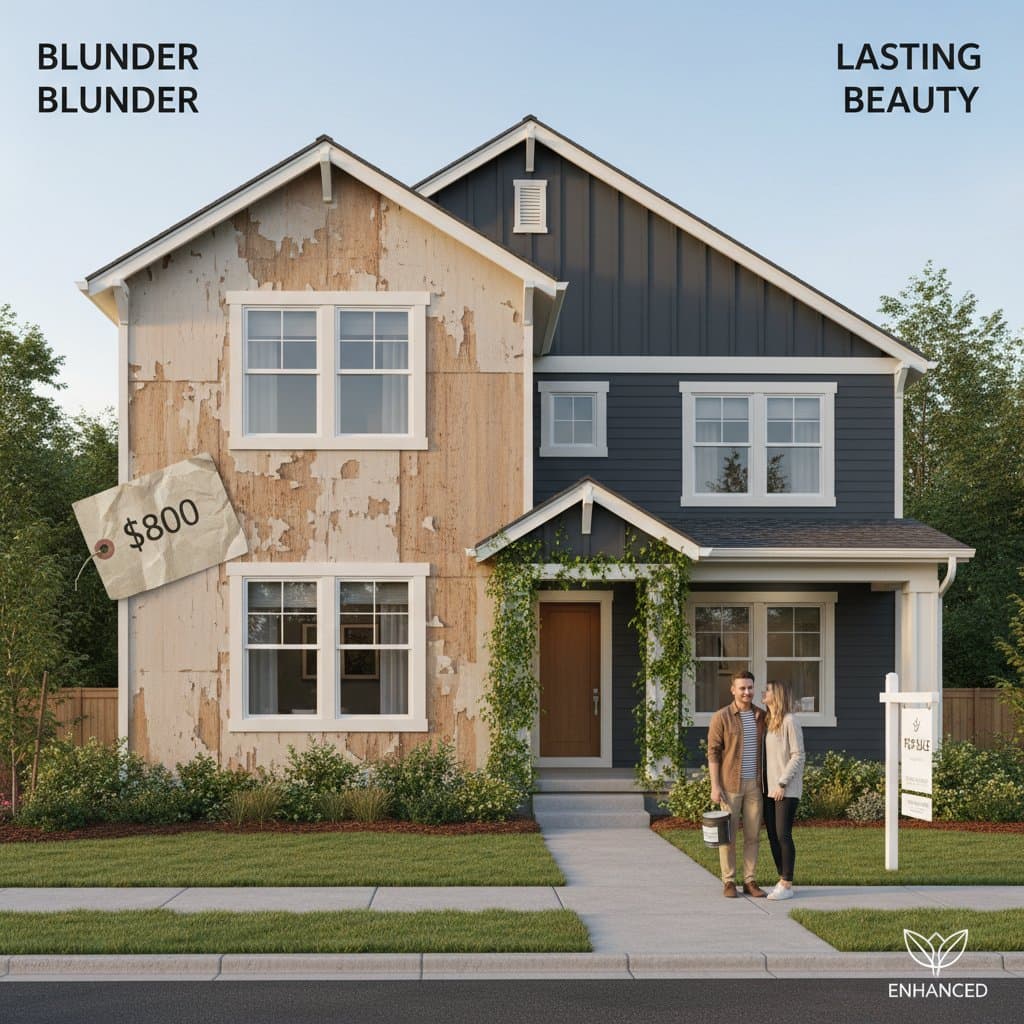
The $800 misstep frequently emerges when individuals bypass preparation or opt for inferior paint that deteriorates swiftly, necessitating an early redo.
Elements Influencing Exterior Paint Expenses
Multiple variables shape both expense and outcome. Awareness of these facilitates precise planning and averts monetary shocks.
Surface State: Grimy, flaking, or impaired siding demands scraping, sanding, and priming prior to painting. Omitting these procedures conserves a few hundred dollars at first but invites bubbling or shedding that incurs greater rectification expenses subsequently.
Paint Caliber: Economy paints frequently deficient in ultraviolet protection and bonding capability. Superior paints range from $40 to $70 per gallon, versus $20 to $30 for elementary varieties, yet they endure longer and preserve hue more effectively. This variance contributes $300 to $500 initially but averts thousands across subsequent cycles.
Labor and Expertise: Skilled painters provide proficiency, suitable tools, and productivity. Self-directed painting appears more economical, yet errors such as irregular application or overlooked priming demand expensive amendments. Labor constitutes 60 to 70 percent of the overall expenditure.
Siding Variety and Finish: Even wood or vinyl exteriors paint rapidly, whereas brick, stucco, or patterned siding necessitates additional paint and effort. Stucco applications cost $3 to $6 per square foot, compared to $2 to $4 for wooden siding.
Elevation and Accessibility: Multistory dwellings or those with inclined roofs require ladders, scaffolding, and safety protocols. Accessibility challenges can elevate the total by $500 to $1,000.
Local Economic Factors: Labor fees differ by locale. Regions with elevated demand exhibit higher contractor rates, whereas painting in off-peak periods may diminish labor by 10 to 15 percent.
In-Depth Expense Evaluation by Type
| Category | Basic Range | Standard Range | Premium Range | Principal Distinctions |
|---|---|---|---|---|
| Paint Caliber | $20 to $35 per gallon | $40 to $60 per gallon | $65 to $90 per gallon | Pigment density, ultraviolet shielding, and resilience |
| Labor | $1.25 to $2.00 per square foot | $2.25 to $3.50 per square foot | $3.75 to $5.00 per square foot | Proficiency, preparation thoroughness, and surface intricacy |
| Preparation | $0.25 to $0.50 per square foot | $0.50 to $0.75 per square foot | $0.75 to $1.00 per square foot | Encompasses cleansing, scraping, sealing, and priming |
| Trim and Accents | $400 to $700 | $700 to $1,000 | $1,000 to $1,500 | Intricacy, hue differentiation, and coating variety |
The Actual Expense of the $800 Misstep
The $800 paint error commonly arises from economizing in one of three stages: paint selection, preparation omission, or hasty execution.
1. Selecting Inferior Paint
Budget paints deteriorate rapidly and forfeit grip. As cracking or peeling commences, humidity infiltrates the siding, fostering timber decay or mold. Remedying these complications costs $800 or beyond, excluding the repaint.
2. Neglecting Surface Preparation
Paint bonds optimally to cleansed, arid, and adequately primed exteriors. Bypassing washing or sanding permits contaminants or prior fragments to lodge under the fresh layer. This precipitates early shedding, demanding complete repainting within a year.
3. Inadequate Application Method
Irregular spreading, sparse layers, or unsuitable atmospheric conditions spoil superior paint. Experts apply within optimal temperature thresholds and guarantee comprehensive coverage with sufficient interval between layers.
Benefits and Investment Yield
An expertly executed exterior paint project yields among the highest returns in home enhancements. Property owners reclaim a significant share of their investment via augmented value and diminished upkeep expenses.
- Enhanced curb appeal: New paint elevates perceived worth and hastens buyer interest.
- Prolonged siding endurance: High-caliber paint and precise application shield against humidity and solar exposure.
- Reduced future outlays: Initial additional spending frequently forestalls premature repaints, conserving thousands long-term.
Employing top-tier materials may increment the project by $500 to $1,000 but extends paint viability twofold and curtails maintenance for years.
Cost-Reduction Tactics Preserving Excellence
-
Emphasize Surface Readiness
Perform personal cleansing, scraping, or slight fixes before professionals commence. Adequate readiness shortens labor duration and yields a superior finish. -
Select Intermediate Paints from Reputable Manufacturers
Intermediate options harmonize expense and efficacy effectively. They endure 7 to 10 years under proper care, delivering robust value. -
Schedule During Favorable Seasons
Temperate climates and reduced moisture promote optimal curing, minimizing bonding issues. Contractors extend reductions in quieter periods. -
Solicit Several Estimates
Secure at least three proposals from credible painters. Comprehensive bids outline preparation, primer application, paint marque, layer count, and post-work tidying. -
Concentrate on Ongoing Upkeep
Routine rinsing and spot repairs deter grime and fungal accumulation that abbreviate paint span. Annual allocation of $150 to $200 on care postpones full repaints by years.
Formulating Your Financial Plan
Meticulous organization averts unanticipated charges and sustains project momentum.
Establish a Practical Spectrum: Designate $2.50 to $5.50 per square foot, contingent on surface status and paint grade.
Incorporate a Reserve Margin: Set aside 10 to 15 percent of the budget for unanticipated fixes like substituting decayed accents or mending slight siding impairments.
Segment the Endeavor: Expansive homes permit sectional painting across seasons, distributing expenses while upholding visual uniformity.
Assess Funding Alternatives: Certain contractors propose installment arrangements or loans. Evaluate interest and conditions prior to agreement.
Examine Agreements Thoroughly: Confirm all specifics, including preparation, layers, tidying, and guarantees, appear explicitly. Shun ambiguous phrasing that invites conflicts or concealed fees.
Hiring Experts Versus Self-Directed Painting
Self-Directed Merits
- Diminished initial labor fees
- Complete authority over schedule and supplies
- Fulfillment from personal accomplishment
Self-Directed Drawbacks
- Necessitates ladders, applicators, and protective equipment
- Requires aptitude for uniform spreading and precise edges
- Labor-intensive, spanning multiple weekends
Expert Merits
- Swift finalization, typically in days
- Uniform excellence and assurance protection
- Comprehensive preparation and post-work clearing
Expert services incur higher initial costs yet frequently preclude the $800 error of swift degradation. Individuals lacking familiarity in exterior readiness or spraying methods attain superior enduring outcomes through professional assistance.
Launching Your Exterior Painting Initiative
Commence by assessing your home's siding condition and measuring surface area to estimate costs accurately. Contact licensed painters for consultations, providing details on desired colors and timelines. Review portfolios and references to select a team committed to quality preparation and durable results. With these steps, you secure a vibrant, long-lasting finish that maximizes curb appeal and protects your investment.
Common Queries on Exterior Painting
1. What constitutes the typical expense for exterior painting?
Most property owners expend between $2,800 and $7,500, varying by residence scale, siding composition, and paint grade. Compact undertakings cost less, whereas expansive or intricate homes surpass $10,000.
2. Which elements exert the greatest influence on exterior paint expenses?
Prominent factors encompass surface state, paint excellence, labor fees, and dwelling elevation. Inadequate readiness or compromised siding augments costs by hundreds. Superior paints elevate initial outlay yet prolong robustness.
3. How does one economize on exterior paint projects while upholding quality?
Prioritize exhaustive readiness, opt for intermediate paints, and arrange during temperate conditions. Property owners managing elementary cleansing or fixes prior to professional involvement conserve 5 to 10 percent on labor.
4. Is hiring professionals preferable to self-directed painting?
Self-directed efforts suit single-story homes with straightforward siding, but elevated or patterned exteriors require expert apparatus and knowledge. Professionals furnish reliable outcomes and frequently include assurances against prompt shedding or discoloration.
5. How should one allocate for unforeseen exterior painting expenses?
Encompass a 10 to 15 percent reserve for extra primer, decayed timber remediation, or accent substitution. Confer prospective concealed charges with the contractor beforehand to preclude shocks.
6. When proves the optimal period to initiate exterior painting for minimal costs?
Favorable intervals feature temperate, arid atmospheres with balanced temperatures. Painters extend reduced fees in subdued demand seasons. Consistently confirm conditions support proper curing for endurance.