The Hidden Challenges of Venetian Plaster Applications
Venetian plaster stands out as a premium wall treatment, delivering a textured depth and subtle glow that elevates any interior. This finish mimics aged marble or limestone, providing a sense of historical luxury in modern homes. However, the intricate layering and burnishing techniques demand specialized skills honed over extensive practice.
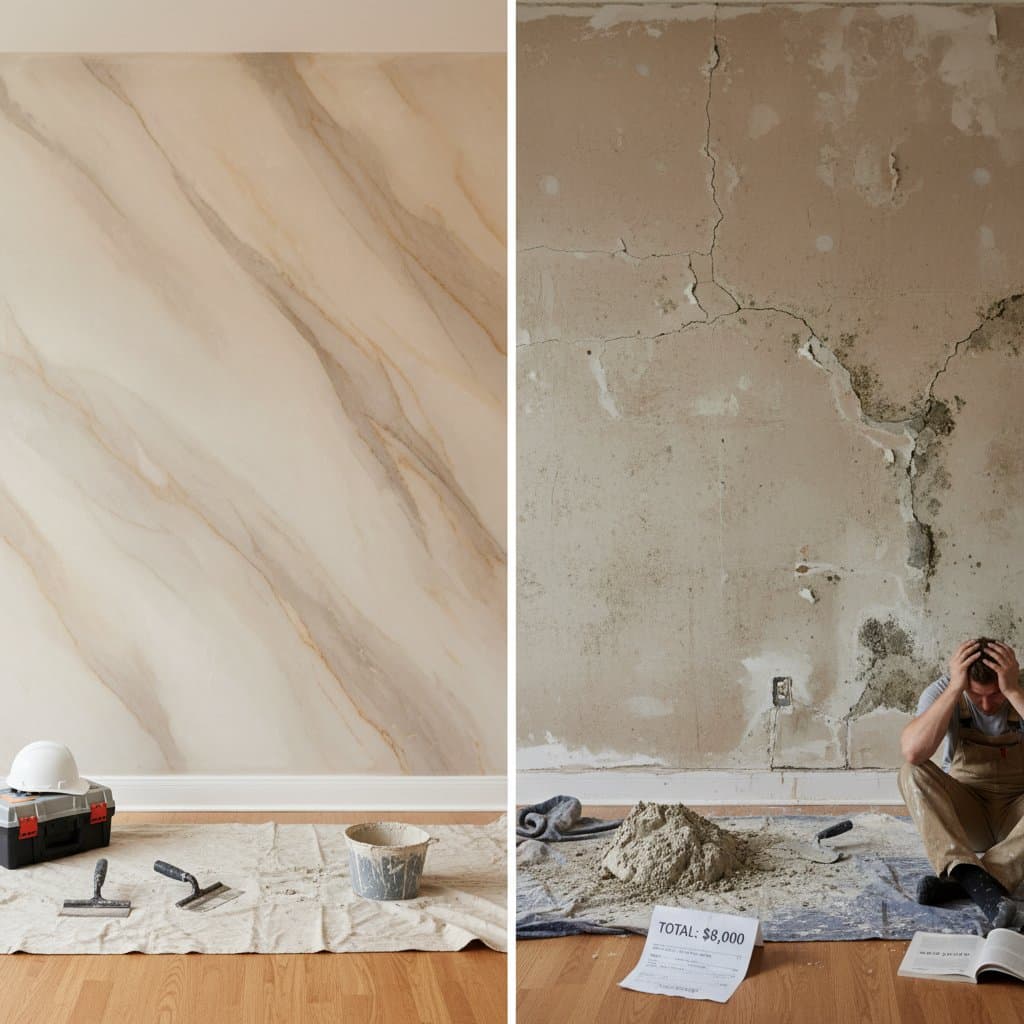
Homeowners often view Venetian plaster as an accessible DIY endeavor, guided by videos and basic kits. In practice, these projects frequently yield patchy coverage, visible seams, or crumbling edges, necessitating full removal and professional intervention. Such missteps transform an ambitious upgrade into a financial burden exceeding $8,000 for remediation in a standard room.
This article examines the core elements of a successful Venetian plaster installation, including precise cost estimates, the gap between amateur and expert execution, and proven application methods. Readers gain insights to evaluate options wisely, avoiding common traps while pursuing this transformative finish.
Detailed Project Cost Analysis
Standard Pricing Tiers
- Basic application: $8 to $12 per square foot, suitable for simple lime-based coats on prepared surfaces.
- Mid-level finish: $13 to $20 per square foot, incorporating color tints and moderate texturing.
- High-end customization: $21 to $35 per square foot, featuring metallic infusions or intricate veining.
For a typical 400-square-foot living room, total expenses range from $4,000 to $10,000, encompassing labor and materials. These figures reflect regional averages; urban areas may incur higher rates due to demand.
Core Components Covered in Estimates
- Thorough surface preparation, including patching and priming.
- High-quality lime plasters, pigments, and additives.
- Expert application across multiple layers.
- Final burnishing and protective sealing.
- Comprehensive site cleanup and minor adjustments.
Additional Expenses to Anticipate
- Structural repairs, such as drywall replacement or crack filling, which can add $500 to $2,000.
- Advanced effects like gold leaf integration or simulated stone patterns.
- Bespoke hues requiring custom mixing or rare imports.
- Oversized projects involving lifts for vaulted ceilings or expansive walls.
Key Influences on Total Expenses
| Factor | Potential Increase | Specific Scenarios |
|---|---|---|
| Surface Condition | 10% to 25% | Removing old wallpaper or repairing water damage |
| Design Intricacy | 15% to 40% | Layered color washes or embedded aggregates |
| Project Scale | 5% to 20% | Multi-room installations or irregular shapes |
| Site Accessibility | 10% to 15% | Narrow hallways or elevated installations |
| Artisan Expertise | 20% to 30% | Certified specialists using traditional tools |
Opting for authentic Italian lime plasters ensures breathability and longevity, justifying the investment over cheaper alternatives that fade or crack prematurely.
Expert Application Versus Amateur Efforts
Essential Technical Skills
Achieving Venetian plaster's signature patina requires mastery of trowel angles and pressure to blend layers seamlessly. Professionals calibrate each stroke to prevent ridges, ensuring uniform sheen across the surface. Beginners struggle with these nuances, often resulting in a stippled or dull appearance.
Required Time Commitment
An inexperienced individual may dedicate two full weeks to a modest wall section, factoring in trial-and-error adjustments. In contrast, seasoned teams finish comparable areas in three to five days by optimizing drying intervals and workflow efficiency.
Specialized Tools and Materials
Beyond basic kits, true results depend on flexible steel trowels for layering, venetian burnishers for gloss enhancement, and pH-balanced compounds for color integration. Professionals maintain these instruments to avoid imperfections from dull edges or incompatible mixes.
Health and Finish Integrity
Lime plasters release alkaline dust, mandating respirators, gloves, and airflow management during application. Experts adhere to these protocols, minimizing health risks while preserving a dust-free environment. Subpar execution compromises both safety and the finish's archival quality.
Financial Breakdown
- DIY materials and basics: $1,500 to $3,000, excluding wasted batches.
- Subsequent corrections: $3,000 to $5,000 for stripping and reworking.
- Direct professional service: $5,000 to $8,000, delivering reliable outcomes.
Engaging experts upfront typically proves more economical, as their precision averts the cascading costs of rework.
Step-by-Step Professional Installation Guide
Initial Surface Assessment
Contractors evaluate walls for levelness, moisture levels, and existing flaws, applying fillers to voids and abrasives for smoothness. A dedicated adhesive primer follows, promoting strong bonding without altering the plaster's natural tone.
Layered Application Sequence
- Foundation layer: Spread a coarse base coat to establish adhesion and initial texture.
- Development layers: Apply two to four successive thin veneers, feathering edges for depth.
- Refinement stage: Compress the surface with angled trowels to reveal underlying aggregates and create luster.
- Protection application: Brush on beeswax or resin sealers to guard against wear and enhance vibrancy.
Monitor environmental factors like 50-70% humidity throughout, allowing 24-48 hours per coat to cure fully. Deviations from this rhythm lead to adhesion failures or color inconsistencies.
Final Touches and Inspection
After full curing, which spans 7-14 days, artisans buff for even polish and address any micro-imperfections. The completed walls exhibit a tactile richness, with light playing across subtle contours for a dynamic visual effect.
Steps to Plan a Successful Venetian Plaster Project
Begin by measuring your space accurately and sketching desired effects, such as warm earth tones or cool metallic sheens. Research local contractors through industry associations, prioritizing those with at least five years in Venetian techniques and verifiable references.
Request on-site consultations to receive tailored quotes, confirming inclusions like warranties against cracking. Schedule during moderate seasons to control drying conditions, and prepare adjacent areas by covering furnishings. This methodical approach secures a finish that not only beautifies but also withstands daily use, providing enduring value.
Common Questions About Venetian Plaster
What budget should I allocate for a standard room installation?
Expect $4,000 to $8,000 for a 12x12-foot space, varying with surface prep needs and style selections. Simpler monochromatic applications stay lower, while detailed patterns elevate costs. Insist on itemized proposals to track value.
How many days does professional installation require?
Teams typically wrap up in four to seven days, covering prep through final seal. Larger or intricate jobs extend to ten days. Amateurs face indefinite timelines from iterative fixes and environmental delays.
Does Venetian plaster work well in moisture-prone areas like bathrooms?
It performs reliably when sealed appropriately, as lime inherently repels mold. Apply a beeswax topcoat or siloxane impregnator for steam resistance. Verify product specs with your installer for optimal protection.
Is practicing on a small test area advisable before full commitment?
Create a sample panel to gauge aesthetics, but avoid wall trials without guidance. Inconsistencies in pressure or timing amplify on larger scales. Professionals offer mockups to preview results accurately.
How do I verify a contractor's proficiency in Venetian plaster?
Seek portfolios showcasing diverse applications, along with certifications from plaster suppliers. Inquire about coat counts, material sources, and post-install care. Reputable experts demonstrate techniques via video or in-person demos.
What steps follow if a DIY attempt fails?
Halt further work to prevent compounding issues. Summon a specialist for diagnosis; they might strip layers, prime anew, and rebuild. Remediation often matches new installation prices, underscoring the wisdom of initial expertise.