The Factors Driving Higher Costs for Painting Vaulted Ceilings
Vaulted ceilings create an illusion of grandeur and invite natural light into living spaces. However, the process of painting them introduces unique challenges that elevate expenses compared to standard flat ceilings. Professionals often encounter costs that approach double those of typical projects due to structural complexities and safety requirements. This article examines the key contributors to these increased prices and provides practical guidance for homeowners.
Height Introduces Significant Challenges
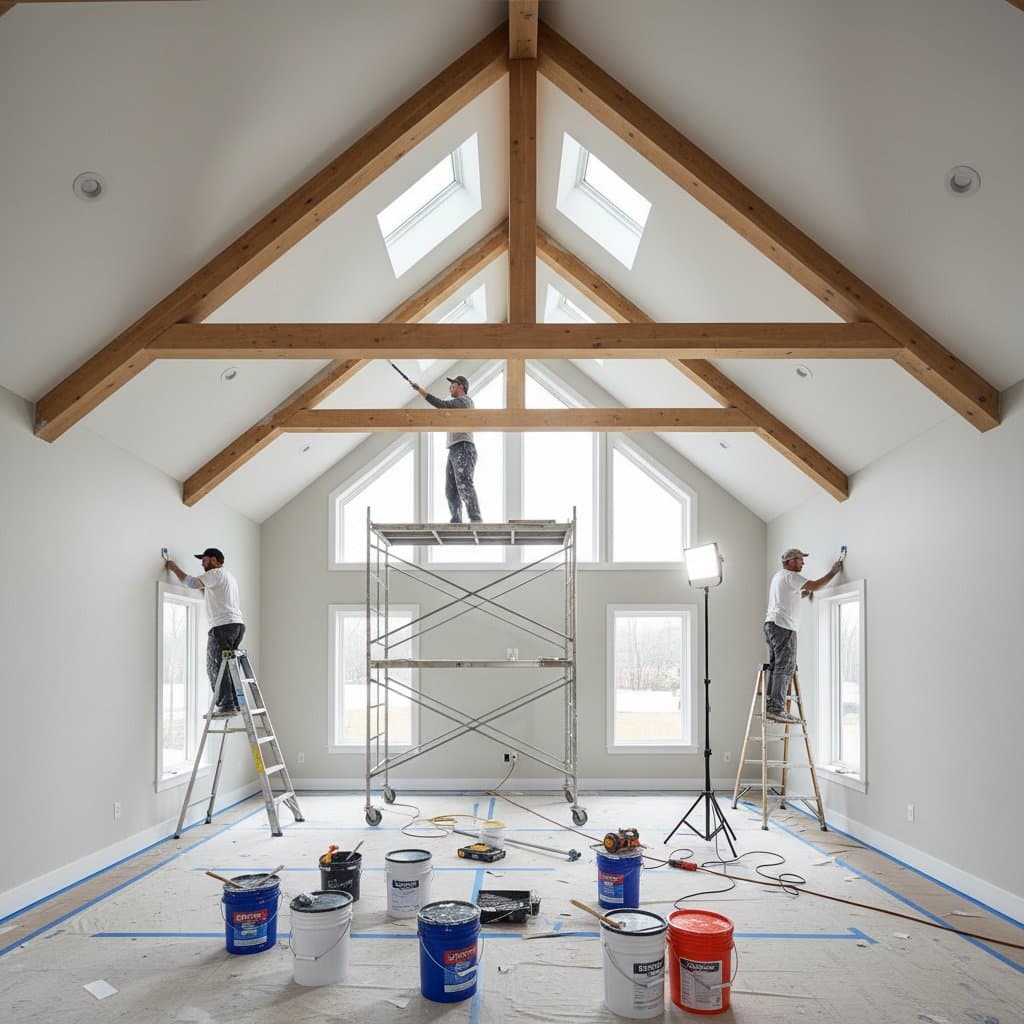
Elevated ceilings demand access methods beyond standard ladders. Painters rely on tall scaffolding, boom lifts, or aerial platforms to reach surfaces that may extend 12 to 20 feet or higher. Setting up this equipment involves securing bases, testing stability, and ensuring compliance with safety regulations, which extends preparation time by several hours.
Working at such heights slows application rates. Each stroke requires precise control to avoid drips that could damage floors or furnishings below. Crew members experience physical strain from prolonged overhead reaching, necessitating rotations that further increase labor hours. Contoured elements like exposed rafters or arched designs compound the effort, as masking and edging demand focused attention from precarious positions.
Expanded Surface Area Increases Material Needs
The geometry of vaulted ceilings results in greater total area than equivalent flat surfaces. For instance, a 20-by-20-foot room with a 10-foot vaulted ceiling might add 20 to 30 percent more square footage due to sloped planes. This expansion translates directly to higher quantities of primer, paint, and related supplies.
Textured features common in vaulted designs, such as wooden beams or paneled sections, absorb coatings unevenly. Professionals apply multiple layers to achieve uniform coverage, often starting with a sealing primer on porous woods. Finishes with subtle sheens hide minor flaws better than glossy options, but preparation remains intensive to prevent visible lap marks under varying light conditions.
Access Difficulties Extend Labor Time
Standard painting operations use rolling scaffolds that allow quick movement across flat areas. Vaulted configurations disrupt this efficiency, requiring frequent repositioning of ladders or disassembly of scaffolding to navigate slopes and angles. In tight or irregularly shaped rooms, crews may need custom rigging to maintain balance.
Advanced tools like scissor lifts or suspended harnesses become essential for ceilings exceeding 15 feet. Rental fees for these items, combined with transportation and setup logistics, add substantial overhead. Once in position, painters prioritize deliberate movements to ensure even application, which reduces speed but upholds professional standards for seamless results.
Lighting and Color Choices Amplify Precision Requirements
Abundant natural illumination from skylights or expansive windows in vaulted rooms accentuates surface imperfections. Harsh shadows or glare can reveal roller stipple, brush marks, or inconsistencies in hue. To counter this, experts select self-leveling paints formulated for high-visibility applications.
Opting for lighter colors often necessitates additional coats to build opacity and depth, while bold contrasts between ceiling panels and trim require meticulous taping. Priming becomes critical on absorbent substrates to block bleed-through and promote adhesion. These steps, though time-consuming, ensure the final appearance complements the architectural drama of the space.
Strategies for Managing Project Budgets
Homeowners can approach vaulted ceiling painting with tiered planning to align costs with expectations.
- Basic Approach: Utilize extendable poles with high-quality, coverage-efficient paints in neutral tones. Opt for flat finishes that forgive minor application variances and minimize the need for extensive touch-ups.
- Standard Approach: Engage a team experienced in elevated work, incorporating basic scaffolding. Select semi-gloss products for cleanability while avoiding excessive reflectivity.
- Premium Approach: Invest in certified professionals using hydraulic lifts and electrostatic sprayers. This method achieves airbrushed uniformity ideal for intricate designs and high-end residences.
Essential Techniques for Optimal Outcomes
Evaluate paint samples in the actual space at different times to account for light shifts. Employ adjustable roller frames with varying nap lengths to adapt to surface irregularities without excessive pressure.
Allocate time for thorough post-application cleanup, as overspray and drips accumulate more readily from heights. Apply primer uniformly on all wood elements or repaired areas to seal and stabilize the substrate.
Conduct a detailed inspection after the initial coat dries, using supplemental lighting to identify hidden flaws. Address them promptly to avoid compounding issues in subsequent layers.
Enhancing and Preserving Your Vaulted Ceiling
A professionally painted vaulted ceiling elevates the overall ambiance, fostering a sense of expansiveness and tranquility. Regular maintenance involves gentle dusting with extendable tools and occasional wiping with diluted cleaners to preserve vibrancy.
Recognizing the intricacies involved in such projects fosters greater appreciation for skilled execution. The investment yields enduring value, transforming architectural features into lasting highlights of the home.