Why Investing in an $800 Dust-Free Sander Delivers Lasting Value
Drywall sanding stands as a pivotal step in surface preparation for painting, yet it often generates overwhelming dust that complicates the process. Traditional approaches scatter fine particles across rooms, demanding extensive cleanup and risking health issues from poor air quality. Dust-free sanding systems address these challenges head-on, and models priced at around $800 offer advanced features that justify the expense through enhanced efficiency and results.
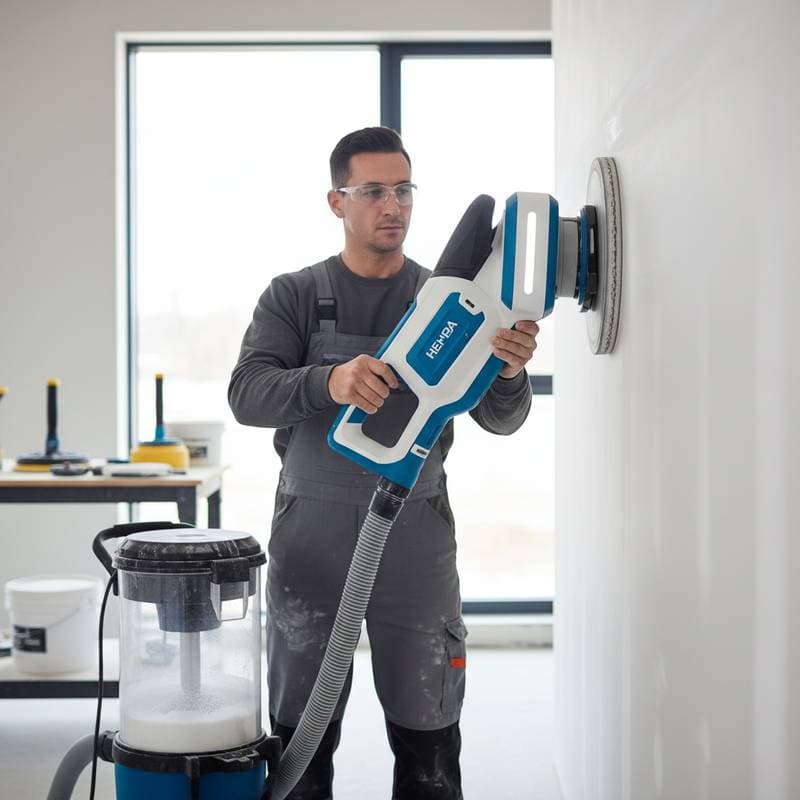
This technology integrates vacuum extraction directly into the sanding process, capturing particles before they become airborne. Professionals and homeowners benefit from reduced mess, faster completion times, and finishes that require fewer touch-ups. Examining the mechanics, costs, and practical applications reveals why such an investment transforms routine projects into streamlined operations.
The Role of Effective Drywall Sanding
Proper sanding ensures walls and ceilings achieve a smooth, even texture that paint adheres to without highlighting flaws. Imperfections like ridges or bubbles emerge prominently under layers of primer or color if not addressed thoroughly. Conventional tools, such as manual blocks or inexpensive orbital sanders, expel dust freely, which clings to surfaces and infiltrates ventilation systems.
In contrast, dust-free systems employ built-in suction to trap over 95 percent of particles at the point of contact. This setup maintains clear visibility for precise work and safeguards respiratory health by minimizing inhalation risks. Users complete tasks with confidence, knowing the environment remains controlled and productive.
Breaking Down Project Expenses
Typical Price Points
- Entry-level dust-free kits: $400 to $600
- Mid-range professional units with dedicated vacuums: $700 to $900
- Advanced configurations including multiple tools: $1,000 to $1,400
Core Components
- Variable-speed electric sander head for controlled abrasion
- Dust collection hose compatible with shop vacuums
- HEPA-rated filter to capture particles as small as 0.3 microns
- Assortment of sanding discs in grits from 80 to 220
- Storage case with basic tools for upkeep
Additional Purchases
- Spare discs and filters: $20 to $80 per pack
- Extended hoses or adapters: $40 to $120
- Tools for edges and overhead work: $50 to $150
- Poles or handles for reach: $60 to $100
Influences on Total Investment
| Factor | Price Influence | Specifics |
|---|---|---|
| Manufacturer and Durability | Increases by premium materials | Brands like Festool or Mirka command higher prices for robust construction |
| Vacuum Capacity and Filter Type | Adds $100 to $300 | Systems with certified HEPA units excel in containment |
| Included Extras | Boosts by $50 to $200 | Options like dust shrouds or corner guides enhance versatility |
| Parts Compatibility | Impacts ongoing expenses | Universal fittings lower replacement costs over time |
Long-Term Savings Over Basic Methods
Initial costs for an $800 unit appear steep compared to sub-$200 alternatives, but hidden expenses with cheaper tools accumulate quickly. Manual or low-end electric sanding produces dust that necessitates prolonged vacuuming, wiping, and even protective gear disposal. Uneven results from inadequate control often lead to extra primer layers or spot repairs post-painting.
Dust-free equipment slashes these burdens by enabling seamless transitions to the next phase. Priming follows immediately without dust interference, preserving surface integrity. Across several jobs, the reduction in labor hours and material waste recoups the purchase price within months, while consistent quality builds reliability for repeat use.
Mechanics of Dust-Free Sanding Systems
These tools merge a rotating sanding pad with an aligned vacuum port that draws debris through mesh-backed discs. As abrasion occurs, suction channels particles into a connected canister, where multi-stage filters, including HEPA, block escape. Adjustable speeds match the task, from coarse joint compound removal to fine finishing passes.
The design promotes even pressure distribution, preventing gouges or missed spots. Operators experience less fatigue in dust-reduced settings, allowing sustained focus. Overall, the system fosters a workspace that prioritizes speed and precision without compromising safety.
Project Timelines with Dust-Free Tools
Grasping time savings underscores the equipment's impact on daily workflows.
Single Room Sanding (12x12 feet)
- Initial masking and setup: 30 minutes
- Sanding phase: 45 minutes to 1 hour
- Final wipe-down: 15 minutes
This approach totals about 1.5 to 2 hours, versus 3 to 4 hours for conventional methods that include dust management. The difference compounds in busier schedules.
Full Interior Repainting
- Site preparation: 2 to 3 hours
- Comprehensive sanding: 8 to 10 hours
- Post-work cleanup: 1 to 2 hours
Dust-free operation trims overall duration by 30 percent, as interruptions for clearing debris vanish. High-quality outcomes follow naturally, shortening revision cycles and elevating client approval.
Guidance for Professionals and DIY Users
Deciding between self-handling and professional services hinges on project scope and skill level. Dust-free sanders empower capable homeowners to achieve pro-level smoothness, yet they demand familiarity with tool handling.
Scenarios for Professional Hiring
- Extensive remodels involving multiple rooms or new installations
- Demanding finishes in prominent spaces like living areas
- Intricate architectures with vaults, angles, or elevations
- Compliance-driven work for rentals or inspections
Ideal DIY Projects
- Localized fixes or single-space updates
- Users experienced in basic finishing techniques
- Individuals committed to tool maintenance and safety protocols
Mastering straight-line motions and progressive grit progression maximizes results. Even superior gear requires methodical application to avoid common pitfalls like over-sanding.
Selecting Contractors with Superior Equipment
Inquire about a team's sanding arsenal to gauge their standards. Firms equipped with $800-level dust-free systems signal dedication to minimal disruption and optimal finishes. Key questions include:
- Does the setup incorporate HEPA filtration for thorough capture?
- How do they handle any incidental dust during operations?
- What smoothness benchmarks apply prior to coating?
- Is thorough cleanup part of the quoted service?
Such providers complete jobs swiftly, with rare need for follow-ups. Their methods preserve home comfort, particularly beneficial for sensitive occupants.
Steps to Optimize a Dust-Free Sanding Session
Preparation sets the foundation for flawless execution.
- Evacuate the area of decor, fabrics, and movable items.
- Barrier off adjacent rooms using sheeting and tape.
- Assess drywall for cracks, bulges, or tape failures.
- Enhance airflow with open vents or auxiliary fans.
- Align subsequent steps like priming to capitalize on fresh surfaces.
These measures amplify tool performance and sustain project momentum.
Assessing Durability and Performance Metrics
- Particle retention rate: Seek 95 percent or higher for effective control.
- Pad consistency: Even contact avoids divots or ridges.
- Upkeep simplicity: Designs with easy-access filters minimize interruptions.
- Operational volume: Lower decibels support extended use without strain.
- Support terms: Multi-year warranties cover defects and wear.
Steps to Secure Professional Results
Evaluate options based on project demands and budget constraints. Test systems in-store if possible, focusing on balance and ergonomics. For purchases, prioritize models with broad accessory support to adapt to varied tasks.
Pair the tool with quality abrasives and follow manufacturer guidelines for longevity. Track usage to anticipate maintenance, ensuring sustained performance. This strategic approach turns the $800 outlay into a cornerstone of efficient, high-caliber work.
Frequently Asked Questions
What Determines the Price of Dust-Free Sanding Equipment?
Costs vary with power output, extraction force, filter sophistication, and bundled items. Entry units hover at $500, while advanced versions with adjustable features and superior containment exceed $800. Ongoing expenses for consumables like filters influence total ownership costs.
How Much Time Does Dust-Free Sanding Require for a Room?
A typical space finishes in two hours, encompassing setup, sanding, and checks. This halves the duration of standard techniques, which grapple with dust fallout and corrections. Complex textures or thicker compounds extend efforts proportionally.
Is Buying or Renting a Dust-Free Sander Better for Homeowners?
Rental suits infrequent needs at $60 to $100 daily. Owners with regular projects recoup via labor efficiencies that outpace the buy-in. Assess frequency against rental fees to decide.
How to Identify a Reliable Contractor for Sanding?
Probe equipment details, containment strategies, and finish assurances. Confirm insurance and review past work samples. Preference goes to those mandating dust-free protocols for quality assurance.
What Occurs During a Dust-Free Sanding Job?
Prep seals the site, then vacuum-linked sanding proceeds with scant visible dust. Progress accelerates, culminating in surface verification and debris removal. Priming readiness follows promptly.
What Issues Arise with Inferior Sanders?
Budget units produce patterns, patchy textures, and dust leaks. Filters jam, suction fades, demanding frequent stops. Opting for established models averts these, yielding dependable, residue-free outcomes.