Dusty Lavender: A Versatile Choice for Any Interior
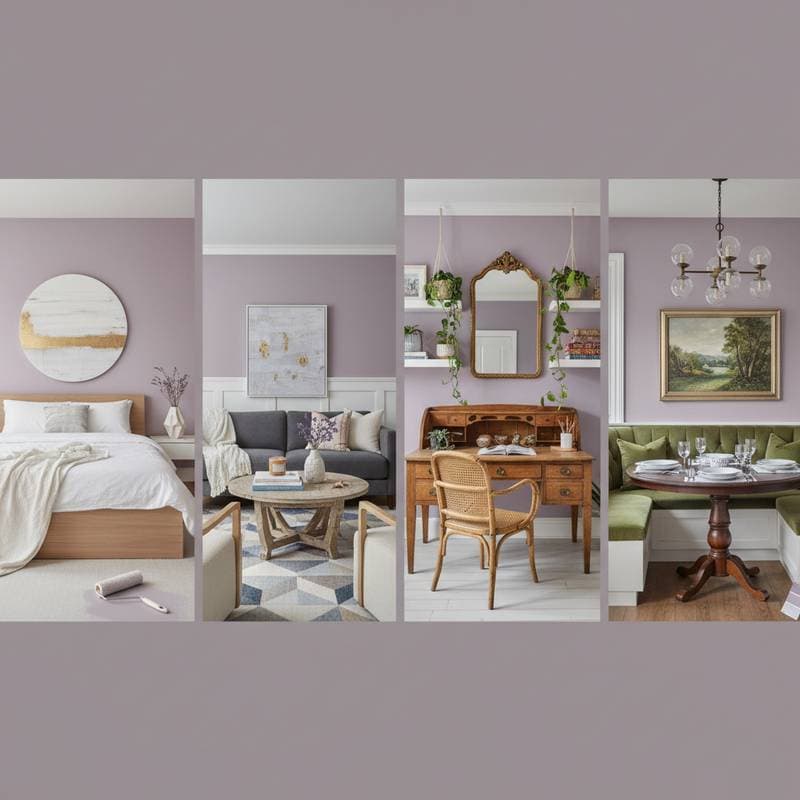
Dusty Lavender combines soft gray undertones with muted purple hues to create a balanced tone. This shade delivers calm sophistication that suits both modern and traditional rooms. Homeowners appreciate its ability to adapt without dominating existing furnishings.
The color shifts subtly under different lighting conditions throughout the day. It pairs well with white trim, natural wood, or deeper accents such as navy and charcoal. These qualities allow it to function as a full-room color or a targeted accent.
How Dusty Lavender Enhances Different Spaces
In bedrooms the shade promotes restful surroundings when paired with linen textiles and warm lighting. Living rooms gain depth when the walls meet brushed metal fixtures or leather seating. Kitchens and baths benefit from its clean appearance alongside crisp cabinetry and stone surfaces.
Exterior applications on shutters or doors introduce gentle contrast against brick or siding. The tone maintains visual interest without clashing with landscape elements. Its understated presence supports resale appeal across varied buyer preferences.
Professional Painting Cost Ranges
Expect the following averages when hiring professionals to apply Dusty Lavender:
- Small rooms up to 150 square feet: 400 to 700 dollars
- Medium rooms 150 to 300 square feet: 700 to 1200 dollars
- Large rooms over 300 square feet: 1200 to 2000 dollars
Costs per square foot generally fall between 2 and 6 dollars. This total covers materials, labor, surface preparation, and final cleanup for standard wall and trim work.
Elements That Influence Final Pricing
Surface repairs for cracks or water damage add 100 to 300 dollars per room. Premium paints with higher pigment levels cost 45 to 75 dollars per gallon yet often require fewer coats. Intricate trim or crown molding increases labor by 150 to 400 dollars.
Higher ceilings raise expenses by 15 to 25 percent due to added equipment needs. Urban labor rates may reach 4 dollars per square foot while suburban areas average closer to 2.50 dollars. Obtaining multiple detailed estimates helps identify the most transparent pricing.
Finish Options and Their Characteristics
| Finish Type | Basic Range | Standard Range | Premium Range | Best Uses |
|---|---|---|---|---|
| Matte | 25 to 35 dollars | 35 to 50 dollars | 50 to 65 dollars | Low-traffic bedrooms and ceilings |
| Satin | 30 to 45 dollars | 45 to 60 dollars | 60 to 75 dollars | Family rooms and hallways |
| Semi-gloss | 35 to 55 dollars | 55 to 70 dollars | 70 to 85 dollars | Kitchens, baths, and trim |
| Eggshell | 28 to 40 dollars | 40 to 55 dollars | 55 to 70 dollars | High-use living areas |
Premium finishes improve durability and simplify routine cleaning.
Practical Ways to Manage Project Expenses
Complete basic wall cleaning and outlet removal before the crew arrives. Select mid-tier paints that still provide strong coverage and consistent color. Schedule work during slower months when contractors may offer reduced rates.
Painting several rooms together often qualifies for volume discounts. Reserve 10 to 15 percent of the budget for unexpected touch-ups or extra coats. These steps keep quality high while controlling overall spend.
Selecting the Right Approach for Your Project
DIY efforts suit small, straightforward spaces with minimal trim. Professional crews deliver uniform coverage and faster completion on larger or detailed rooms. The long-term appearance and durability typically justify the investment for most homeowners.
Next Steps for a Successful Update
Measure each space accurately and note existing surface conditions. Review finish samples under the actual lighting of the room. Compare at least three itemized proposals that specify preparation steps and paint brands. This preparation leads to a refined result that feels current yet enduring.