Wall Repair Costs Hidden in Your Paint Quote
A painting estimate may include wall preparation, yet the phrase can cover anything from filling a few nail holes to replacing damaged drywall. Before approving a quote, ask what repairs are included, how extensive damage will be priced, and whether the estimate assumes smooth, paint-ready walls.
For a typical interior room, minor patching may add about $100 to $400 to a professional painting project. More involved drywall repairs can cost $400 to $1,500 or more, especially when damage affects multiple walls, ceilings, insulation, or textured surfaces. These are broad U.S. estimates, and local labor rates, access, and finish expectations affect the final price.
Typical Wall Repair Costs
| Repair scope | Common professional cost | What it may include |
|---|---|---|
| Small holes and shallow dents | $10 to $50 per repair, or a minimum service charge | Filling, sanding, and spot priming |
| Several nail holes or small patches | $100 to $400 per room | Basic patching and preparation before paint |
| Medium drywall damage | $200 to $700 per area | Cutting out damaged material, patching, taping, and sanding |
| Large section or multiple damaged areas | $500 to $1,500 or more | Drywall replacement, finishing, and possible texture matching |
| Ceiling repair or difficult access | $300 to $1,200 or more | Overhead work, protection, repairs, and extra setup |
Contractors may price by the repair, by the hour, or as part of a broader preparation allowance. Small jobs often carry a minimum charge because setup, dust control, and cleanup take time even when the patch itself is small.
What Is Usually Hidden in "Preparation"
A paint quote may list scraping, sanding, caulking, and patching without stating how many repairs are included. Some painters include only minor surface flaws. Extensive drywall work may be excluded, handled as a change order, or referred to a specialist.
Ask the contractor to describe the wall condition assumed in the estimate. Request clear language about patch size, number of repairs, sanding, primer, texture matching, and cleanup. If the quote says "repairs as needed," ask how extra work will be measured and approved.
Factors That Change the Price
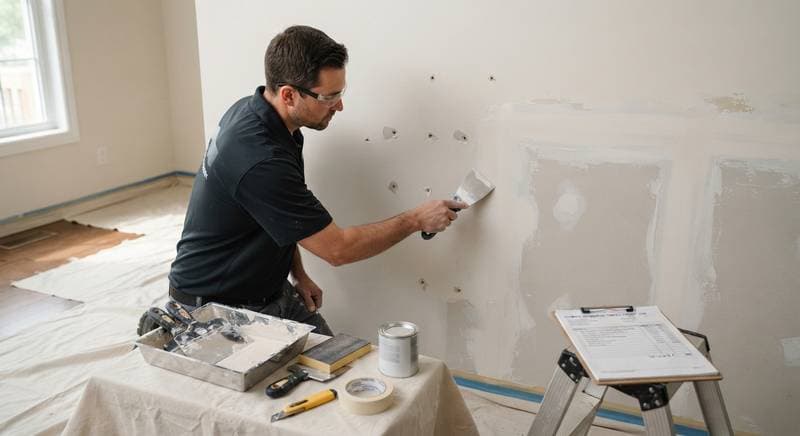
Damage size and depth: A pinhole needs little material, while a fist-sized hole may require backing, a drywall insert, joint compound, tape, and several sanding stages. A patch several feet wide usually takes more labor and may need additional support.
Wall texture and finish: Smooth walls make uneven patches easy to spot, so they often require careful feathering and sanding. Matching orange peel, knockdown, or other textures takes skill and may require spray equipment. A close match can add roughly $50 to $300 per area, depending on size and complexity.
Water or recurring damage: A stain may need stain-blocking primer, but paint will not fix a leak or soft, deteriorating drywall. Repairs can grow if the contractor finds wet insulation, mold concerns, or damage behind the surface. Resolve the source before painting and confirm whether specialized inspection or remediation is needed.
Access and protection: High ceilings, stairwells, crowded rooms, and delicate floors increase setup time. Moving furniture, protecting belongings, and working around fixtures can add labor even when the damaged area is small.
Regional labor and scheduling: Labor costs are generally higher in areas with higher operating expenses or strong demand. Busy painting periods can limit availability. Ask for a written estimate that separates labor, materials, and any added service charges.
Comparing Repair and Finish Options
| Approach | Cost tendency | Best suited to |
|---|---|---|
| Basic patch and spot prime | Lowest | Small flaws on walls with modest finish expectations |
| Standard repair with full sanding and primer | Midrange | Most occupied homes preparing for a fresh coat |
| Extensive replacement and texture blending | Highest | Large damage, visible feature walls, or high-quality finishes |
A low quote may cover only filling and sanding. That can leave visible ridges, uneven sheen, or flashing, which is a patch that looks different after paint dries. Proper preparation may require primer over repairs and, on highly visible walls, a broader primer coat to help the finish look uniform.
Budgeting Without Surprises
Before the painter arrives, inspect the room in bright light. Mark dents, cracks, popped nails, and water stains, then photograph them. Share the list when requesting estimates. Ask each contractor to price the same repair scope so you can compare proposals fairly.
Set aside about 10 to 20 percent of the project budget for unexpected preparation. Older homes, previous patch jobs, and walls hidden by furniture can reveal problems once work begins. Ask the contractor to stop and get approval before completing repairs that exceed the quoted allowance.
Homeowners can reduce labor costs by removing wall hangings, clearing furniture, and making rooms accessible. Avoid filling large holes yourself unless you have experience. A rough patch may need to be removed and redone, adding time and expense. Do not paint over cracks or stains before the underlying cause is understood.
DIY or Professional Repair?
DIY patching can make sense for a few small holes if you have basic tools and can match the wall texture. Materials may cost $20 to $80, while sanding blocks, knives, and dust protection add to the initial expense. Larger repairs need more skill, and mistakes are especially visible under side lighting.
Professional work costs more upfront, but a painter can coordinate repairs, primer, and finish coats. For widespread damage, ceilings, textured walls, or smooth finishes, request an itemized quote and ask to see examples of similar repairs. The best value comes from a repair that holds up and disappears under the finished paint, not simply the lowest initial price.
Frequently Asked Questions
How much do wall repairs add to a painting project?
Minor repairs may add $100 to $400 per room. Larger patches, texture matching, or damaged ceilings can raise the added cost to $500 to $1,500 or more. The extent of damage and local labor rates determine the actual price.
How much should I reserve for hidden repairs?
Plan for 10 to 20 percent of the total project budget. This cushion covers surprises such as hidden water damage, previous poor repairs, or additional texture matching that becomes apparent once work begins.