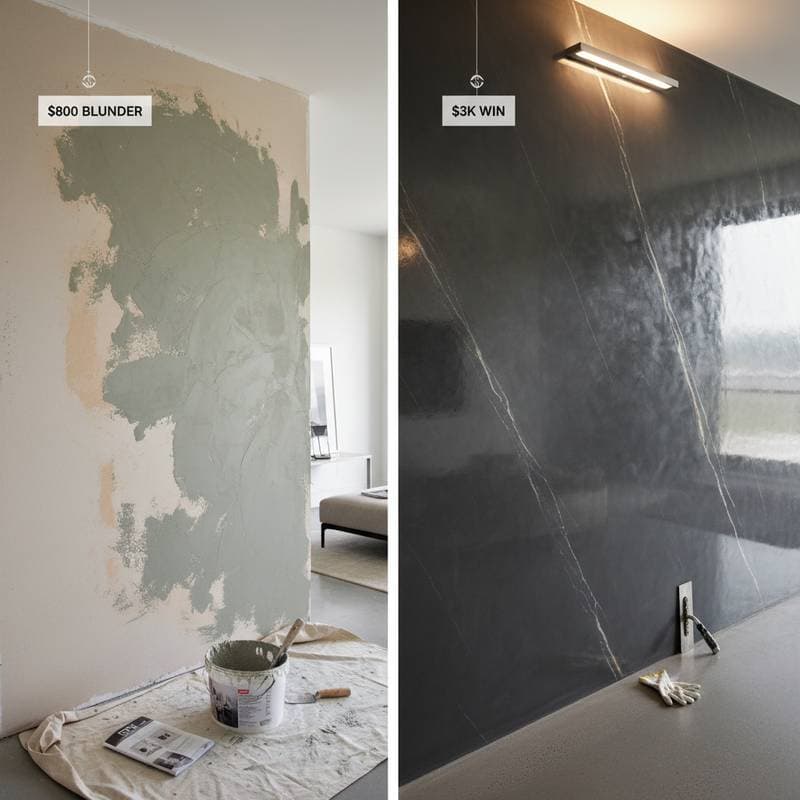
Venetian Plaster DIY: $800 Blunder or $3K Win?
Venetian plaster delivers a luxurious wall finish that evokes the depth and polish of natural stone. Homeowners often consider applying it themselves to cut costs significantly. Success hinges on preparation, technique, and realistic expectations. This article examines the costs, processes, and outcomes of DIY versus professional installation to guide informed decisions.
Understanding Venetian Plaster
Venetian plaster consists of lime putty combined with marble dust, applied in thin layers and burnished to a subtle sheen. Artisans employ time-honored methods to produce nuanced color variations and texture. DIY efforts utilize comparable materials, yet outcomes vary based on application precision.
The procedure encompasses wall preparation, successive plaster applications, burnishing, and sealing. Precision proves essential at every stage. Errors in early layers may persist through the final polish, underscoring the need for thorough process knowledge prior to commencement.
Project Cost Analysis
Typical Cost Estimates
- Basic DIY installation: $600 to $900
- Standard professional application: $2,500 to $3,500
- Premium artisan execution: $4,000 to $6,000
These figures apply to a medium-sized room under normal conditions. Accent walls reduce expenses, whereas expansive or irregular surfaces elevate them.
Cost Components
- DIY expenses: Plaster, pigments, trowels, protective equipment, and sealants.
- Professional fees: Labor, materials, preparation, cleanup, and polishing.
- Premium additions: Bespoke color mixes, intricate textures, and meticulous burnishing.
Additional Expenses
- Drywall repairs prior to plastering.
- Labor for textured or curved walls.
- Custom pigments or specialized waxes.
- Fees for travel or setup in distant locations.
Influences on Total Expenditure
| Factor | Impact Level | Specific Instances |
|---|---|---|
| Room dimensions | Substantial for larger spaces | Entire living area versus single accent wall |
| Surface state | Moderate to significant | Cracks or irregularities demand preliminary fixes |
| Material grade | Moderate | Genuine lime-based versus synthetic options |
| Design intricacy | Considerable | Layered colors or veined patterns extend effort |
| Skill of applicator | Fluctuating | DIY errors necessitate additional materials and time |
Challenges of DIY Venetian Plaster
Initial material costs appear economical, often below $1,000 for a kit with plaster, tools, and wax. Application demands thin, uniform layers using steady trowel pressure. Layers require full drying intervals, followed by deliberate polishing to secure the characteristic luster.
Novices frequently encounter difficulties such as uneven surfaces, streaks from inconsistent pressure, cracks due to rushed curing, or visible joints and color inconsistencies. Remediation involves sanding previous layers or complete restarts, inflating both time and material outlays. Such setbacks transform an economical endeavor into a costlier pursuit.
Benefits of Professional Installation
Professionals command higher fees yet guarantee uniform quality through expertise in surface evaluation, pigment blending, and drying management. They utilize advanced tools to attain the profound, light-reflecting quality of traditional Venetian plaster.
Rates typically range from $10 to $20 per square foot, depending on design demands, potentially totaling $3,000 for a standard room. Results endure for decades with basic upkeep, justifying the investment for those prioritizing enduring elegance.
Project Timelines
DIY Schedule
- Preparation: One to two days for cleaning, patching, and priming.
- Plaster application: Two to three days for layered coats.
- Burnishing and sealing: One to two days for curing and polishing.
Total duration may span a week, influenced by room scale and environmental factors.
Professional Schedule
- Initial consultation and color choice: One day.
- Preparation: One day.
- Application and completion: Two to four days, varying by complexity.
Efficiency stems from practiced methods and suitable equipment, often accelerating the overall process.
Scenarios for DIY Success or Professional Necessity
Ideal DIY Applications
- Compact accent walls or panels.
- Spaces tolerant of slight imperfections.
- Individuals adept at intricate manual tasks.
Projects Requiring Experts
- Expansive rooms or whole-house treatments.
- Prominent zones like foyers or formal dining areas.
- Walls needing structural repairs or custom textures.
DIY suits enthusiastic creators prepared for meticulous work. Professionals excel in delivering seamless, high-stakes results.
Selecting the Appropriate Specialist
Handymen suit minor repairs but lack the finesse for Venetian plaster artistry. Opt for licensed decorative plaster experts for comprehensive applications. Evaluate candidates by:
- Proven work with lime plasters.
- Samples of prior decorative projects.
- Client testimonials.
- Detailed proposals and agreements.
Licensing and insurance safeguard against complications in sizable undertakings.
Essential Preparation Steps
Pre-Application Measures
- Relocate furnishings and shield floors with drop cloths.
- Address cracks and apply a suitable primer.
- Install lighting to accentuate texture during assessment.
Application Phase
- Ensure adequate airflow to facilitate curing.
- Review daily advancements to identify concerns promptly.
- Discuss adjustments to hues or patterns as needed.
Post-Application Care
- Permit complete curing before sealing.
- Shield from humidity until protected.
- Employ soft, moist cloths for cleaning to preserve integrity.
Durability and Upkeep
Cured Venetian plaster withstands mold and light abrasions effectively. Superior applications persist for generations without renewal. Sustain vibrancy through mild cleaning and occasional wax renewal. Steer clear of harsh abrasives that compromise the patina. Experts can advise on ongoing preservation or minor restorations.
Steps to Plan Effectively
Establish practical goals to avoid disappointments. DIY approaches conserve funds yet demand dedication and trial runs. Professionals provide assurance for flawless, enduring outcomes.
Formulate a budget, investigate supplies, and practice on test areas. Solicit bids from several specialists to gauge value and service levels.
Common Inquiries
What Determines Venetian Plaster Expenses?
Room scale, wall readiness, material standards, and finish sophistication dictate pricing. Basic work averages $10 per square foot; elaborate designs exceed $20. Supplementary costs arise from fixes, unique colors, or layered techniques.
How Long Does Installation Require?
Experts finish a room in four to five days. DIY efforts extend due to inexperience and drying waits. Ambitious designs or vast areas prolong schedules.
Is DIY Venetian Plaster Feasible?
It works for modest zones if prior wall work experience exists. Larger or refined projects benefit from professional precision and resilience.
How to Select a Contractor?
Gather bids, examine portfolios, and verify references. Ensure lime plaster proficiency and coverage. Contracts must specify scope, supplies, and results.
What Occurs During Plastering?
Phases include preparation, thin coats, drying, and polishing. Protection minimizes mess. Specialists handle tidying for even, lustrous finishes.
How to Maintain Finished Walls?
Wipe with soft, damp cloths and dilute soap as required. Renew wax periodically for protection and gleam. Refrain from aggressive chemicals or tools.
Venetian plaster elevates interiors with historic sophistication. Whether pursuing an $800 self-guided project or a $3,000 expert service, informed planning yields enduring satisfaction.