Understanding TSP Restrictions and the Need for Alternatives
Trisodium phosphate, commonly known as TSP, has served as a staple cleaner for surface preparation before painting. It excels at eliminating grease, grime, and residues to create ideal conditions for primer and paint application. However, environmental regulations in numerous regions have limited or prohibited its use due to phosphate content that harms waterways.
These restrictions stem from phosphates promoting excessive algae growth in aquatic systems, which disrupts ecosystems and degrades water quality. Although TSP remains accessible in select areas, concerns over proper disposal and ecological impact render it unsuitable for contemporary projects. Painters and homeowners must now identify substitutes that maintain efficacy while prioritizing safety and sustainability.
Criteria for Selecting Effective TSP Substitutes
An ideal TSP alternative must accomplish three essential tasks: it eradicates dirt and grease, penetrates stubborn residues, and readies surfaces for optimal paint adhesion. Selection hinges on the project's specifics, including surface type and desired finish. For instance, kitchen walls demand robust degreasing, whereas scuffed areas benefit from milder residue removers.
The substitute should yield a clean, matte, and thoroughly dry surface without harming the substrate. Test products on inconspicuous spots to verify compatibility, particularly on delicate materials like wood or previously painted surfaces. Prioritize options that rinse cleanly to avoid interference with subsequent layers.
Detailed Cost Analysis for Surface Preparation
Typical Pricing Ranges
- Basic cleaning of surfaces: $0.10 to $0.40 per square foot
- Intensive degreasing or deglossing: $0.50 to $1.00 per square foot
- Full professional preparation service: $1.50 to $3.00 per square foot
Standard Inclusions
- Labor dedicated to cleaning and deglossing tasks
- Provision of appropriate cleaning solutions or TSP substitutes
- Use of application tools, including sponges, cloths, or abrasive pads
- Optional light sanding for even surfaces
- Comprehensive wipe-down and allowance for drying
Additional Expenses
- Remediation of mold or mildew: $0.50 to $2.00 per square foot
- Removal of wallpaper adhesive: $1.00 to $2.50 per square foot
- Pre-paint sanding and sealing of wood: $2.00 to $4.00 per square foot
Influences on Total Expenses
| Factor | Impact on Cost | Specific Examples |
|---|---|---|
| Condition of surface | Elevated for soiled areas | Kitchen walls, trim, or cabinetry |
| Type of product | Premium for specialized | Biodegradable or eco-formulas |
| Intensity of labor | Increased for buildup | Layered residues on textured walls |
| Scale of area | Economies for large jobs | Expansive open interiors |
Budget accordingly by assessing surface challenges upfront. Larger projects often lower per-square-foot rates through efficient scaling of efforts.
Reliable TSP Alternatives and Application Methods
Phosphate-Free Cleaners
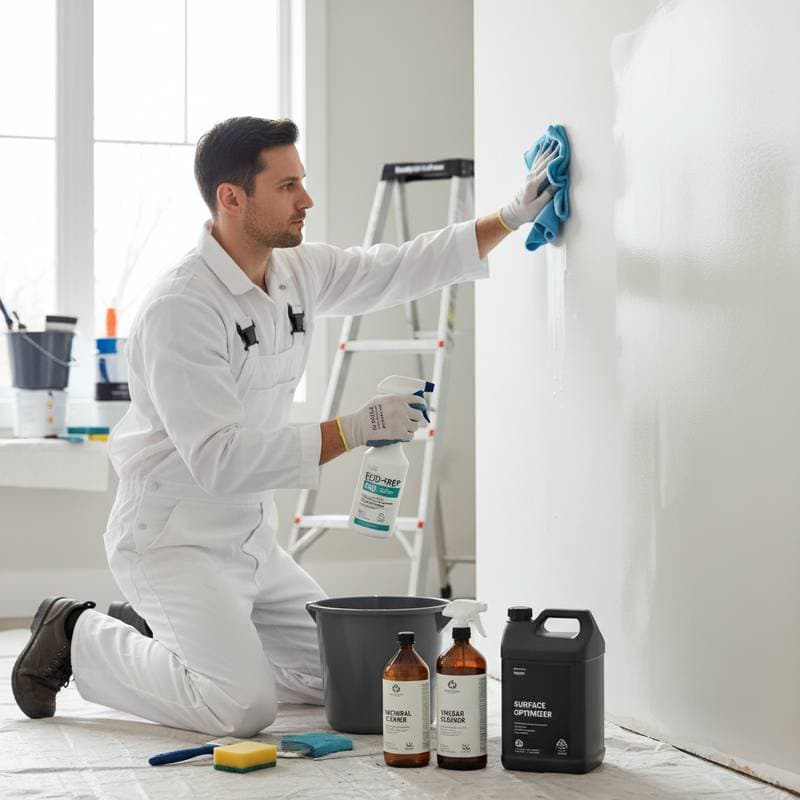
Hardware retailers stock phosphate-free formulations that replicate TSP's potency using surfactants and gentle alkalis. These cleaners dissolve oils and lift contaminants without toxic aftermath. Select products labeled as TSP equivalents; dilute according to instructions, apply with a sponge, scrub gently, and rinse thoroughly to prevent film formation.
For best outcomes, wear gloves during use and ventilate the area. This option suits most general prep needs, ensuring surfaces remain neutral for paint bonding.
Deglossing Liquids
These solutions, often termed liquid sandpaper, target glossy elements such as cabinetry, doors, and trim. They eliminate shine to promote adhesion while avoiding airborne dust from sanding. Saturate a lint-free cloth with the deglosser, wipe evenly across the surface, allow dwell time of 5 to 15 minutes, then buff away residue with a damp cloth.
Follow with a dry wipe to confirm even dullness. Ideal for high-gloss paints, this method streamlines preparation on detailed features.
Mild Detergent Mixtures
Combine warm water with a neutral dish soap for routine interior wall maintenance. This blend tackles dust, minor oils, and faint residues from prior finishes. Mix one tablespoon of soap per gallon of water, apply via sponge or spray bottle, agitate lightly, and rinse with clean water to restore surface readiness.
It represents an economical choice for low-stakes repaints, minimizing risks to underlying layers.
Vinegar-Based Solutions
White vinegar diluted with equal parts water effectively counters light accumulations, particularly from smoke or culinary vapors. The natural acidity dissolves grime without abrasiveness. Spray the mixture, let it sit for 10 minutes, scrub as needed, and rinse to neutralize any scent.
This approach proves gentle on painted walls and eco-conscious, though it may require multiple passes for heavier soiling.
Commercial Eco-Friendly Options
Plant-derived concentrates from reputable brands provide robust, non-toxic cleaning power. Biodegradable and free of harsh chemicals, they handle pre-paint demands safely around families or pets. Dilute per label guidelines, apply broadly, and rinse to achieve residue-free results.
Opt for certified green products to align with regulatory standards and enhance indoor air quality.
Realistic Timelines for Preparation Phases
Light-duty cleaning typically requires 1 to 2 hours per standard room, covering application and initial drying. More thorough deglossing and scrubbing extend to 3 to 5 hours, scaled by square footage. Professional interventions often complete full prep within a single day, incorporating inspections.
Account for drying durations, which vary by humidity and material porosity. Wood demands longer waits than drywall; test readiness by pressing a dry cloth to confirm no moisture transfer. Rushing this step invites peeling or bubbling in finishes.
Weighing Professional Assistance Against DIY Efforts
Professionals deliver uniform preparation adhering to manufacturer specifications, employing industrial tools to eliminate inconsistencies like streaks. They identify needs for supplementary sanding or treatments, safeguarding against common pitfalls. This expertise proves invaluable for complex scenarios involving lead-based paints or extensive grease.
DIY methods suffice for straightforward wall refreshes or modest areas, provided users match cleaners to surfaces and observe protocols. Begin with small tests to gauge efficacy, and escalate to experts for safety-critical tasks. Either path yields success when executed methodically.
Choosing and Collaborating with Painting Contractors
Seek contractors committed to eco-compliant practices; inquire about their phosphate-free protocols and product selections. A thorough professional outlines the sequence from cleaning through priming and coating. Verify credentials and review past work to ensure alignment with quality expectations.
Essential Inquiries for Contractors
- Which cleaning agents do you employ for preparation?
- How do you safeguard adjacent spaces during the process?
- Is sanding or deglossing part of the plan?
- What drying intervals follow cleaning before painting?
- Does your service include guarantees on adhesion and durability?
Clear communication fosters projects that meet timelines and budgets effectively.
Essential Quality Assurance Steps
Post-cleaning, inspect for absence of streaks or films; the surface should feel uniformly smooth and matte. Verify tape and primer stick without lifting, signaling readiness. Absence of chemical odors confirms complete evaporation.
Conduct a patch test with paint in a hidden area to predict full-application performance. Address any anomalies promptly through re-cleaning or abrasion to uphold standards.
Securing Durable Finishes Through Smart Preparation
Integrate these alternatives into your workflow to bypass TSP drawbacks while attaining pro-grade outcomes. Focus on thorough rinsing, precise drying, and surface compatibility to maximize adhesion. Homeowners and pros alike benefit from reduced environmental footprint and enhanced longevity in painted surfaces.
By selecting the appropriate substitute and following structured steps, projects transform ordinary spaces into resilient, visually striking environments. Invest time in prep for results that endure seasons of wear.