Transform Textured Ceilings into Smooth Surfaces for $800
Textured ceilings, such as popcorn or knockdown finishes, served practical purposes in past decades by masking imperfections and absorbing sound. Today, many homeowners consider these features dated and distracting. Skim coating provides a reliable method to remove texture and apply a smooth layer of joint compound, often costing about $800 for a typical room. This process refreshes the space, enhances lighting, and boosts property appeal. Grasping the elements that shape this expense equips you to budget accurately and select the best approach.
Skim Coating Cost Overview
Skim coating a ceiling generally costs between $3 and $6 per square foot, influenced by texture severity, surface state, and desired smoothness. For a standard room, expenses fall between $700 and $1,200, averaging $800 when addressing popcorn removal and achieving a level finish.
Average Costs by Room Size
- Small Room (100 square feet): $300 to $600
- Medium Room (150 square feet): $600 to $900
- Large Room (250 square feet): $900 to $1,500
These ranges cover preparation, texture removal, multiple skim layers, sanding, and site cleanup.
Cost Breakdown per Square Foot
| Cost Category | Range per Square Foot | Description |
|---|---|---|
| Materials | $0.50 to $1.50 | Joint compound, primer, drop cloths, and basic tools |
| Labor | $2.00 to $4.00 | Application, sanding, and preparation by skilled workers |
| Preparation | $0.50 to $1.00 | Protecting furniture, masking walls, and initial setup |
| Additional | $0.25 to $0.50 | Repairs for cracks, height adjustments, and final cleanup |
Factors Affecting Skim Coating Costs
Multiple variables determine the total price of a skim coating job. Reviewing these allows you to forecast expenses and refine your choices.
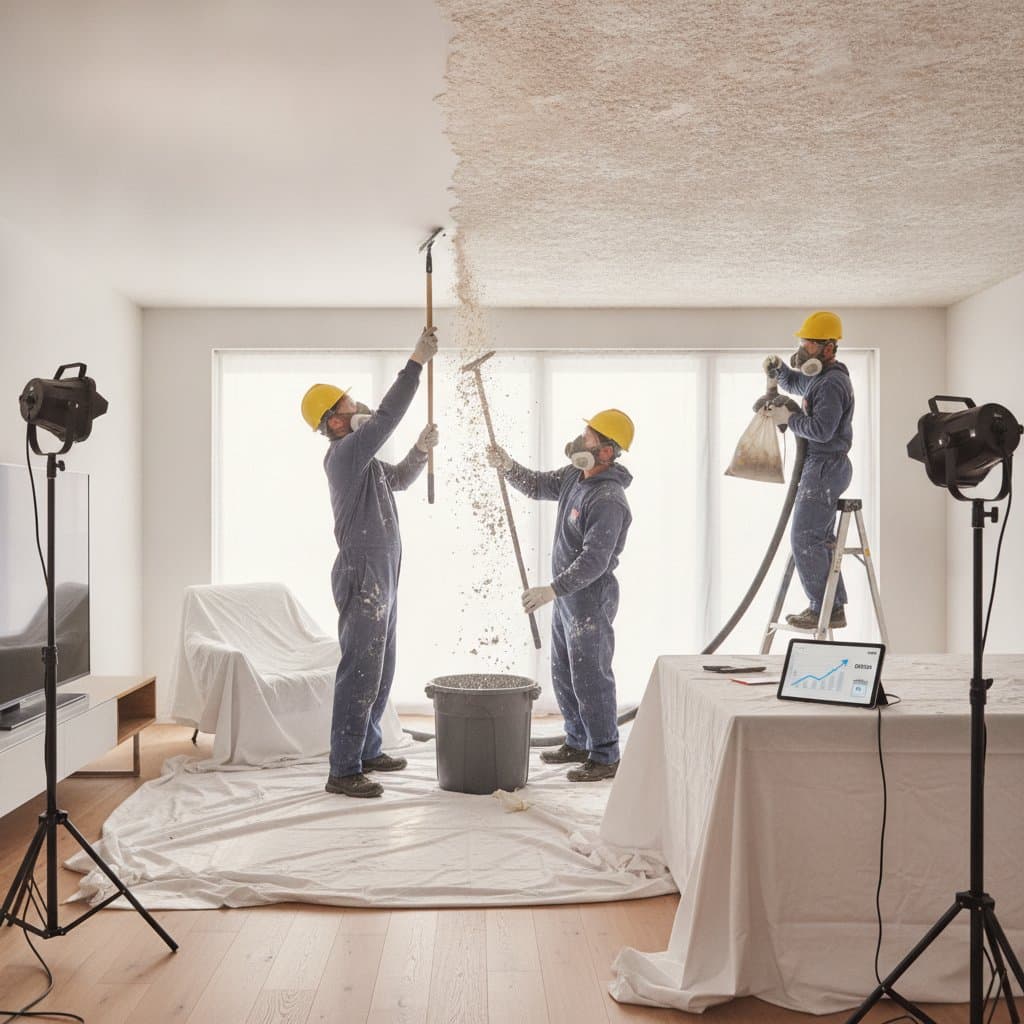
Ceiling Condition and Texture Type: Dense textures like heavy popcorn demand extensive scraping and patching. Surfaces with cracks or moisture damage require additional fixes, elevating the bill.
Ceiling Height: Standard eight-foot ceilings simplify access, but taller or sloped designs necessitate scaffolding and extra time, raising labor charges.
Room Size and Access: Compact areas may incur higher rates per foot due to tight working conditions. Fixtures such as lights or vents complicate the job and extend duration.
Coats and Finish Quality: Basic projects use two to three layers; premium results involve four or more for seamless perfection under bright lights.
Regional Variations: Labor rates differ by location, with urban zones commanding premiums due to higher wages and demand.
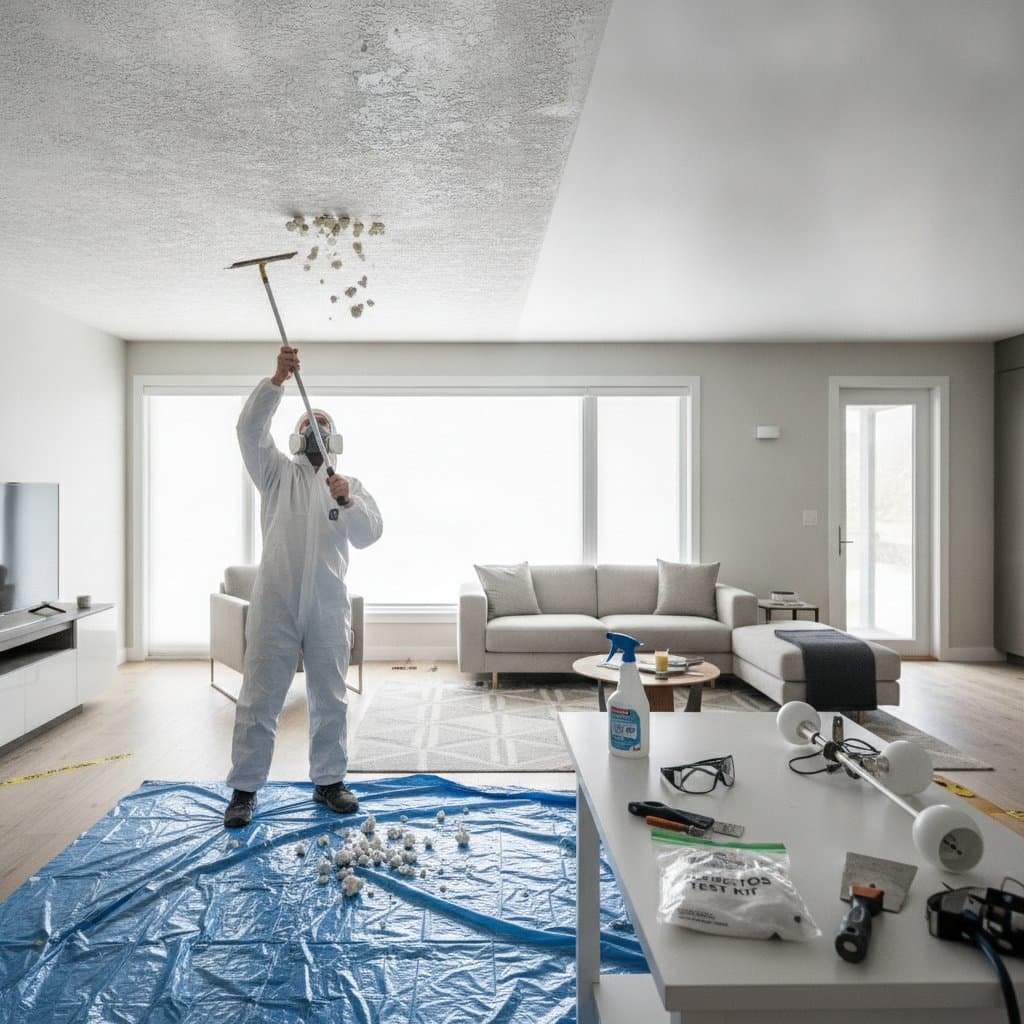
Asbestos Considerations: In homes built before 1980, testing for asbestos in textures adds fees for safe abatement if present.
Material and Finish Level Analysis
| Finish Level | Basic Range | Standard Range | Premium Range | Key Differences |
|---|---|---|---|---|
| Joint Compound | $0.20 to $0.40 | $0.40 to $0.70 | $0.70 to $1.00 | Superior options sand evenly and prevent cracks |
| Primer and Paint | $0.50 to $1.00 | $1.00 to $1.50 | $1.50 to $2.50 | Advanced formulas improve adhesion and longevity |
| Labor per Square Foot | $2.00 to $3.00 | $3.00 to $4.00 | $4.00 to $5.00 | Involves precise layering and detailed refinishing |
Project Cost Examples
Small Bedroom (100 Square Feet)
Total: $300 to $600
- Texture removal: $100 to $200
- Skim application: $150 to $300
- Sanding and finish: $50 to $100
- Materials and cleanup: $25 to $50
Medium Living Room (150 Square Feet)
Total: $600 to $900
- Setup and protection: $75 to $100
- Texture removal: $200 to $300
- Skim layers: $250 to $400
- Finishing: $75 to $100
Large Open Area (250 Square Feet)
Total: $900 to $1,500
- Preparation: $100 to $150
- Removal: $300 to $500
- Multiple coats: $400 to $700
- Primer, sanding, and cleanup: $100 to $150
Estimates assume eight-foot height and average texture; damage or thickness adjustments increase figures.
Key Cost Influences
Preparation Essentials
Effective prep involves scraping texture, sealing cracks, and clearing dust for optimal compound adhesion. This phase represents 10 to 20 percent of costs. Flaking paint or structural issues extend this step significantly.
Material Selection
Standard compounds offer affordability but demand thorough sanding. Premium variants apply smoothly and endure better, justifying their higher upfront price.
Labor Expertise
Experienced applicators ensure even coverage, minimizing visible flaws. Their rates reflect the skill needed for overhead work, where errors show prominently.
Site Challenges
Elements like fans or molding add $50 to $150 per feature through extra masking and precision cuts.
Timing and Location
Off-season work, such as winter, often secures lower bids amid reduced contractor schedules.
Benefits and Investment Value
An $800 skim coat investment modernizes rooms, facilitating even light distribution and simpler future maintenance. This upgrade appeals in real estate markets, potentially increasing home value. Unlike temporary retexturing, a smooth surface withstands time without frequent touch-ups.
Strategies to Reduce Expenses
Self-Prep Basics
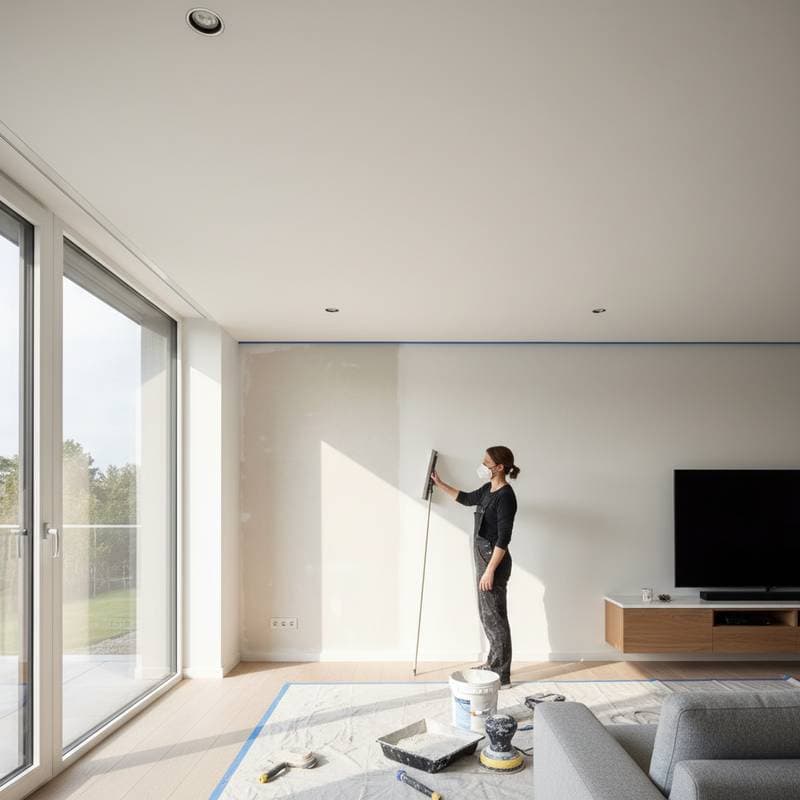
Shift furniture, cover floors, and tape trim to cut labor by $50 to $150.
Bundle Tasks
Pair ceiling work with wall painting to share setup costs.
Opt for Standard Materials
Mid-tier compounds deliver reliable results at lower prices than luxury grades.
Time Projects Wisely
Book in low-demand months for discounts.
Pre-Check for Hazards
Conduct asbestos tests early to prevent mid-project halts.
DIY or Professional Approach
Confident DIYers can manage small areas, limiting costs to $1 to $2 per square foot for supplies. Success hinges on steady hands to prevent lumps or overlaps. Professionals, however, complete jobs swiftly with specialized equipment.
DIY Benefits:
- Reduced expenses on labor
- Control over timeline
- Sense of accomplishment
DIY Challenges:
- Chance of subpar smoothness
- Extended effort on drying and refining
- Possible future fixes
Professional Strengths:
- Uniform, expert outcomes
- Quick turnaround
- Workmanship assurances
Professionals suit most scenarios, particularly for ceilings over 100 square feet.
Budget Planning Steps
Effective planning extends beyond measurements. Account for the full scope, including surprises.
- Measure the ceiling area precisely.
- Apply $3 to $6 per square foot baseline.
- Allocate 10 to 20 percent for prep.
- Reserve 15 percent contingency for repairs.
- Include primer and paint expenses.
Target $700 to $1,200 for average rooms, adjusting for specifics.
Payment typically involves deposits and final balances. Discuss options like installments upfront.
Launching Your Project
Start with a thorough ceiling inspection. Consult professionals for textured or compromised surfaces to confirm skim coating suitability. Obtain quotes from licensed experts, requesting itemized labor, materials, and schedules. Verify inclusion of debris handling.
Prioritize quality over minimal bids; superior execution yields enduring smoothness. Post-completion, dust regularly and refresh paint periodically to maintain the upgrade.
A smooth ceiling elevates room brightness and spaciousness. Thoughtful preparation and skilled execution turn an $800 investment into a lasting enhancement.
Common Questions
What does skim coating cost after popcorn removal?
Rates range from $3 to $6 per square foot, totaling $700 to $1,200 for medium rooms, based on condition and coats.
Which factors most affect pricing?
Texture density, damage, height, and local rates dominate; asbestos adds significant extras.
How to cut costs while preserving quality?
Handle prep, time off-peak, select mid-grades, and integrate with other repairs.
DIY or hire out?
DIY works for tiny spaces with practice; pros excel on larger or complex jobs.
Budgeting for surprises?
Add 10 to 15 percent buffer for cracks or upgrades revealed during removal.
Optimal timing for savings?
Late winter or early fall offers lower rates and availability outside peak seasons.