The $800 Skim Coat Solution for Popcorn Ceilings
Popcorn ceilings gained popularity decades ago because they concealed flaws and dampened noise effectively. Today, numerous homeowners regard these textured surfaces as outdated, prone to collecting dust, and challenging to clean. Smoothing out that uneven texture to reveal a clean finish can instantly update any room. The skim coat technique stands out as a reliable approach to this upgrade. For typical projects, professionals complete the work for around $800, delivering a polished ceiling primed for new paint.
This overview details the skim coat procedure, factors influencing expenses, and strategies for selecting qualified experts in popcorn ceiling removal and finishing.
Understanding the Skim Coat Process
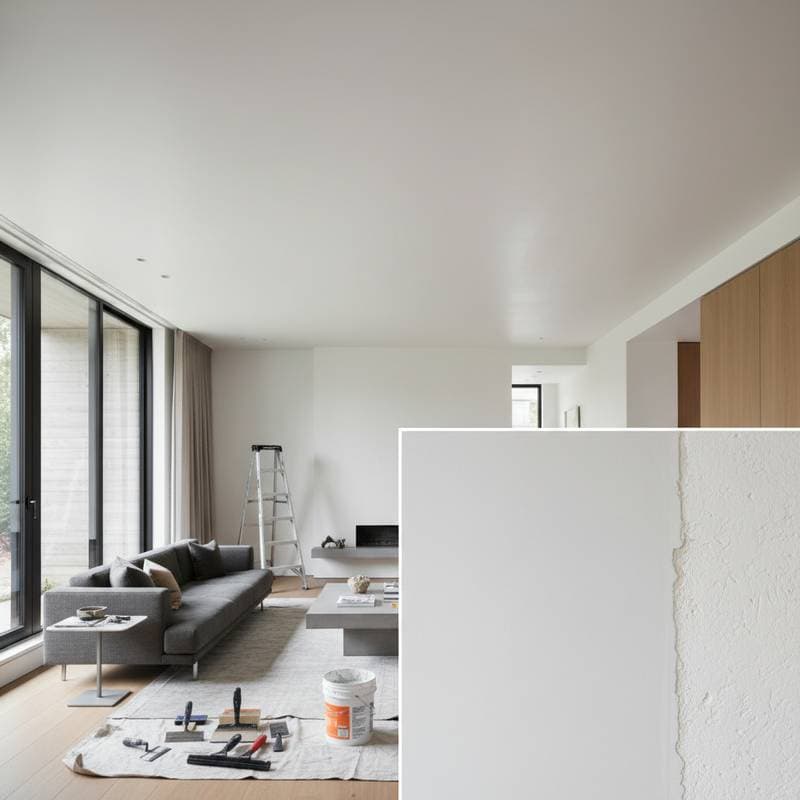
A skim coat applies a slim layer of joint compound over the ceiling to level the surface. This method conceals the popcorn texture, fills minor defects, and establishes a uniform foundation for subsequent primer and paint applications. Achieving success involves meticulous preparation and repeated applications using trowels or broad knives. While the technique appears straightforward, it calls for precise timing, steady hands, and expertise to produce a seamless outcome.
Key Steps in a Skim Coat Application
-
Site Preparation and Safeguarding
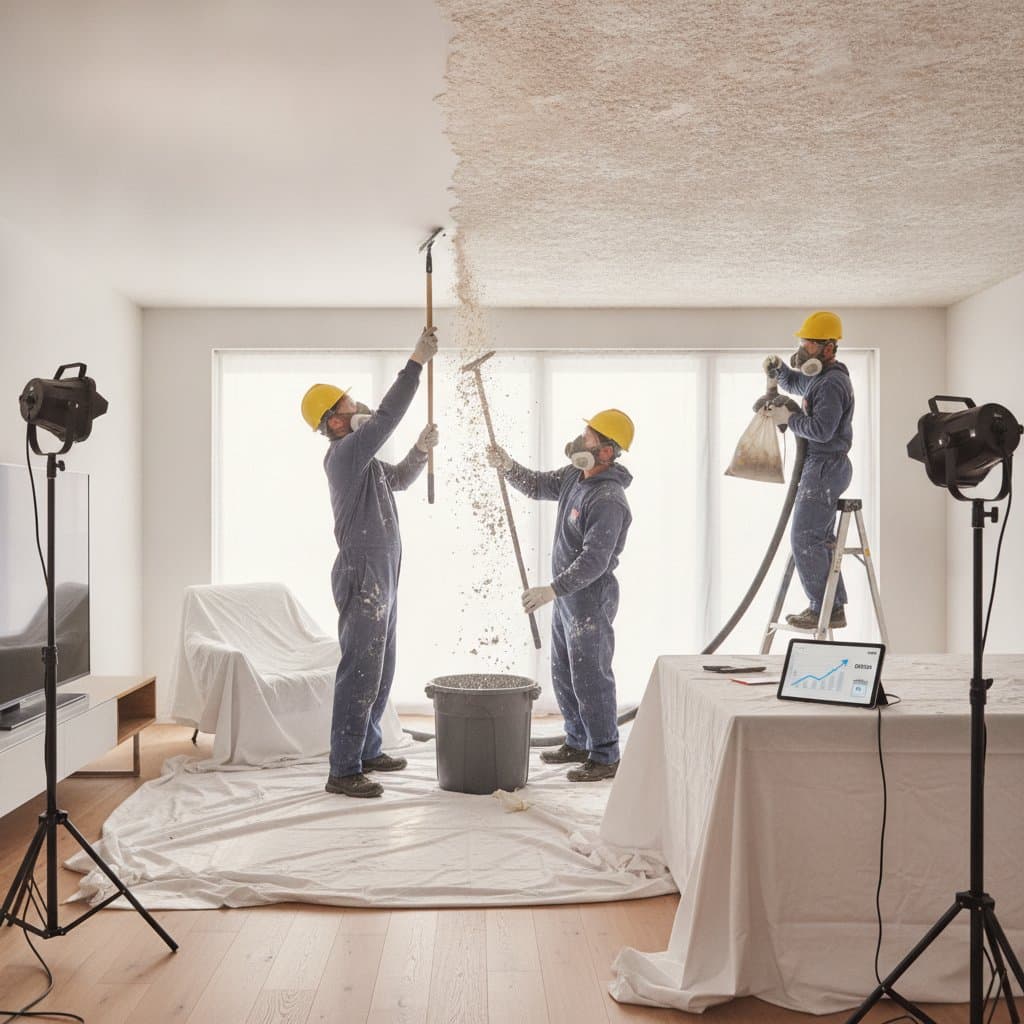
Workers cover furniture with drop cloths, shield floors from debris, and tape off or detach light fixtures and vents. These measures contain dust and prevent compound from contaminating adjacent areas. -
Texture Removal
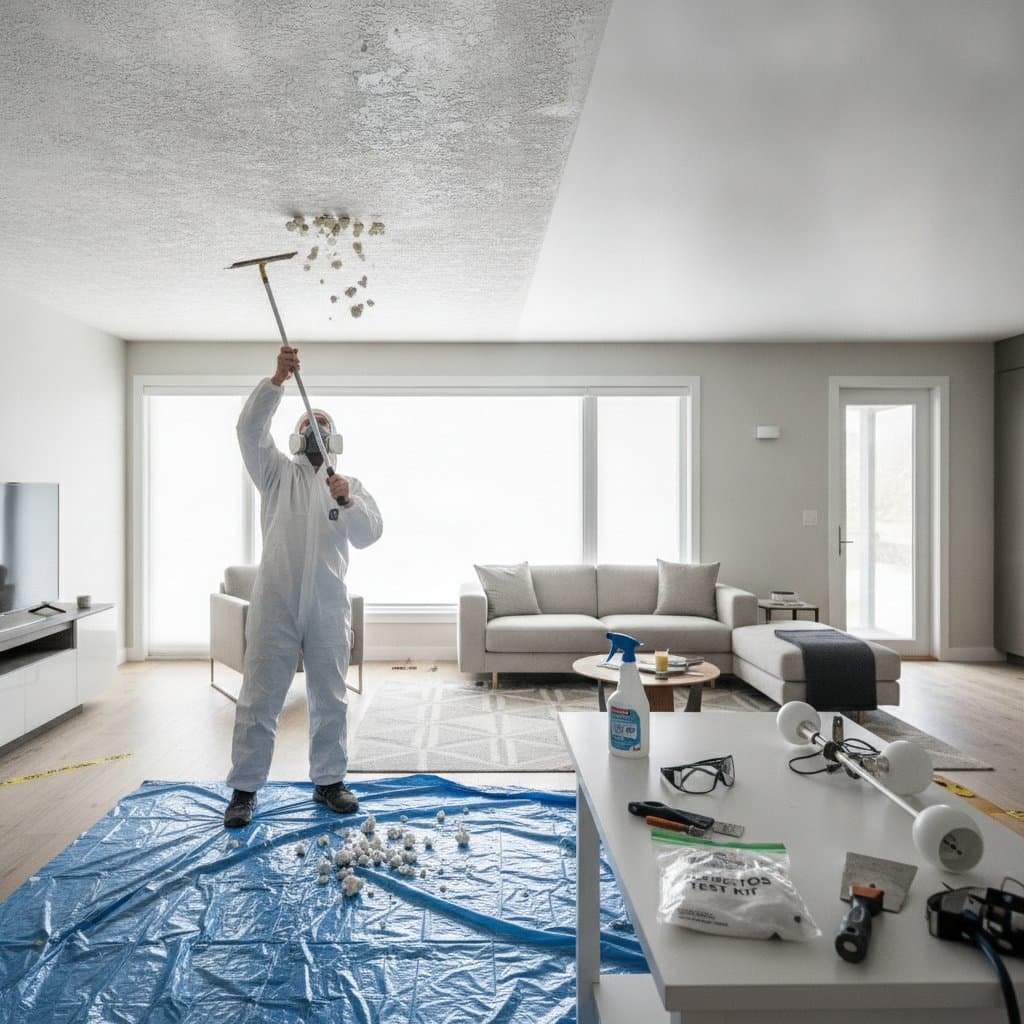
If the popcorn remains intact, crews spray the surface with water to loosen it, then scrape gently to avoid damaging the underlying drywall. Older installations might include asbestos, necessitating lab testing by certified specialists prior to disturbance. -
Repairing the Base Surface
Teams fill cracks, secure loose seams, and patch holes with appropriate compounds. Ensuring the ceiling stands firm and residue-free sets the stage for even adhesion of new material. -
Applying the Skim Coats
Applicators spread multiple thin layers of joint compound, allowing each to dry fully before smoothing. Progressive layers gradually eliminate irregularities, yielding a progressively flatter profile. -
Final Sanding and Priming
Light sanding refines the texture to a consistent smoothness. Following thorough vacuuming, the ceiling receives a sealing primer coat, preparing it for painting.
Breaking Down Project Expenses
Cost Categories
- Entry-Level Scope: $600 to $900, suitable for modest areas with straightforward finishing.
- Mid-Range Engagement: $900 to $1,400, covering average rooms with standard repairs.
- High-End Execution: $1,500 to $2,500, for expansive or intricate setups demanding extensive work.
Projects hitting the $800 mark typically involve rooms under 400 square feet, assuming prior texture removal and minimal additional fixes. Expansive areas, elevated structures, or extra layers push totals higher.
Core Components of the Quote
- Skilled labor for scraping and coating.
- Supplies including joint compound, sandpaper, and tools.
- Initial cleaning, detailed sanding, and protective priming.
- Post-job site restoration to original condition.
Potential Add-On Charges
- Structural fixes like drywall patches or full panel replacements.
- Custom textures or premium sealants beyond basic smoothing.
- Supplementary layers for severely pitted or damaged substrates.
- Fees for hazardous material assessment or specialized waste handling.
Influences on Total Pricing
| Element | Effect on Budget | Specific Instances |
|---|---|---|
| Area Dimensions | Scales directly with coverage | Expansive dining areas or combined living spaces demand more time and material. |
| Elevation | Adds setup complexity | Sloped or tall designs require stable platforms and extended reach tools. |
| Existing State | Escalates with damage extent | Moisture stains, fractures, or warped panels necessitate preliminary restoration. |
| Desired Outcome | Adjusts based on refinement level | Ultra-smooth versus light texturing alters labor intensity. |
| Local Market | Varies by location economics | Metropolitan zones reflect elevated wages compared to rural settings. |
Factors Shaping Cost Variations
Labor dominates expenses, as layering and refining demand hours of focused effort across multiple sessions. Materials remain affordable, yet the precision of application determines durability and aesthetics. Rates often compute at $1.50 to $3.50 per square foot, factoring in project demands. For a 300-square-foot bedroom in fair condition requiring dual coats, the bill aligns closely with $800.
Anticipating the Project Schedule
Skim coating unfolds over three to five days for standard jobs. Day one handles demolition and setup. Subsequent days alternate between coating, drying intervals of four to eight hours, and sanding passes. Painting caps the effort once the surface achieves evenness. Complex cases with substantial repairs might extend by an extra day. Adhering to drying protocols avoids cracks or lumps, securing a superior, enduring surface.
Weighing Professional Service Against Self-Installation
Scenarios for Homeowner Involvement
Individuals versed in drywall work and equipped with hawks, trowels, and ladders may manage isolated repairs or small-scale smoothing. However, tackling entire ceilings frequently results in patchy results or prominent lines due to overhead fatigue and technique inconsistencies. Beginners face steep learning curves in maintaining level applications.
Benefits of Expert Intervention
Professionals excel in comprehensive transformations, especially for ceilings exceeding standard height or involving full texture stripping. They deploy industrial vacuums, ergonomic scaffolding, and proven methods to guarantee uniformity. Investing $800 to $1,400 in such services circumvents errors, minimizes downtime, and yields a resilient upgrade that enhances room ambiance.
Selecting a Competent Specialist
Thorough vetting ensures quality execution. Target firms specializing in ceiling refinishing and texture abatement, backed by verifiable portfolios. Verify licensing, bonding, and liability coverage to safeguard against mishaps. Secure itemized proposals outlining scope, timelines, and contingencies.
Essential Inquiries for Contractors
- Does the bid encompass multiple application layers?
- Which brands of compound and primer do you recommend for this surface?
- What containment strategies address airborne particles during refinement?
- How do you handle unforeseen structural issues discovered onsite?
- Is final color application part of the package, or billed separately?
Detailed agreements clarify responsibilities, mitigating disputes over deliverables or adjustments.
Streamlining Project Readiness
Owners facilitate efficiency by vacating rooms, dismantling hanging art, and draping valuables. Deactivating air circulation units during abrasive phases confines particulates. Post-completion, permit 24 to 48 hours for full curing before introducing paints or hardware. Opt for low-humidity periods to promote optimal material setting.
Advancing Your Ceiling Refresh
Opting for skim coating revitalizes interiors minus invasive overhauls, fostering brighter illumination and elevated property worth. Grasping expense dynamics empowers informed budgeting and vendor choices. From $800 basics to comprehensive overhauls, this method instills enduring elegance and ease in living environments.
Common Queries Addressed
1. What pushes a skim coat estimate from $800 toward $2,000?
Projects scale with spatial demands, substrate integrity, and layering needs. Compact spaces with light intervention hold near the lower end, while vast vaults or compromised bases inflate figures through prolonged labor and supplies.
2. How many days does a full skim coat require?
Expect three to five days overall, accounting for sequential drying between applications. Extensive repairs or oversized footprints may add time for precision sanding and final inspections prior to topcoating.
3. Is skim coating feasible for DIY enthusiasts?
Targeted fixes suit capable amateurs with access to quality gear. Whole-room efforts demand pro-level proficiency to evade inconsistencies; delegation averts rework and preserves structural soundness.
4. How to identify top-tier skim coat providers?
Prioritize certified operators experienced in abatement and finishing, supported by client testimonials and competitive bids. Insist on contracts specifying inputs, post-work restoration, and performance assurances.
5. Outline the complete skim coat workflow.
Initiate with texture stripping and decontamination, followed by defect correction. Proceed to phased compound spreading, interspersed with drying and abrasion. Conclude with priming, enabling seamless paint integration.
6. How do pros mitigate typical skim coat challenges?
Issues like irregular curing or seam visibility arise from hasty or excessive buildup. Skilled teams employ measured thicknesses, environmental controls, and iterative refinements to deliver flawless, cohesive results.